In recent months, the Montevideo City Hall (IMM) has been at the center of a controversy that highlights a structural problem in public spending management: the exorbitant payment of overtime to its employees.
In 2023, according to data obtained through public information access requests, the IMM allocated approximately US$10 million to more than 826,000 overtime hours, an amount that has caused indignation among citizens and criticism from various political sectors.
This case not only reflects inefficient administration, but also a disregard for the principles of fiscal responsibility and taxpayer accountability, essential for a free and prosperous society.
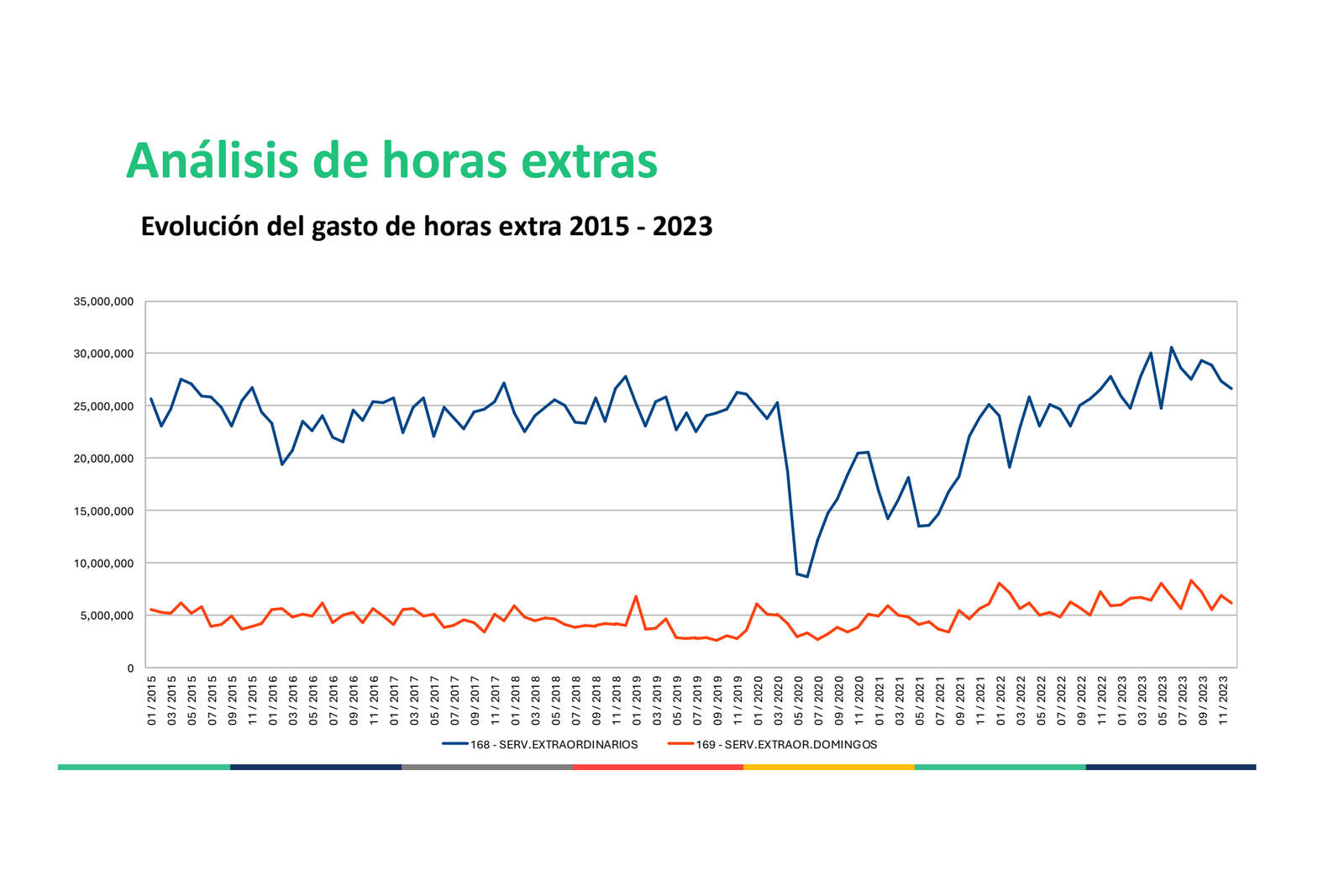
Evolution of the amount of overtime
GRAFICA
On one hand, spending on Sunday overtime (orange line) remains more stable, fluctuating between 4 and 6 million pesos during the period, with a slight increase toward 2023. This stability suggests that Sunday hours have not experienced drastic changes in their allocation, unlike extraordinary services.
HS EXTRAS
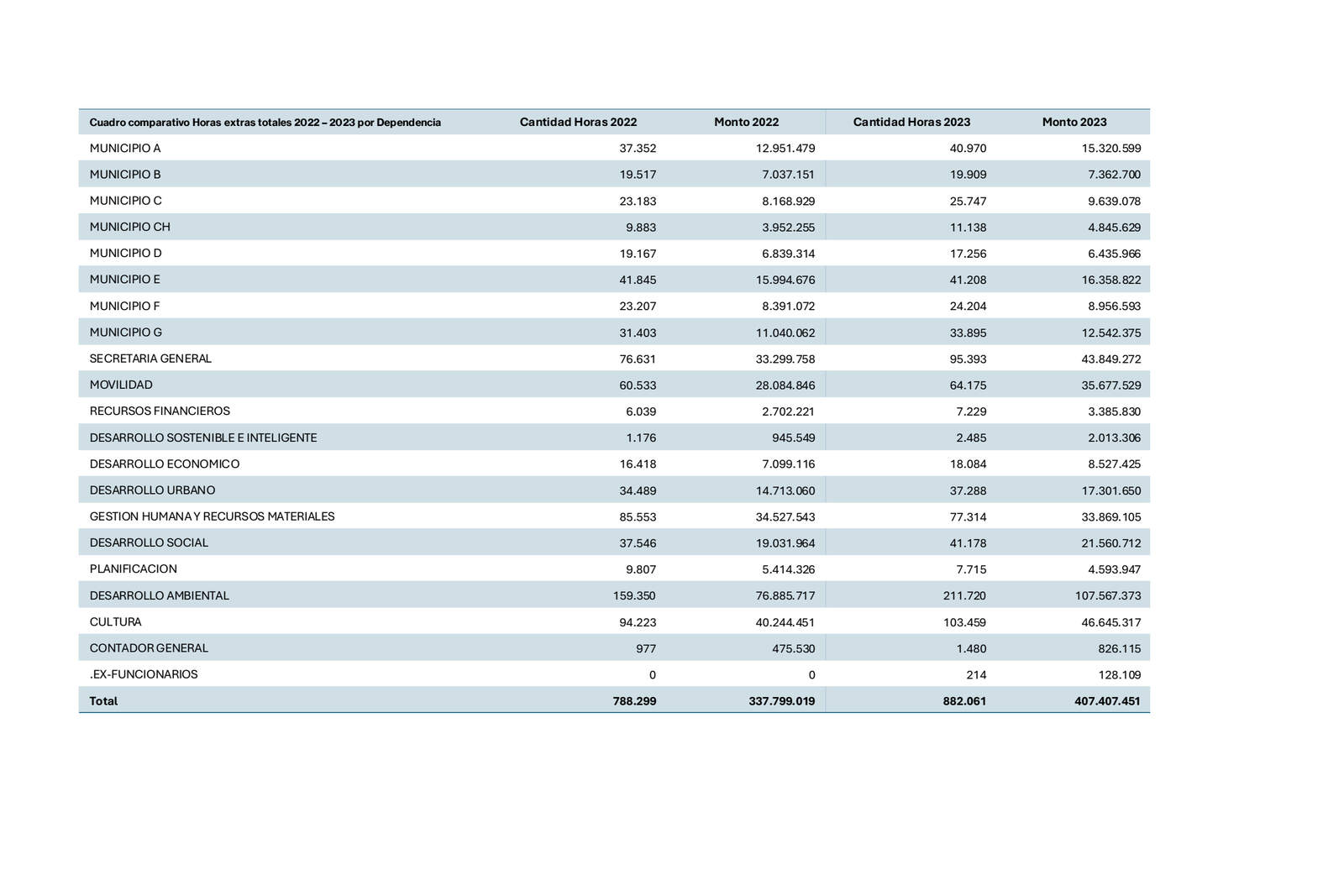
Regarding the number of hours, there was an increase from 788,299 to 882,061 hours from 2022 to 2023, almost 100,000 more hours, without a perceived increase in the quantity and quality of services provided by the IMM.
BASURA
These data reflect the need to review personnel management policies in the Montevideo City Hall, as the sustained increase in overtime spending could impact the municipal budget and indicate a reliance on this mechanism to cover operational needs.
Criticism from the opposition
One of the candidates for Municipal Mayor of Montevideo from the Republican Coalition, Martín Lema, one of the most critical voices on this issue, has denounced that between 2020 and 2024 the IMM paid more than 3.4 million overtime hours, with an accumulated cost exceeding US$35 million in five years.
In 2023 alone, overtime spending represented about 2% of the total budget of the City Hall, a figure that Mayor Mauricio Zunino has described as "reasonable."
However, this statement is difficult to justify when analyzing the details: workdays of up to 17 hours a day were authorized for some employees, and irregularities were identified such as the violation of the limits established by the Municipal Digest, which limits overtime unless expressly authorized by the Mayor.
More seriously, overtime was approved for activities that were suspended, such as in the Municipal Casino during the pandemic, where more than 500 overtime hours were paid despite the establishment's closure. These practices, far from being isolated cases, seem to have become a norm, evidencing a worrying lack of internal control.
The IMM collects approximately US$808 million a year, of which 48% is allocated to salaries and other labor links. This percentage, added to overtime spending, leaves a minimal margin —around 13%— for investments in infrastructure, cleaning, or mobility, which are the true priorities of the citizens.
Instead of optimizing existing human resources or restructuring its workforce of more than 8,000 employees, the City Hall resorts to overtime as an easy solution, perpetuating a management model that favors political patronage over general welfare.
A City Hall in crisis
The overtime controversy unfolds in a context of financial difficulties acknowledged by Zunino himself, who has admitted that the IMM's economic situation "is not excellent."
However, instead of adopting austerity measures, the administration has chosen to blame the central government of Luis Lacalle Pou, alleging delays in transfers, while organizing costly and non-austere events, such as the party for the "300 years of Montevideo" to name one of many.
The IMM carries a heavy bureaucratic structure that, in many cases, duplicates national state functions or assumes roles that do not correspond to it.
This model is not only inefficient but also facilitates patronage practices, diverting resources that could be allocated to improving the quality of life of Montevideo's residents and is the reflection of a management model that ignores the principles of responsibility, efficiency, and respect for the taxpayer.