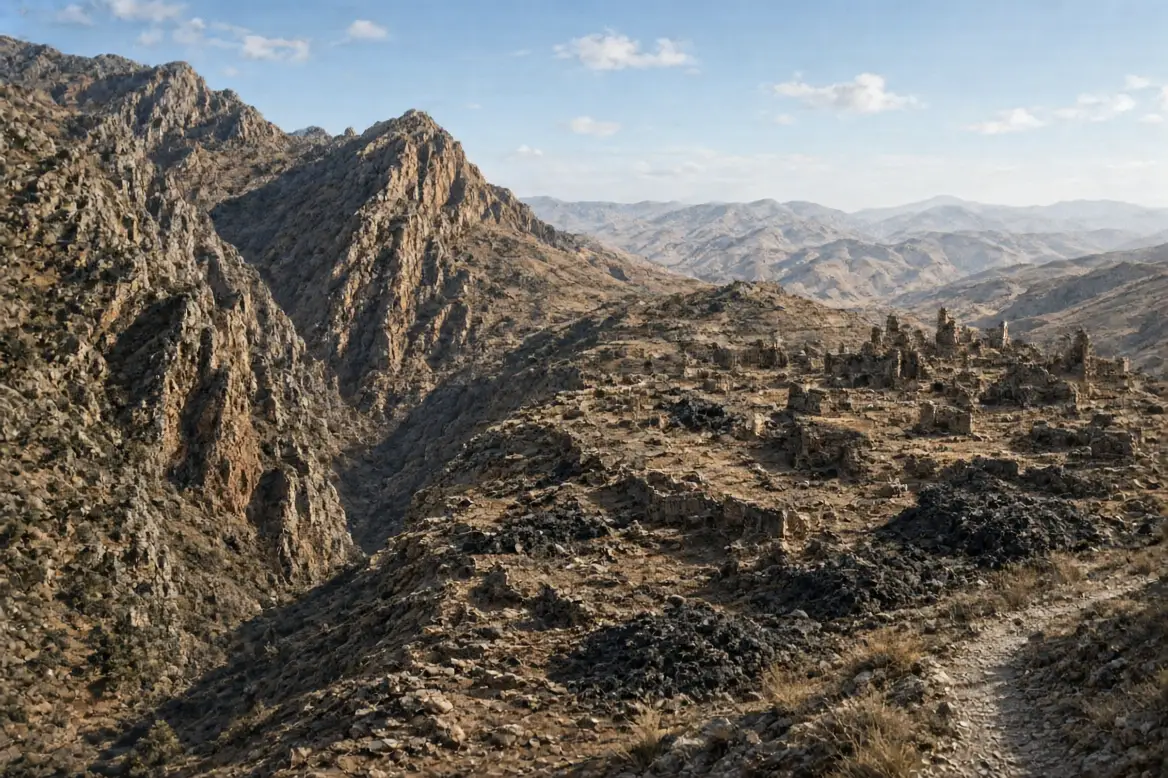

In the rugged highlands of southeastern Uzbekistan, about 2,000 meters above sea level, an international team of archaeologists is excavating a vast settlement that challenges traditional ideas about the Silk Road. The site, known as Tugunbulak, covers nearly 120 hectares and features remains of walls with towers enclosing an area almost twice the size of Pompeii.
The researchers, led by Michael Frachetti from the University of Washington in St. Louis, Farhod Maksudov from the National Archaeology Center of Uzbekistan, and Sanjyot Mehendale from the University of California, Berkeley, believe it to be the legendary Marsmanda. This iron-producing metropolis is mentioned in 10th-century Arabic sources but had never been located.
/https://tf-cmsv2-smithsonianmag-media.s3.amazonaws.com/filer_public/71/c5/71c530e2-e726-4e9f-9053-6a4242425b7d/uzbek2025_250725_0003-21.jpg)
The site was inhabited between the 6th and 11th centuries, during the height of trade routes connecting East Asia with the Mediterranean. Today, only seasonal shepherds and a few summer farmers graze their livestock there, but a millennium ago, it housed a complex urban community in an environment where June snowfalls are not uncommon and snow covers the ground for more than half the year.
The excavations revealed clear evidence of intensive metallurgical activity. Heavy rocks laden with iron pellets, slag, and remnants of furnaces indicate that miners, smelters, and blacksmiths congregated there to produce weapons, tools, and hardware.
/https://tf-cmsv2-smithsonianmag-media.s3.amazonaws.com/filer_public/b7/8a/b78a73e7-a485-4cea-a8ae-72596fc1c746/silkroadmap.jpg) An industrial center at extreme altitude
An industrial center at extreme altitude
These products –swords, arrowheads, horse gear, hoes, and plows– circulated through the exchange network that the German geographer Ferdinand von Richthofen dubbed the Silk Road in the 19th century. Local iron production would have supplied the steppe empires and the lowland cities.
Frachetti and Maksudov were not searching for a lost city when they began exploring the area. Their initial goal was to find traces of Bronze Age settlements. However, in 2011 they discovered thousands of ceramic fragments from the 8th to 11th centuries in a nearby valley called Tashbulak, and later identified the much larger complex of Tugunbulak.
/https://tf-cmsv2-smithsonianmag-media.s3.amazonaws.com/filer_public/f5/31/f5312ff7-e151-4833-9426-2b6979c7453b/tugunbulak_pano.jpg)
/https://tf-cmsv2-smithsonianmag-media.s3.amazonaws.com/filer_public/91/cd/91cd2a76-dbaa-42aa-b4dc-1642644999ed/uzbek2025_250726_0004-38.jpg) The nearby site of Tashbulak, smaller in size, also thrived between the 8th and 11th centuries. There, metallurgical workshops, solid housing, and a large Muslim cemetery with hundreds of graves oriented toward Mecca were found, indicating the arrival of Islam in the region.
The nearby site of Tashbulak, smaller in size, also thrived between the 8th and 11th centuries. There, metallurgical workshops, solid housing, and a large Muslim cemetery with hundreds of graves oriented toward Mecca were found, indicating the arrival of Islam in the region.








