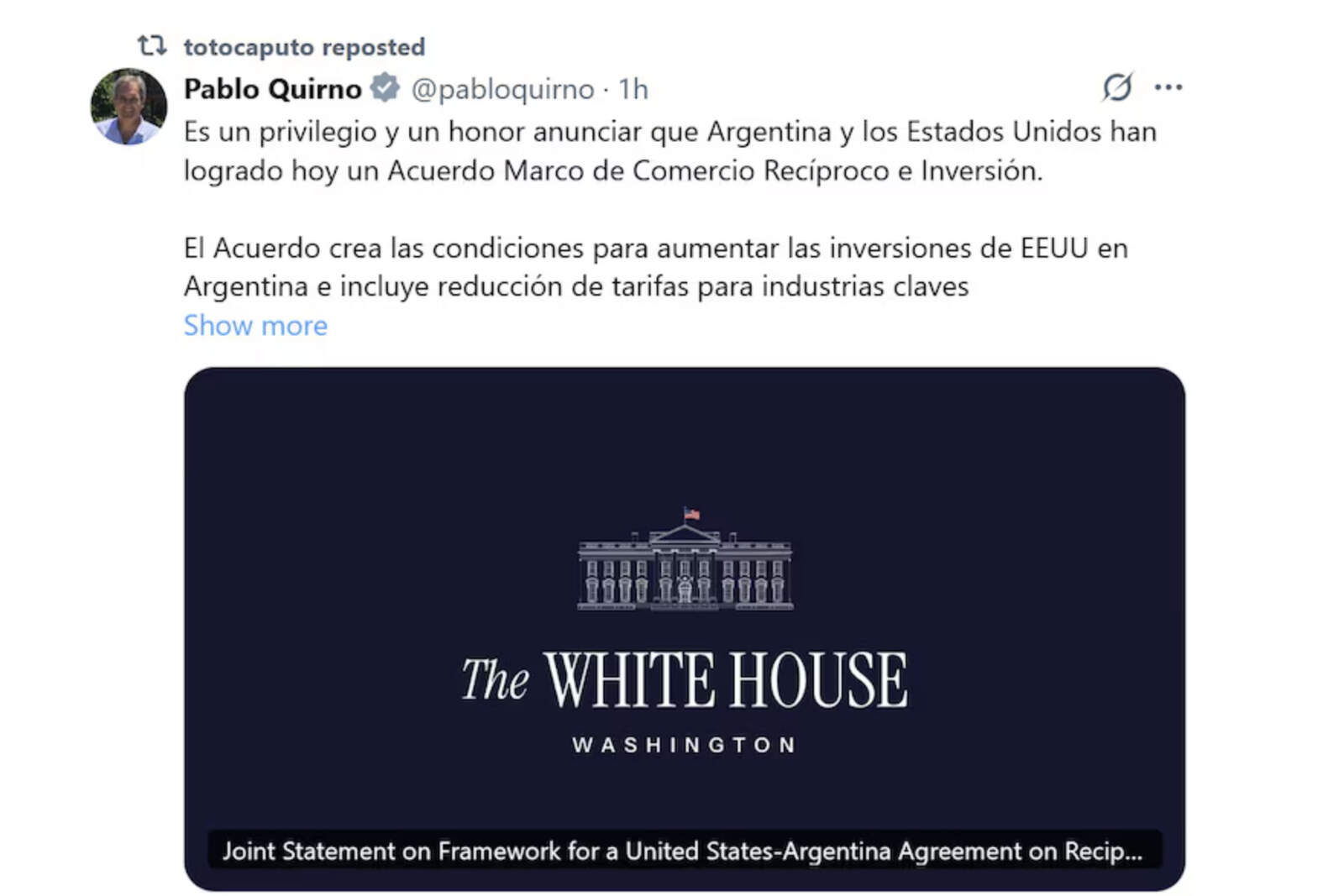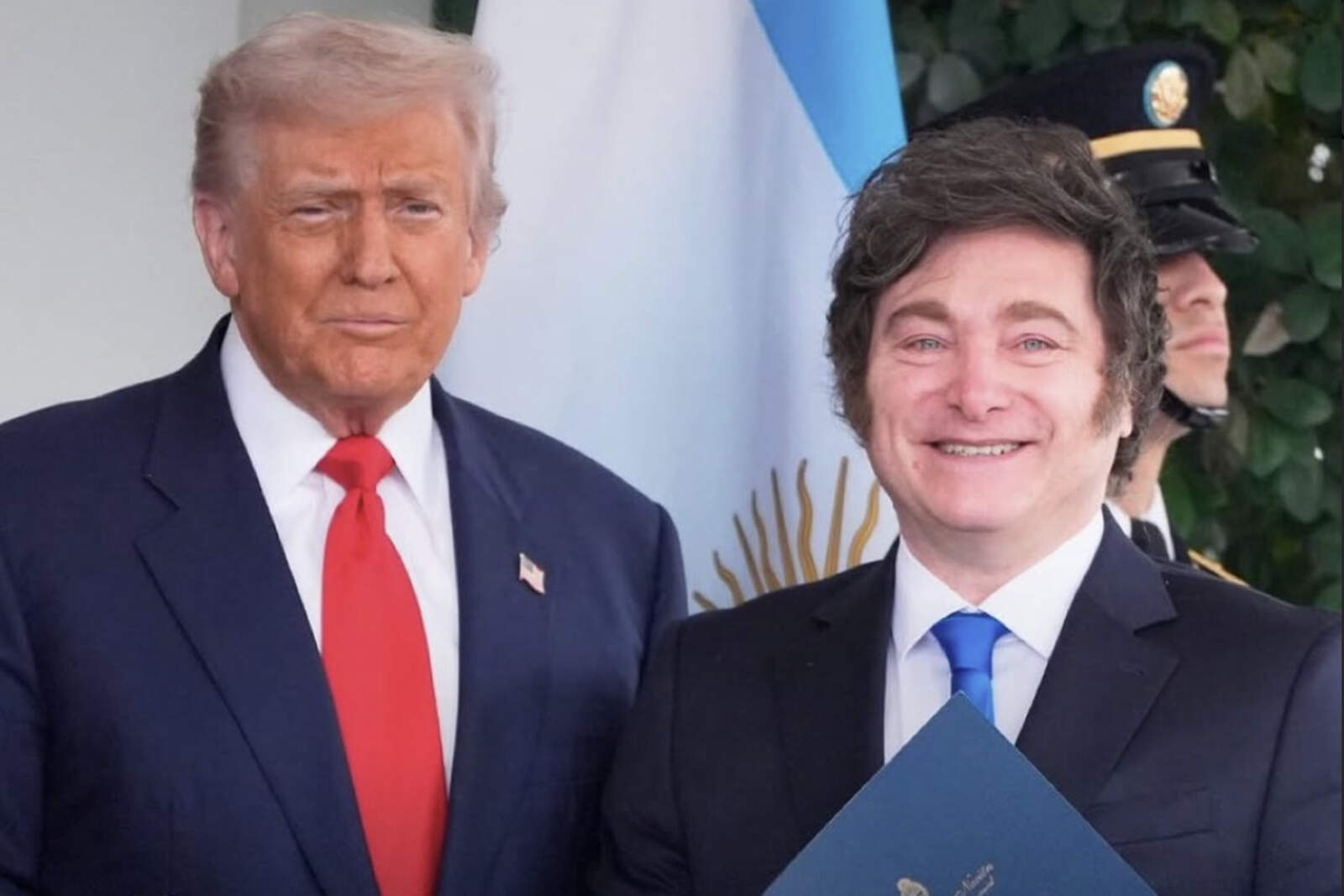

Argentina took one of the most important steps in terms of international integration in decades this Thursday. The White House confirmed that both countries reached a Framework Agreement on Reciprocal Trade and Investment, a pact that had been under negotiation for months and marks a deep shift in Argentina's foreign policy: after years of isolation, the country is once again integrating into global trade.
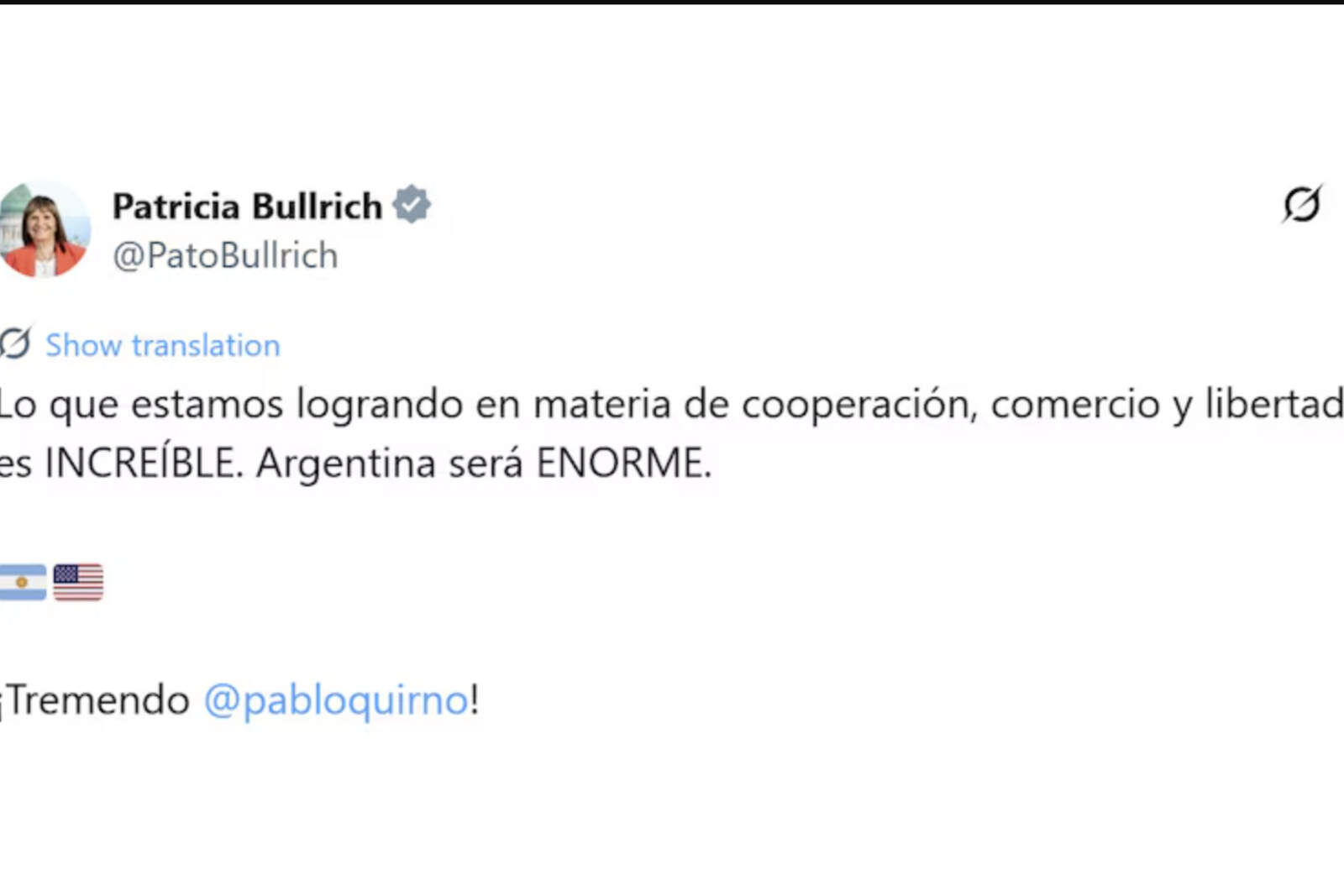
President Milei celebrated the announcement with a direct message: “WE HAVE AN AGREEMENT WITH THE US. VLLC!”
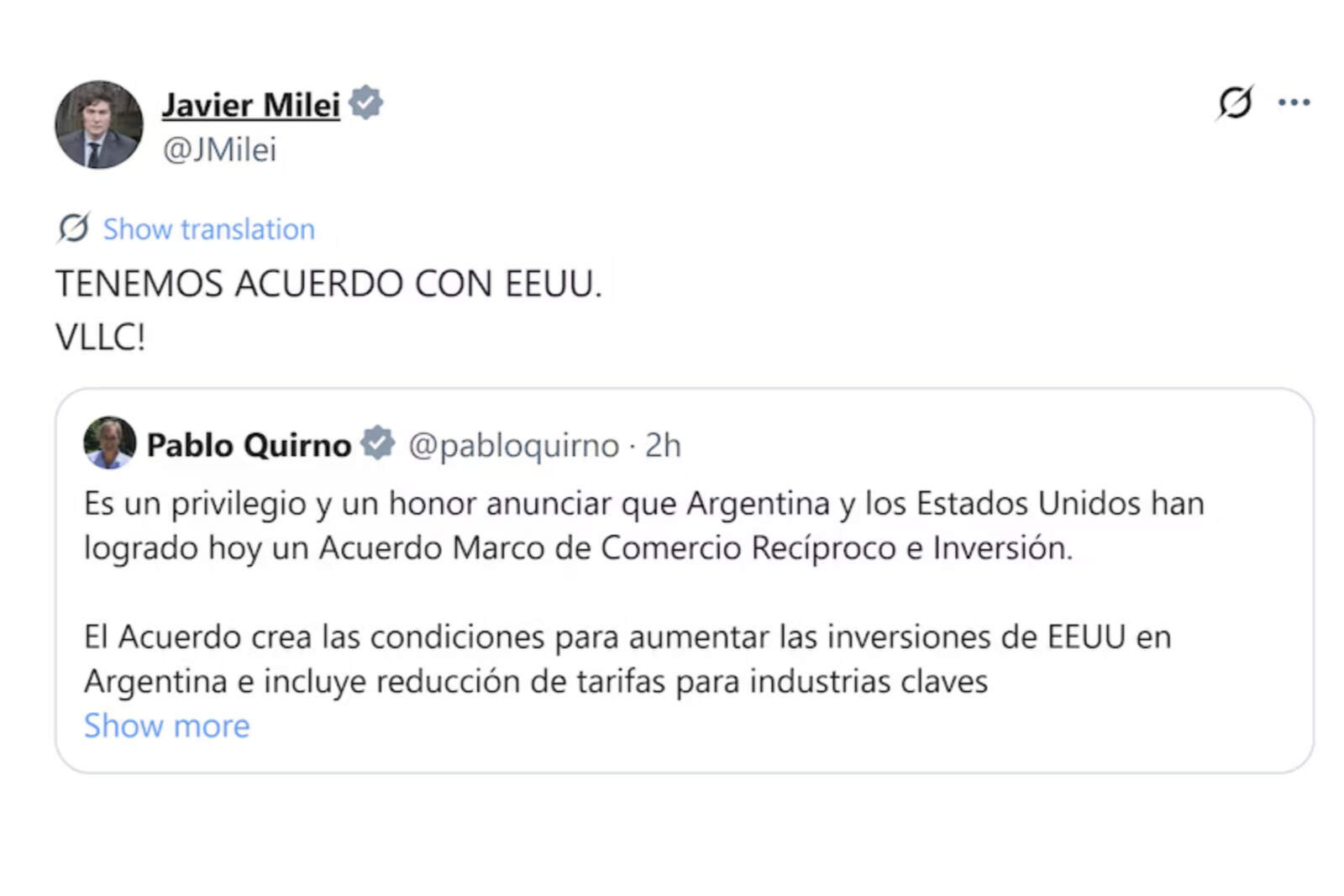
The agreement establishes preferential conditions for key sectors of the Argentine economy. For the first time, the United States will enable an expanded access scheme for exports of natural resources, steel, aluminum, and beef.
In the case of steel and aluminum, they will be incorporated into a quota with virtually zero tariffs, emulating the system that operated between 2018 and 2019, when Argentina exported up to 180,000 tons without paying the current 50% tariff.
The agreement also opens the Argentine market to US products under preferential conditions. Among them are pharmaceuticals, chemical products, industrial machinery, information technologies, medical devices, vehicles, and a range of agricultural goods. This will allow Argentines to access higher-quality products at better prices, diversifying the supply and improving their quality of life.
The White House framed part of this opening within the national security parameters established by the Trade Expansion Act, which makes the agreement a strategic move for both countries.
Another central chapter of the pact is intellectual property. Argentina committed to strengthening the fight against counterfeiting and piracy, both in physical and digital markets, and to modernizing its patent and designation of origin regime. This point responds to observations from the USTR's Special 301 Report, which will be updated in 2025 and for which Argentina seeks to improve its position.