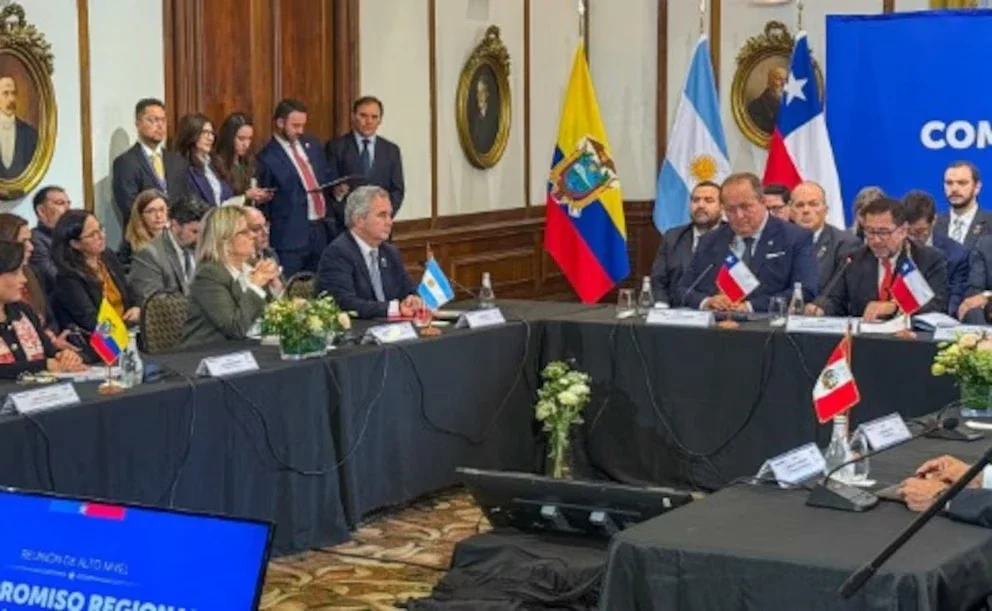
For his part, Chilean President José Antonio Kast, host of the meeting, raised the political stakes by proposing joint cross-border operations, mixed investigation teams, real-time information exchange, and expedited extraditions.
Kast drew a significant historical analogy: “Just as an O'Higgins, a San Martín, a Bolívar, a Sucre fought against those who at that time impeded the freedom of different peoples, today we also have a common enemy”.
Moreover, he warned that organized crime is no longer just a police problem, but a direct attack on democracies, as it “buys loyalties, buys soldiers, buys children to go against the legally established regime”.
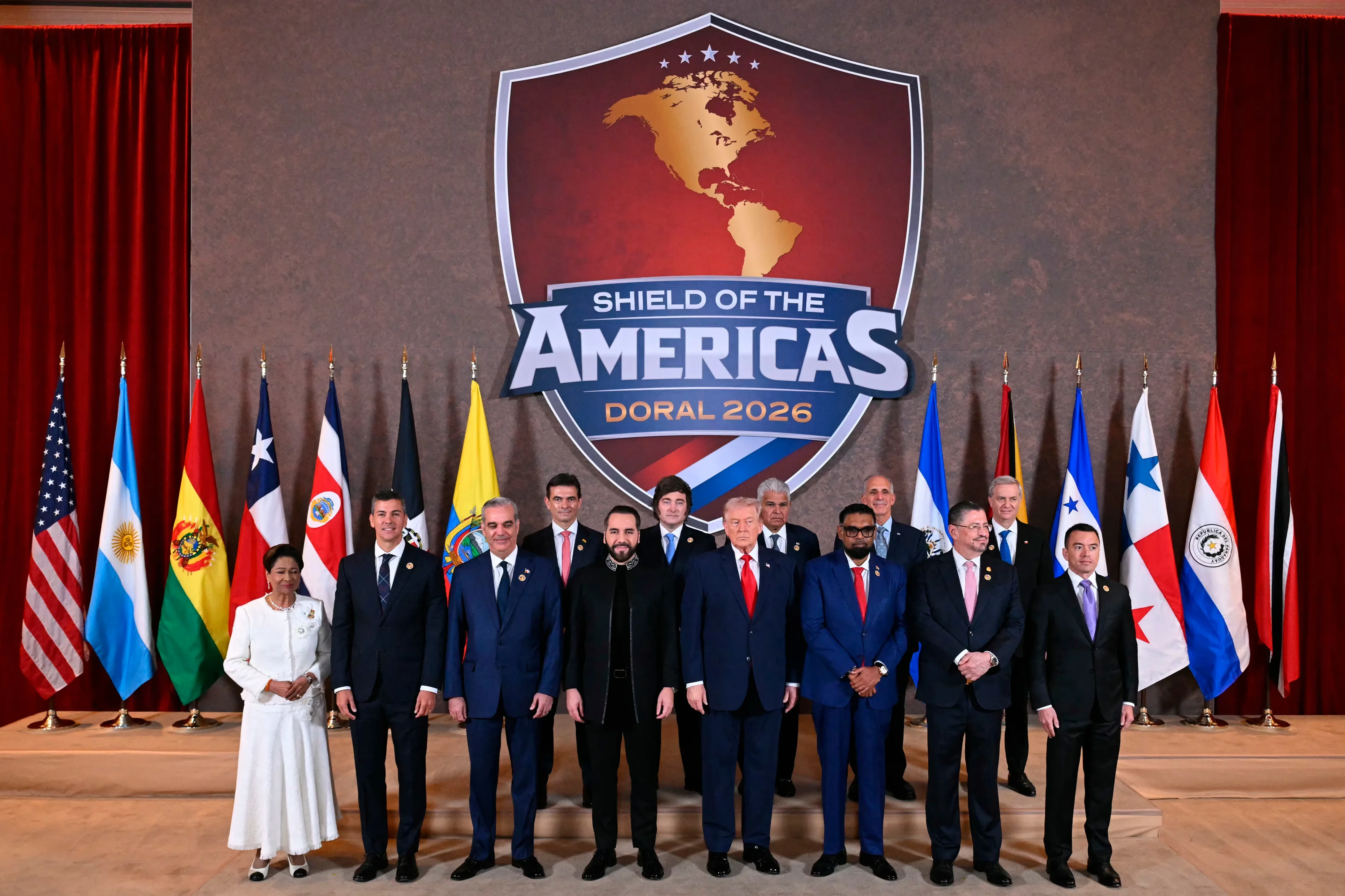
This new security bloc exposes the ideological fracture of the continent. While the current 13 nations of the Shield of the Americas —including the United States, Argentina, Bolivia, Chile, Costa Rica, Ecuador, El Salvador, Guyana, Honduras, Panama, Paraguay, the Dominican Republic, and Trinidad and Tobago— move towards order, the center-left governments of Mexico, Colombia, and Brazil have been left out of this initiative.
The exclusion of these countries responds to their distance from the security agenda of Washington and the Trump administration, which officially launched this coalition on March 7, 2026 in Doral, Florida, based on the “Americas Counter Cartel Conference Joint Security Declaration” signed previously on March 5.
As Colombia heads towards an election this Sunday May 31 with the progressive candidate Iván Cepeda as the favorite, in Brazil, Senator Flavio Bolsonaro has already promised to join the Shield of the Americas if he regains power.
The next step of this strategic alliance will be to present the Regional Commitment of Santiago at the forty-sixth General Assembly of the OAS, in order to add more nations that wish to abandon complacency and confront transnational crime head-on. Argentina, under the Milei doctrine, thus positions itself at the forefront of this new era of hemispheric security and freedom.