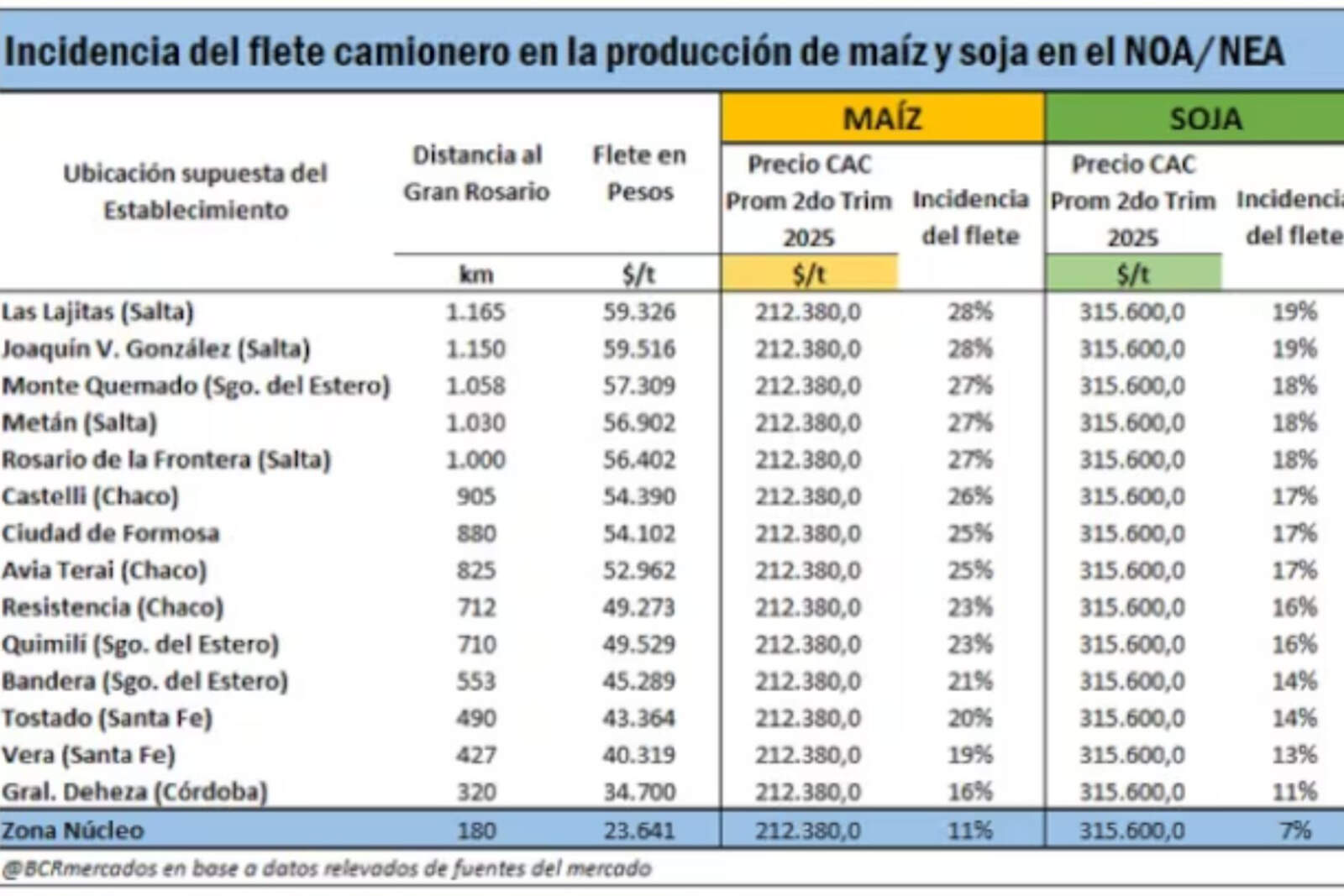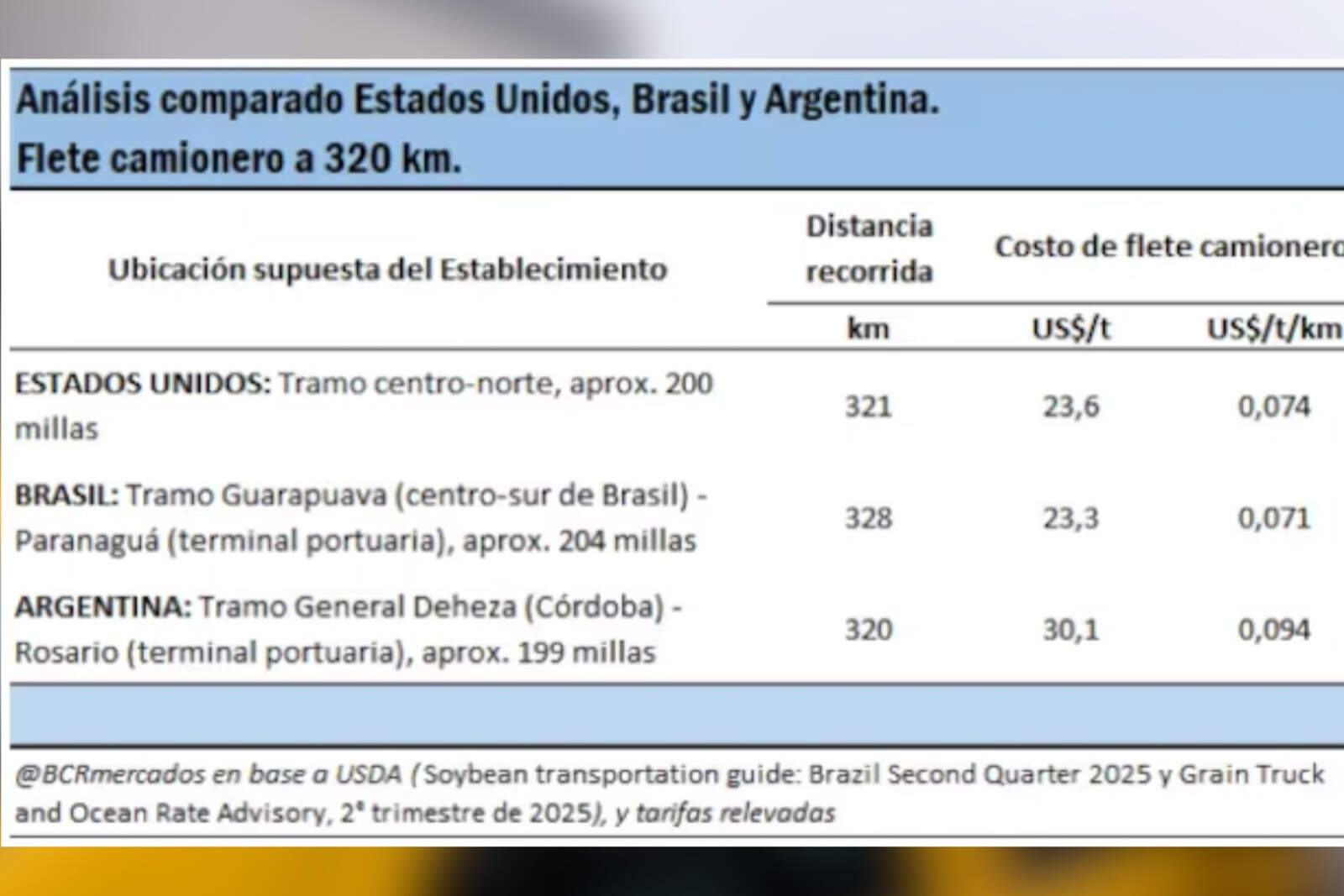

According to a report from the Rosario Board of Trade, transporting grain by truck costs 30% more in Argentina. The comparison was made with Brazil and the United States, countries with which it competes in agricultural exports. The domestic tax burden and the exchange rate are key factors in this gap.
The analysis considered a short distance of 320 km (199 miles), common for local routes to ports, and measured the cost per ton per kilometer traveled. In Argentina, the value reached US$0.94 per ton/km, compared to US$0.71 in Brazil and US$0.73 in the United States. This represents a difference of 32% and 28% respectively, which reduces the competitiveness of national production.
Workers in the sector point out that logistics costs are a direct consequence of provincial taxes. Each jurisdiction adds fees and obstacles that, when accumulated, harm transport efficiency. Reforming the federal tax system appears as an urgent necessity.
Long distances, excessive costs
On long routes, Argentina also records extra costs compared to its regional competitors. For distances of 1,150 km (714 miles), the local freight cost was US$0.045/t/km, compared to US$0.043 in Brazil. Although the difference seems minor, when applied to large volumes it represents millions in losses.
The equation is clear: greater distance, greater impact of freight on the final price of grain. In remote areas such as Salta, transporting corn can represent up to 28% of the sale value. In contrast, in the Core Zone, that percentage drops to 11%.