The country will return to lunar exploration with national technology validated by the highest international standards
Compartir:
Argentina will once again be part of a historic space exploration mission. According to the Office of the President of the Nation, the country will join NASA's Artemis II mission, the international program that will mark humanity's return to lunar orbit after the conclusion of the Apollo Program in 1972.
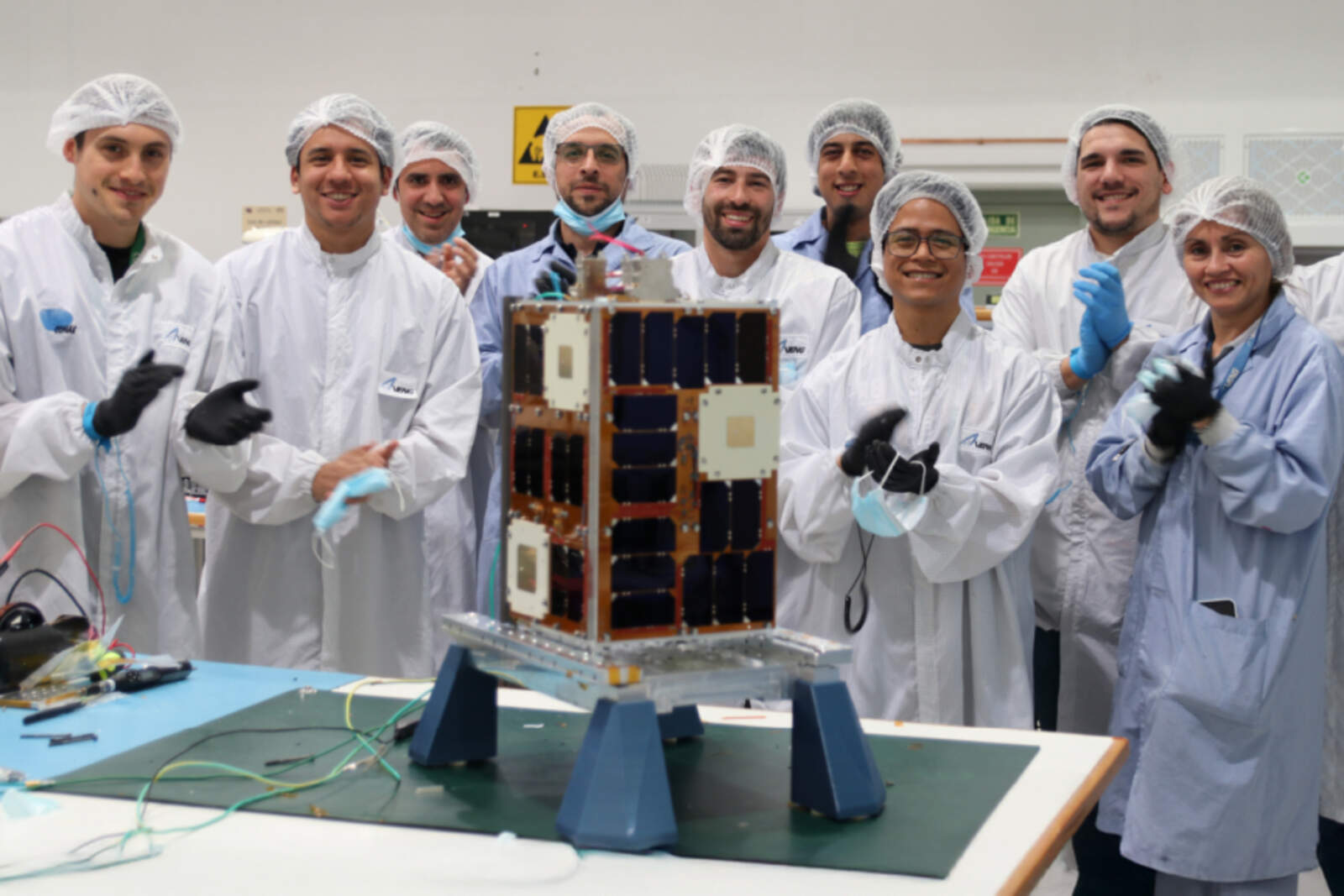
During the launch of the mission, the Argentine microsatellite Atenea, developed by the National Commission on Space Activities (CONAE) together with the company VENG S.A., will be deployed. The project also includes the participation of the Argentine Institute of Radio Astronomy (IAR), the National Atomic Energy Commission (CNEA), the National University of La Plata (UNLP), the National University of San Martín (UNSAM), and the School of Engineering of the University of Buenos Aires (FIUBA).
ATENEA mide aproximadamente 30 cm x 20 cm x 20 cm, y tiene como objetivo validar tecnologías críticas para futuras misiones espaciales
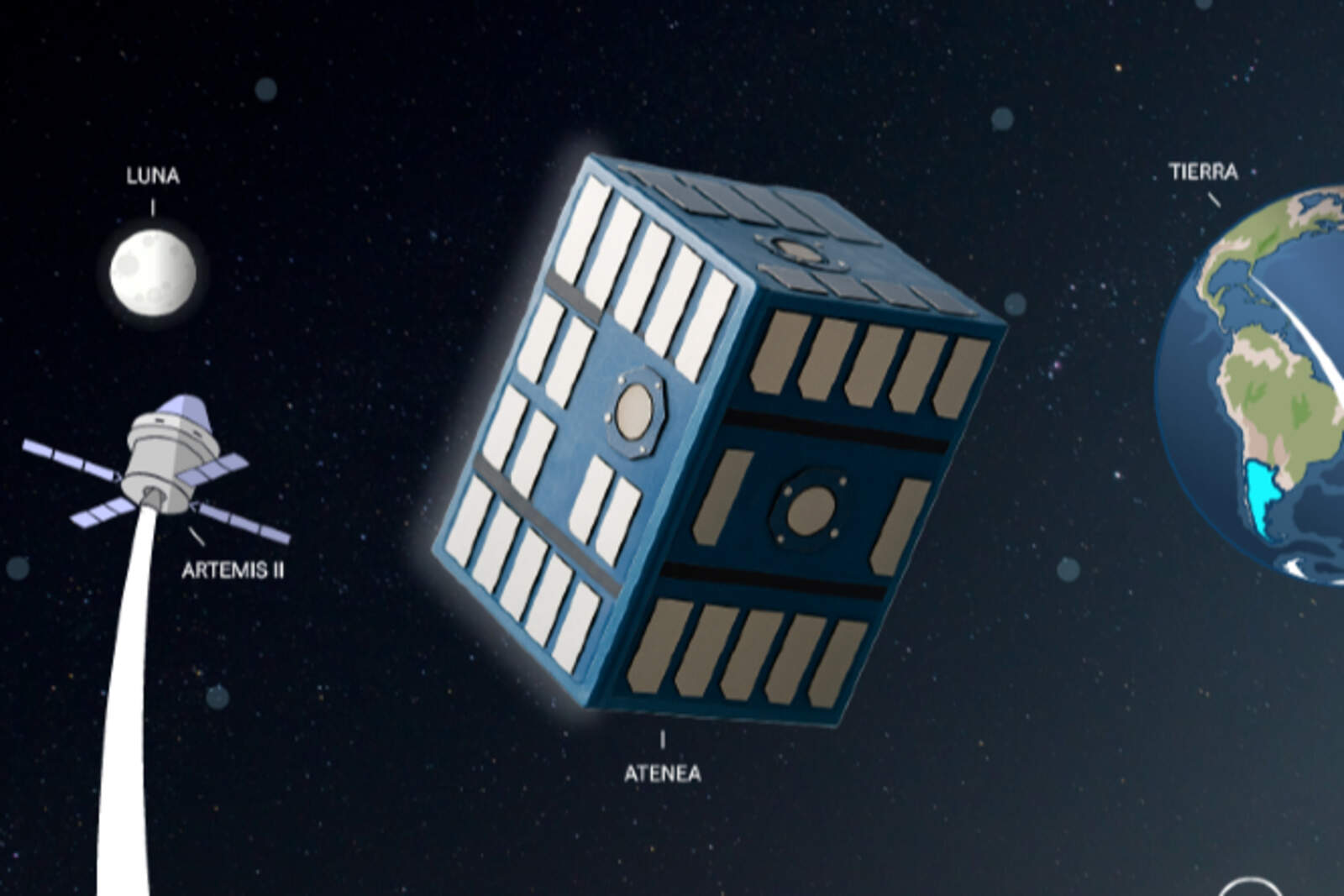
The deployment of the satellite will take place in the first stage of the mission, more than 70,000 kilometers (43,495 miles) from Earth, an unprecedented distance for an Argentine satellite. This milestone represents a record for the national space industry and positions the country within the small group of nations capable of developing and validating technology in highly complex space missions.
The Atenea microsatellite will make it possible to validate critical technologies for future space missions. Among its objectives, the measurement of radiation in deep orbits, the evaluation of components for space use, the collection of GPS data in geostationary transfer orbits, and the validation of long-range communication links stand out. This information will be key for NASA in the development of new exploration missions.
The Artemis II mission will have a crew on board, which implies the world's most demanding quality, safety, and reliability standards for space activities. In that context, the selection of the Argentine project constitutes an explicit recognition of the technical, scientific, and operational level reached by the country in the space sector.
Imagén generada con inteligencia artificial.
The national government emphasized that technological development and research in strategic matters are among the administration's priorities. In that regard, officials highlighted that investment in science is sustained through efficient management of public resources, eliminating unnecessary expenses in areas that do not generate strategic value.
Argentina's participation in Artemis II not only strengthens the bond with the United States and the world's main space agencies, but also consolidates a vision of a country oriented toward knowledge, innovation, and international integration through merit. When politics stops getting in the way and development once again becomes the priority, the results speak for themselves.