
Marine diesel and the hidden cost of the state monopoly: a lesson in how intervention distorts production

Marine diesel and the hidden cost of the state monopoly: a lesson in how intervention distorts production
porEditorial Team
Uruguay

Politicians use state companies as a mafia-style extortion method.

Compartir:

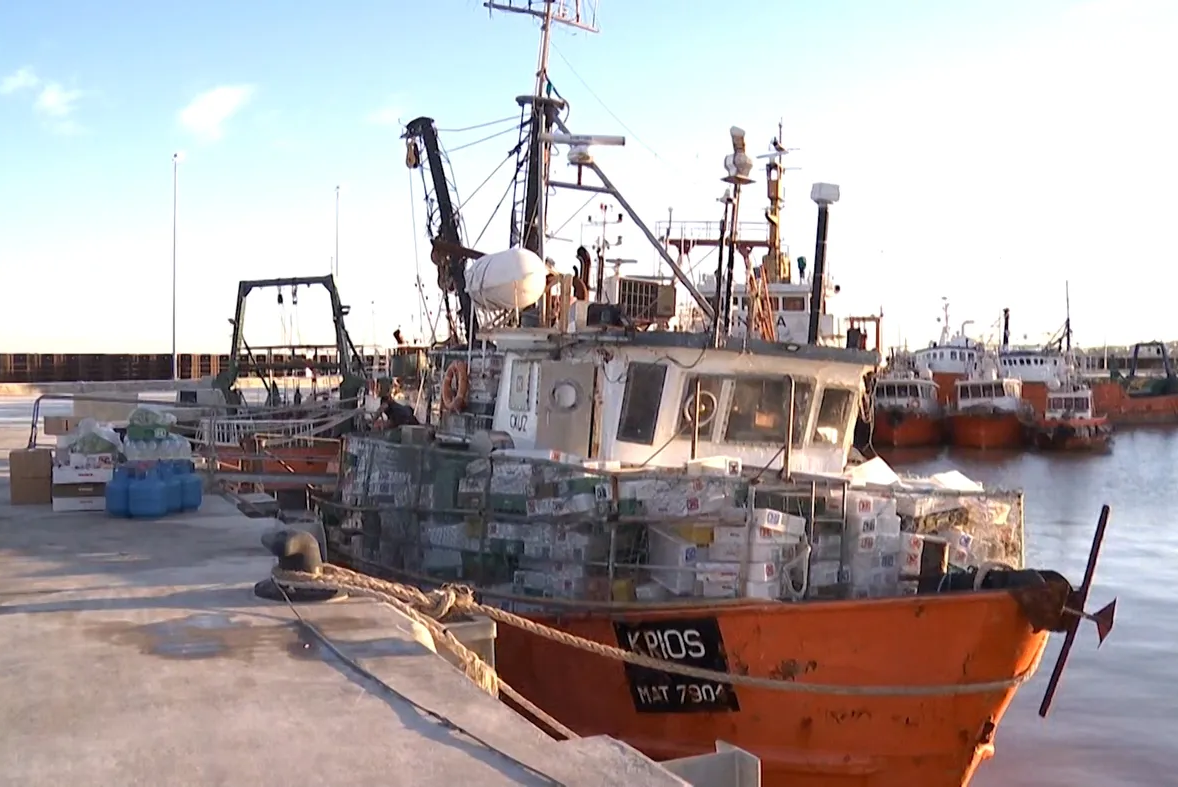
In the early hours of April 1, 2026, the National Fuel, Alcohol and Portland Administration (ANCAP) reported an 83 percent adjustment in the price of marine diesel, the essential fuel for the Uruguayan fishing fleet. The value went from approximately $715 per cubic meter to more than $1,300. The measure, justified by the international rise in oil resulting from instability in the Middle East and the absence of regulatory caps in this segment (unlike domestic fuels), raised immediate alarm in the fishing sector. Shipowners warned that the operation was becoming unfeasible: several ships were unable to sail and the harvest, which intensifies in May, was

in danger.


The reaction was not long in coming. The Chamber of Fishing Industries of Uruguay (CIPU), which brings together the main companies in the sector, pointed out that the increase made the main input a prohibitive factor. “We are not going to take out the boats because it is unfeasible to buy fuel at that value and go fishing,” summarized its president, Juan Riva-Zucchelli. At the same time, previous supply difficulties were reported, which had already left fifteen vessels ashore. The Executive, faced with the risk of paralysis, corrected course in a matter of hours: it set a differential price with an adjustment of 7% (equivalent to that of the rest of the regulated fuels) for a maximum volume of 2,000 cubic meters destined for ships and fishing under the national flag. The surplus would be sold at the regional market price (around 53,173 pesos per cubic meter). In this way, ANCAP absorbs an estimated gap of 1 to 1.2 million dollars per month, financed with

public resources.


This episode, beyond its rapid rectification, reveals a structural dynamic. When a single state entity controls the refining, importation and distribution of fuels, price signals cease to emerge from the voluntary encounter between bidders and claimants. Instead, bureaucratic calculations that attempt to balance international costs, implicit subsidies and political pressures prevail. Marine diesel, since it was not subject to the same limit regime as fuels for the public, suddenly reflected regional reality; but the impact on fishing — an export sector that competes in global markets — was immediate and disproportionate. The subsequent correction, although welcome to avoid a strike, does not solve the underlying problem: it still depends on the discretion of the monopoly entity and the

public treasury.

The working context of the fishing sector adds another layer of rigidity. In recent years, the industry has faced protracted conflicts with maritime unions that denounce precarious working conditions and hiring foreign crew members. Companies, for their part, categorically reject accusations of “semi-slavery” and argue that historical union attitudes have generated dysfunctional labor relations: difficulty accessing local labor, high costs and reduced competitiveness. Uruguayan fishing operates in a highly competitive global environment, where margins depend on efficiency in fuel, labor and logistics costs. Any artificial distortion—whether in the price of energy input or in the flexibility of the labor market—translates directly into fewer outputs, fewer catches, less employment and less foreign exchange

.


Based on the logic of a free market economy, these types of episodes illustrate why state monopolies are not neutral. When the production and distribution of a strategic good such as fuel is left in the hands of a single actor with coercive power (the State), the spontaneous coordination mechanisms that arise from competition are lost. Prices cease to be truthful information about relative scarcity and become political variables. Temporary subsidies, while mitigating the immediate blow, transfer the cost to the taxpayer and generate perverse incentives: overconsumption, speculative stockpiling (as seen in the extraordinary demand of the previous days) and chronic dependence on centralized decisions. Fishing, a private activity that generates wealth, ends up paying for the inefficiency of a scheme that privileges control over

efficiency.


The solution does not involve cosmetic adjustments or emergency decrees. It lies in allowing the market to work unimpeded: opening up the import, refining and distribution of fuels to private competition, eliminating legal monopolies and letting prices be shaped by the interaction of thousands of individual decisions. At the same time, the modernization of the labor market — with flexible contracts, respect for the will of the parties and an end to coercive union privileges — would allow the fishing sector to reduce costs and increase its productivity. This is the only way to prevent episodes such as that of marine diesel from being repeated, and that the real engine of prosperity - private initiative - ceases to be punished by interventions that, even if presented as protection, end up being their

biggest obstacle.


Uruguay has an opportunity to learn from this forced correction. The path to a more robust and competitive economy is to reduce the State's weight in activities that the market can better solve. Fishing is not a marginal sector: it is a source of employment, exports and coastal development. Protecting it does not mean subsidizing it with foreign resources, but freeing it from the chains that

bind it today.

Noticias relacionadas

The Uruguayan left supports the Cuban communist narco-dictatorship

The Uruguayan left supports the Cuban communist narco-dictatorship

The tunnel that was buried alive: a pharaonic whim that the government had to abandon

The tunnel that was buried alive: a pharaonic whim that the government had to abandon

Laura Raffo endorses RT's Russian propaganda and opens the door to Putin's nefarious influence in Uruguay

Laura Raffo endorses RT's Russian propaganda and opens the door to Putin's nefarious influence in Uruguay

The media that Russia would have paid to operate against Javier Milei

The media that Russia would have paid to operate against Javier Milei

The Government of Milei eliminated the luxury tax and the prices of cars fell

The Government of Milei eliminated the luxury tax and the prices of cars fell

Stabilization: oil companies sign an agreement with YPF to sustain gasoline prices across the country

Stabilization: oil companies sign an agreement with YPF to sustain gasoline prices across the country

La Derecha Diario logo
ESX logoInstagram logoYouTube logoTikTok logo
ARGENTINABOLIVIAECUADORISRAELMEXICOURUGUAYDERECHA DIARIO TV
  • ESXInstagramYouTubeTikTok
  • DERECHA DIARIO TV
  • Secciones
  • ARGENTINA
  • BOLIVIA
  • ECUADOR
  • ISRAEL
  • MEXICO
  • URUGUAY
  • Países
  • La Derecha Diario logoLA DERECHA DIARIO
  • La Derecha Diario México logoLA DERECHA DIARIO MÉXICO
  • La Derecha Diario Uruguay logoLA DERECHA DIARIO URUGUAY
  • La Derecha Diario Ecuador logoLA DERECHA DIARIO ECUADOR
  • La Derecha Diario Bolívia logoLA DERECHA DIARIO BOLÍVIA
  • La Derechadiario República Dominicana logoLA DERECHADIARIO REPÚBLICA DOMINICANA
  • La Derecha Diario Israel logoLA DERECHA DIARIO ISRAEL
  • La Derecha Diario Estados Unidos logoLA DERECHA DIARIO ESTADOS UNIDOS
  • Temas
  • GUERRA EN IRÁN
  • JUICIO POR YPF
  • El Diario
  • QUIENES SOMOS
  • AUTORES
  • PUBLICIDAD
  • DONAR
La Derecha Diario logo
TwitterInstagramYouTubeTikTok
Derecha Diario TV

Nosotros

  • Quienes Somos
  • Autores
  • Donar

Privacidad

  • Protección de datos
  • Canales
  • Sitemap

Contacto

  • info@derechadiario.com.ar
PUBLICIDAD