Producers, refiners and marketers are implementing a joint scheme across the country to stop the transfer of the international rise in crude oil to suppliers.
This mechanism, defined by YPF as a “price shock absorber”, emerges as a direct response to the collapse in consumption, particularly in the interior of the country, and makes it possible to sustain levels of activity in an adverse context. At the end of the stipulated period, companies will re-evaluate the scenario based on the evolution of the war and the international energy market.
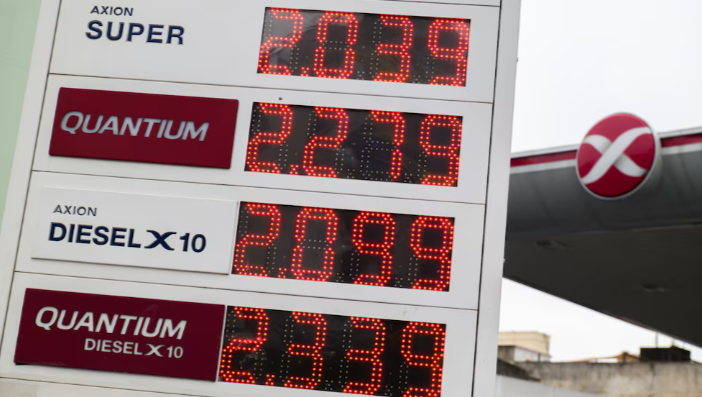
It should be noted that the price of crude oil represents approximately 40% of the final value at the pump, while the remaining 60% corresponds to taxes, refining costs, logistics, biofuels and commercial margins.AXION Energy
In this framework, although the agreement makes it possible to moderate the impact of the international increase, there are external variables—such as fiscal or exchange rate changes—that could affect the final price. However, the Government had already announced at the end of March the postponement of the tax update, a measure that, together with exchange rate stabilization, reinforces the current price containment scheme. Looking to the future, oil companies anticipate that the duration of the pact will depend on the evolution of the international conflict. Even in a de-escalation scenario, a return to pre-war levels of $60 per barrel is not expected. “During the war, a lot of infrastructure in the energy chain was destroyed, so it won't be simple or quick to rebuild it,” business sources
said.
The adopted system also guarantees the profitability of producers, who do not give up income but receive it in a deferred manner, which helps to sustain investment in the sector.
In short, the Argentine oil market opted for an internal and coordinated solution to face an adverse global situation, prioritizing predictability, sustained consumption and price stability. A movement that, in line with the Government's economic direction, consolidates signs of confidence, macroeconomic order and market discipline in one of the most sensitive variables for the
daily economy.
In an international context marked by growing geopolitical tension in the Middle East and a sharp escalation inthe price of oil, theArgentineenergy market reacted with a signal of order and coordination: the main oil companies operating in the country decided to align themselves with the strategy promoted by YPF to contain the rise in fuels and ensure stability in the pumps. The agreement, which is already in force throughout the national territory, involves producers, refiners and marketers, and establishes that the prices of gasoline and diesel will remain stable for at least the next six weeks, thus preventing the impact of the international rise in crude oil from being transferred immediately to the
consumer.
According to sources with knowledge of the negotiations, the decision responds to two key factors: the fall in demand —especially in the interior of the country— and the need to provide greater predictability in the face of global volatility. It is also an understanding reached at the initiative of the private sector itself, without direct intervention by the Government, which reinforces the change of economic paradigm under the current administration. The mechanism was activated after an increase of close to 20% in fuel since the beginning of the armed conflict in the Middle East, a rise that had a full impact on consumption. In particular, there was a significant drop in sales of super naphtha in the interior, where the price reached more than $2000 per liter
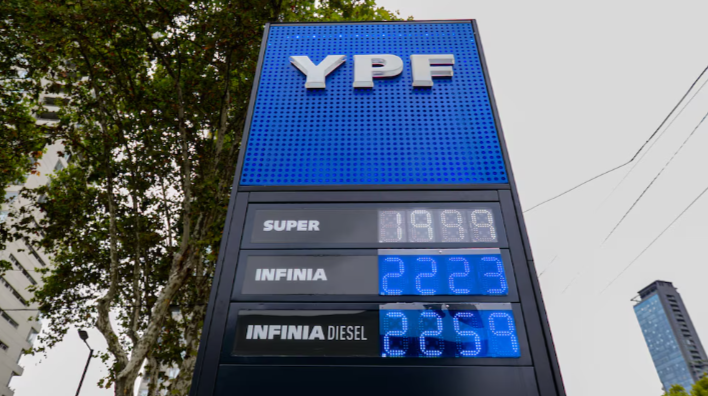
. YPF
The understanding—in force for 45 days from April 1st and running until mid-May—covers the entire chain: producers such as Tecpetrol, Pluspetrol and Fénix; refiners such as Raízen and Trafig; and integrated companies such as Pan American Energy, operator of Axion stations, in addition to YPF itself. At the same time, Puma Energy —controlled by Trafigure—is considering joining, although it is expected to accompany the market's decision. The agreed scheme makes it possible to avoid tensions between the different actors in the sector. On the one hand, producers could maximize profits by exporting crude oil abroad, but that would put domestic supply at risk.
On the other hand, refiners could only pay higher prices if they passed those costs on to the pumps, which is not feasible in a context of declining consumption.
To solve this equation, the value of crude oil in March in domestic transactions was established as a reference. Thus, while producers invoice according to the international price, which reached peaks of USD 119 per barrel and is currently around USD 109, refiners pay the current value until that month. The difference builds up in a clearing account that will be settled over time. In practical terms, this means that the price at the pump remains unchanged: even if the conflict is resolved and the oil price falls, gasoline will not decrease immediately, since the amounts not previously paid will be compensated