

A recent report by BBVA Research projects that Argentina could chain together three consecutive years of Gross Domestic Product (GDP) growth, an unprecedented scenario for the country and something that has not happened since 2006, 20 years ago.
According to the study, after a 2024 marked by the necessary adjustment and the drop in activity resulting from the serious crisis inherited from Kirchnerism, the economy would show a sustained recovery driven by the successful economic program of the Government of Javier Milei.
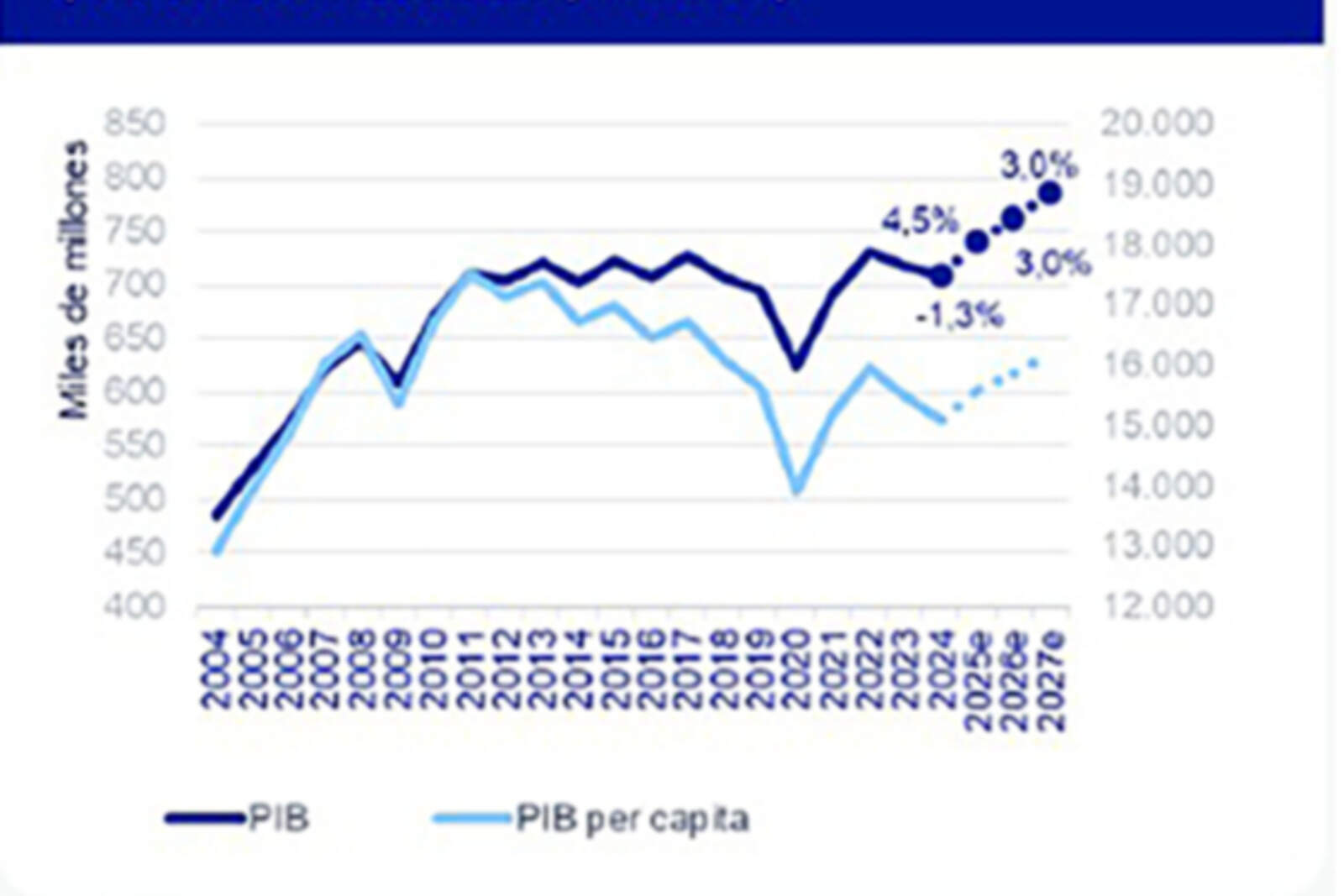
According to the bank's estimates, Argentina's GDP would grow by 4.5% in 2025 and then by 3% in both 2026 and 2027. This sequence of expansion would mark a change of cycle for an economy that, over the past twenty years, has been characterized by periods of growth interrupted by recurrent crises, recessions, and severe macroeconomic imbalances.
The report emphasizes that this scenario is supported by a combination of greater macroeconomic stability and a more favorable business environment. In that regard, BBVA Research states: “Greater macroeconomic stability together with a better business environment would allow investment and exports to drive growth in the coming years. GDP per capita in 2026 will reach the levels of the previous 2022 peak″.
Among the sectors that would contribute decisively to growth, the study highlights agriculture, which would benefit from a reduction in export taxes; mining, which would be driven by the projects covered by the Incentive Regime for Large Investments (RIGI); and financial intermediation, with greater dynamism in credit and interest rates in a context of monetary normalization.
Structural reforms
BBVA Research also focuses on the structural reforms promoted by Milei's Government as one of the key factors to explain the improvement in medium-term projections.