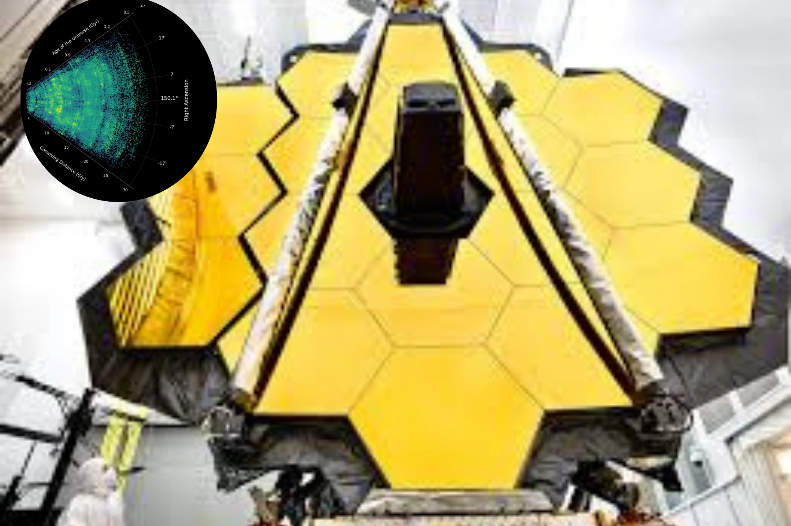
A team of astronomers has significantly improved the map of the cosmic web thanks to observations from the James Webb Space Telescope. This structure, made up of dark matter, gas, and filaments, acts as the skeleton of the universe, connecting galaxies and clusters in a vast network.
The cosmic web represents the underlying architecture of the cosmos. With the new images and data, researchers can see details that were previously hidden or smoothed out, especially in the very early epochs of the universe.
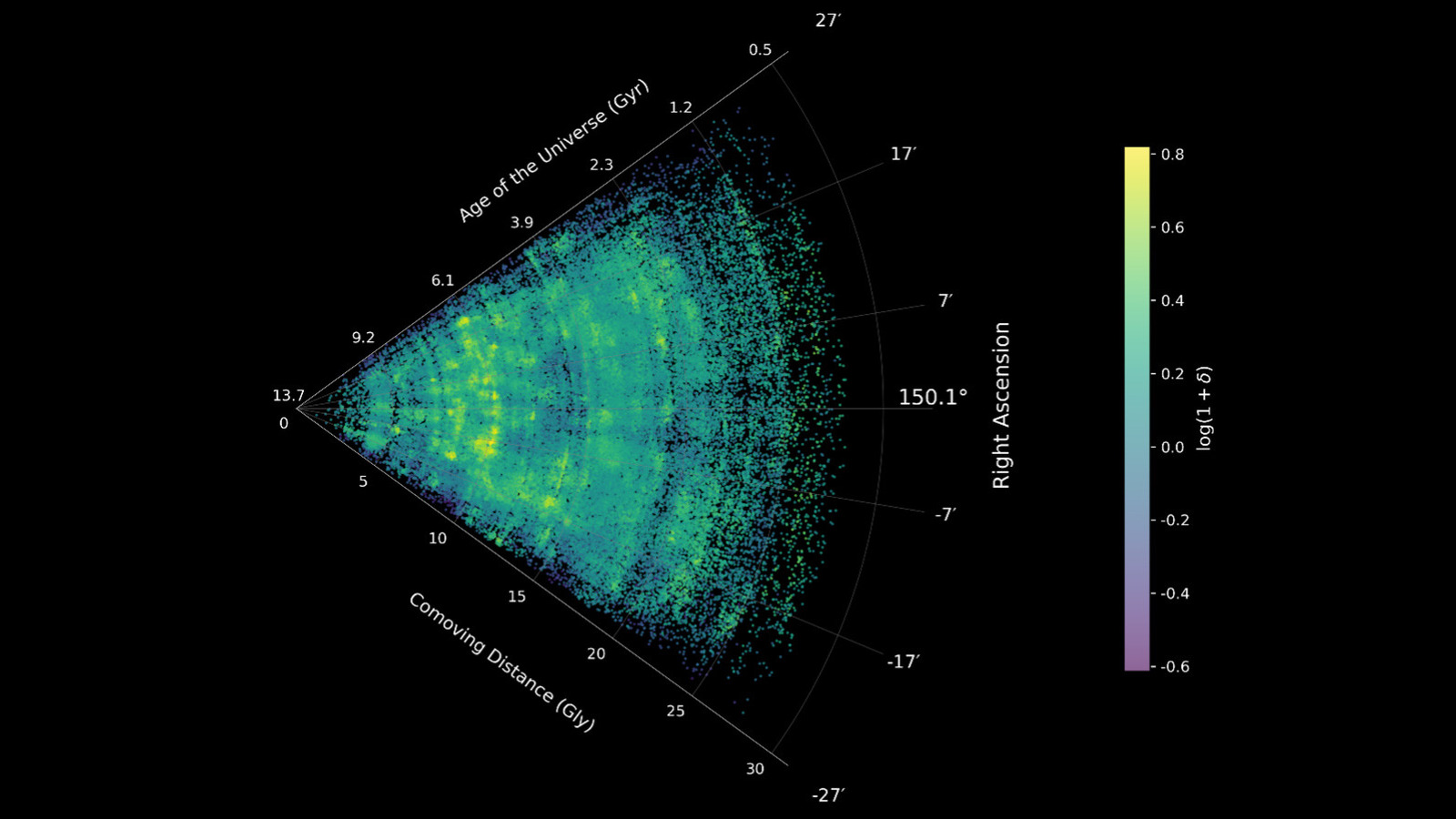
The leap in depth and resolution is truly significant, highlighted Bahram Mobasher, a professor at the University of California, Riverside, and a researcher on the study. It is now possible to observe the cosmic web at a time when the universe was only a few hundred million years old, an era practically inaccessible with previous instruments.
What once appeared as a single blurry structure is now resolved into multiple components. The fine details that were lost in previous observations now appear clearly, representing a key advancement for modern astronomy.
Studying evolution through cosmic time
For the first time, scientists can analyze how galaxies evolve within clusters and filamentous structures over billions of years. This spans from when the universe was around one billion years old to the nearby universe we know today.
These observations open the door to a better understanding of how galaxies formed and grew in relation to their environment within the cosmic web. The work, led by Hossein Hatamnia, a graduate student at the University of California, Riverside, and at the Carnegie Observatories, marks a milestone in this type of mapping.
The study is based on precise data obtained with the James Webb, which surpasses the limitations of previous telescopes by capturing infrared light with unprecedented sensitivity. This allows for the detection of faint structures of gas and dark matter that influence the distribution of galaxies.
The cosmic web not only connects massive objects but also plays a fundamental role in star formation and the movement of matter on a large scale. Understanding its details helps to test and refine current cosmological models about the origin and development of the universe.
Publication and future perspectives
The results of this research were published in the journal The Astrophysical Journal. The authors emphasize that this improved map will serve as a foundation for future investigations into the past of the cosmos and the processes that shaped the large structures we observe.
The images and maps generated are not only scientifically valuable but also reveal the beauty of the universe on immense scales. The filaments and knots of the cosmic web are displayed with a clarity that invites further exploration of its secrets.
This advancement reinforces the role of the James Webb Telescope as a key tool for unraveling the mysteries of the early universe. As more data is analyzed, new findings are likely to emerge about how matter organized itself after the Big Bang.
Researchers continue to process information to further expand the map. The combination of resolution and depth achieved promises to transform the understanding of large-scale structure formation in the cosmos.