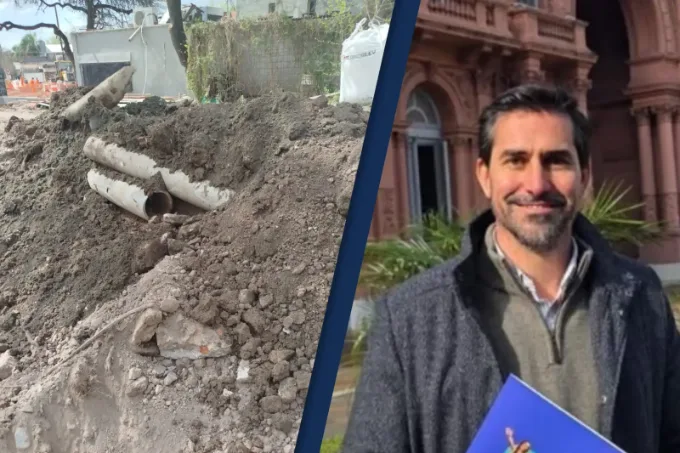
The progress of the most important work in La Calera has revealed land grabs, asphalt that does not meet regulations, and now deficient and poorly executed drainage systems, which the current administration is working to correct
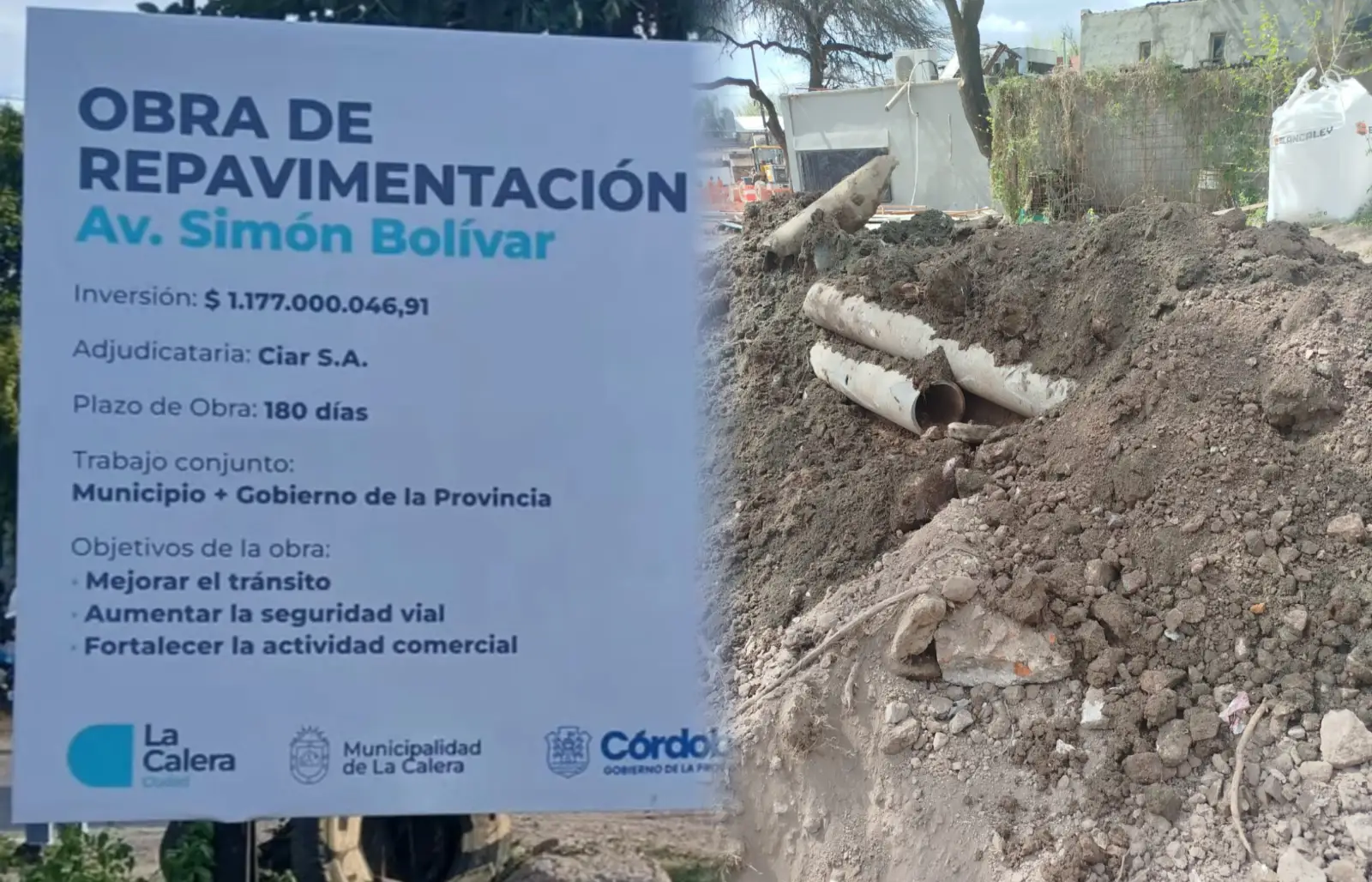
Two pipes with a combined cross-section of just 0.0982 square meters were, until recently, the entire drainage capacity of Simón Bolívar avenue at the height of the Cochabamba roundabout, in La Calera. This piping had to absorb the water that flowed down the slope of the street during each rain, something it never managed to do efficiently until the administration of Fernando Rambaldi undertook a new project.
The problem did not end with the insufficient diameter. These pipes emptied into a chamber built at a slope, in the opposite direction to where the water should flow, and with that combination —small pipes and poor orientation— the result was practically guaranteed: the corner of Bolívar, Sucre, and Cochabamba, next to the Parque de la Familia, flooded time and again, and each flood ended up breaking the asphalt that the municipality had to repair afterward.
This situation summarizes much of what the administration of Fernando Rambaldi has been correcting in the infrastructure of La Calera: poorly sized projects executed without planning, which for years generated recurring repair costs instead of solving the underlying problem.
The management of Fernando Rambaldi has been making corrections to the infrastructure of La Calera.
The new drainage system on Simón Bolívar multiplies its capacity by ten
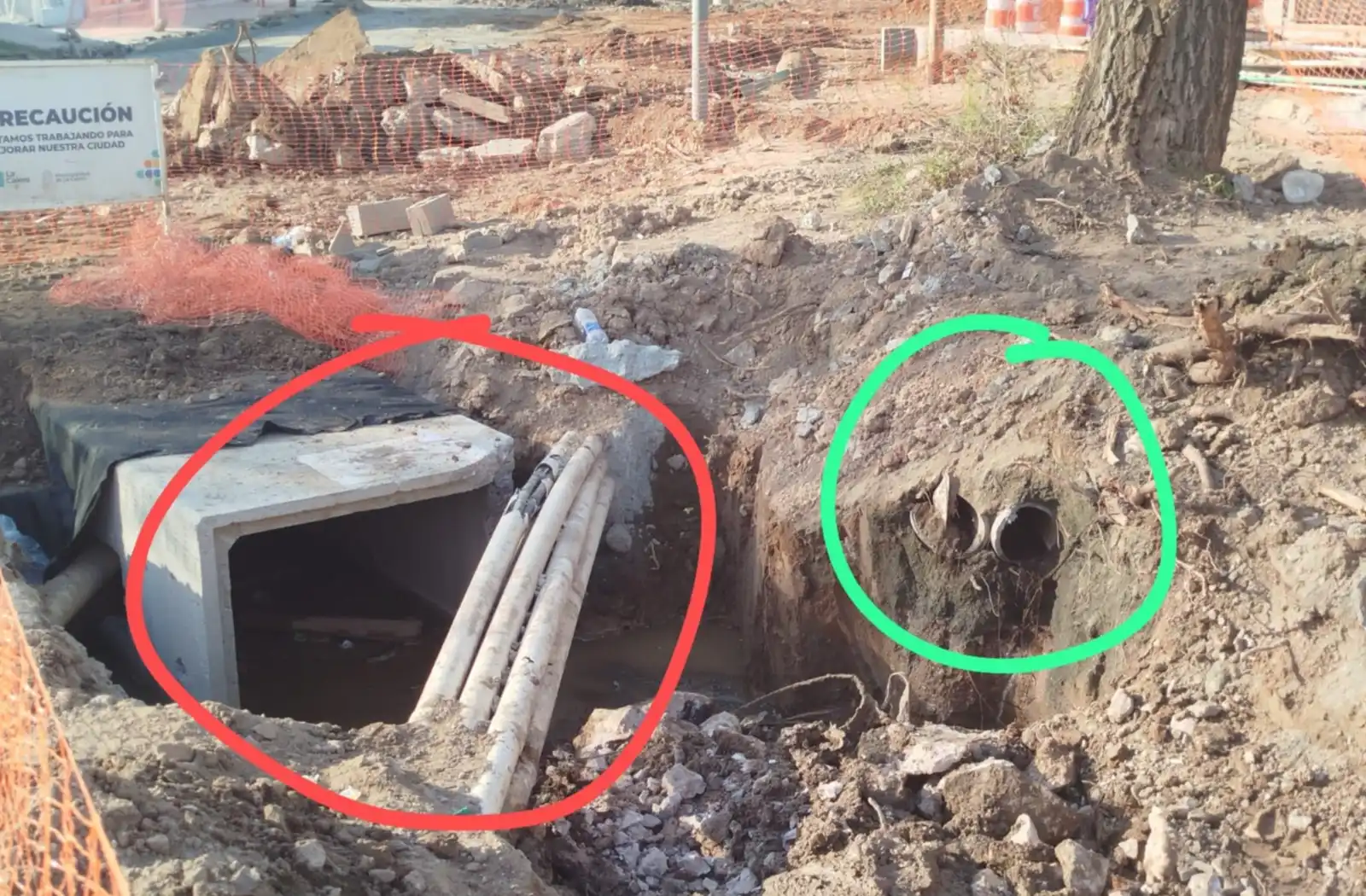
The new project replaces that system with a single conduit with a cross-section of one square meter, ten times the capacity of the two previous pipes. This change is not a minor technical detail: it means that the avenue will be able to absorb a significantly greater amount of water without the corner turning into a pool every time it rains.
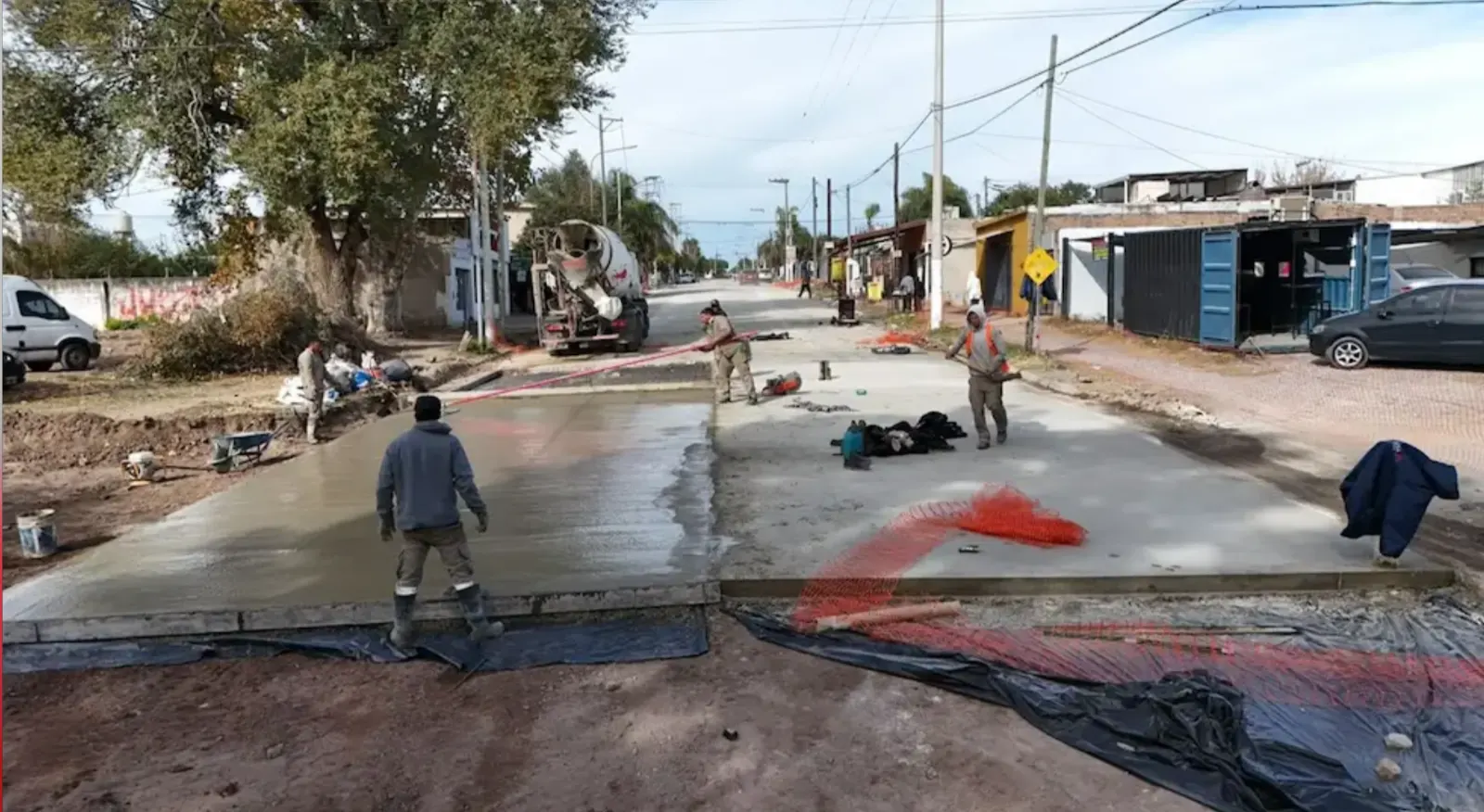
The new drainage system is part of the comprehensive repaving project of Simón Bolívar avenue, one of the most important interventions currently being carried out by the Municipality of La Calera, with an investment of over $1.180 billion and progress that has already surpassed 70% in its first two phases. The artery connects the neighborhoods of Stoecklin, Industrial, Altos de La Calera, Los Prados, and La Estanzuela with the city center, and is used daily by thousands of motorists, motorcyclists, cyclists, and pedestrians.
In green the old pipe of 0.0982 m2, and in red the new pipe installed by the new management (of 1m2, ten times more)
The usurped land that hindered the drainage of Simón Bolívar
Before being able to advance with the new drainage system, the Municipality had to resolve another inherited problem: a 147-square-meter plot reserved since the design of the Stoecklin neighborhood specifically for that stormwater project. This is a non-buildable space —the regulations require a minimum of 250 square meters to build— which, by its very nature, could never have been sold, ceded, or handed over to a private individual.
However, that land ended up in private hands: according to the municipal investigation, it was allegedly handed over in 2010 to a family from the city as supposed payment of a debt by previous authorities, who irregularly assigned it a water account number and fees, without any documentation supporting that operation on public property. The family, according to that same investigation, acted in good faith and ended up being a victim of a deception orchestrated by the municipal government itself.
When the drainage work was about to begin, the land was fenced off to prevent its continuation. The Municipality removed the fencing in protection of the public interest, and in response, the land was closed off again, this time with a wall. In light of this usurpation, the municipality has already requested the Provincial Cadastre to remove the lot from private ownership, arranged for the regularization of the irregularly assigned accounts, and initiated actions to determine responsibilities, including potential criminal charges.
The management of Fernando Rambaldi has been making corrections to the infrastructure of La Calera, and the work on Av. Simón Bolivar is the truest reflection of this
Av. Simón Bolívar: Less than 5 centimeters of asphalt on an uncompact base
As the concrete work on Av. Simón Bolívar progressed, municipal technical teams confirmed what residents had been suffering for years: the previous pavement had sections of less than 5 centimeters in thickness and lacked the minimum compaction required for a main avenue that daily accommodates thousands of vehicles, including heavy and passenger transport.
For a road of these characteristics, technical standards demand a structural package several times larger, so that project was doomed to break from day one: this explains why the avenue was destroyed a few months after each "repair" and why today the work is slowed down, as it was necessary to remove and redo what should never have been executed that way. And it raises a question that the residents of La Calera have the right to have answered: if a budget was allocated, certified, and paid for an avenue, and what appeared under the machines was a thin layer of asphalt on an uncompact base, where did the difference go?
Between minimal asphalt, undersized pipes, a poorly oriented chamber, and public land usurped for over a decade, Simón Bolívar avenue ended up summarizing much of the old practices that previous administrations left unresolved. Where there used to be a corner that flooded every time it rained, today there is a project that multiplies its drainage capacity by ten; where there was land closed off with wires and walls to halt progress, today there is infrastructure designed for the thousands of neighbors who cross that avenue every day, and where the asphalt had less than 5 centimeters, today it has over 20 cm of concrete, a project intended to last and to respect the efforts of taxpayers.