Bessent also asserted his willingness to take risks in certain financial operations and stated that he has an advantage over those trying to anticipate the decisions of the U.S. Treasury.
“People can say that the Secretary of the Treasury is taking a risk, but, well, that’s my dream. I have asymmetric information and now the house is me,” he stated during his presentation at the Cox School of Business.
The U.S. Secretary of the Treasury, Scott Bessent, defended the use of his agency's balance sheet as a tool of foreign policy and cited the intervention made to defend the Argentine peso against the attacks from the Kirchnerist opposition during last year's legislative elections as a central example.
During a conference at Southern Methodist University in Texas, Bessent explained that the U.S. strategy aims to strengthen alliances in the continent and stated that Argentina was the first case where this approach was applied.
He suggested that the Donald Trump administration believed that the policies of President Javier Milei were solid and that the opposition was using financial markets to generate fear.
“Our foreign policy objective is to create allies in the Americas. Argentina was the first example of that, and I was convinced that the Milei government had solid policies and that the opposition was using capital markets to create panic and cause a currency crisis,” Bessent said.
The official also explained the logic behind U.S. assistance during the electoral campaign. “We believed it was possible to build a bridge during the elections and for the U.S. government to make money and for President Milei to cross to the other side and win,” he indicated.
The financial support was realized in October of last year, before the legislative elections, through a currency swap line of up to USD 20 billion. The assistance was channeled through the Exchange Stabilization Fund (ESF) and arrived at a time of pressure on the exchange rate, limited international reserves, and uncertainty prior to the elections.
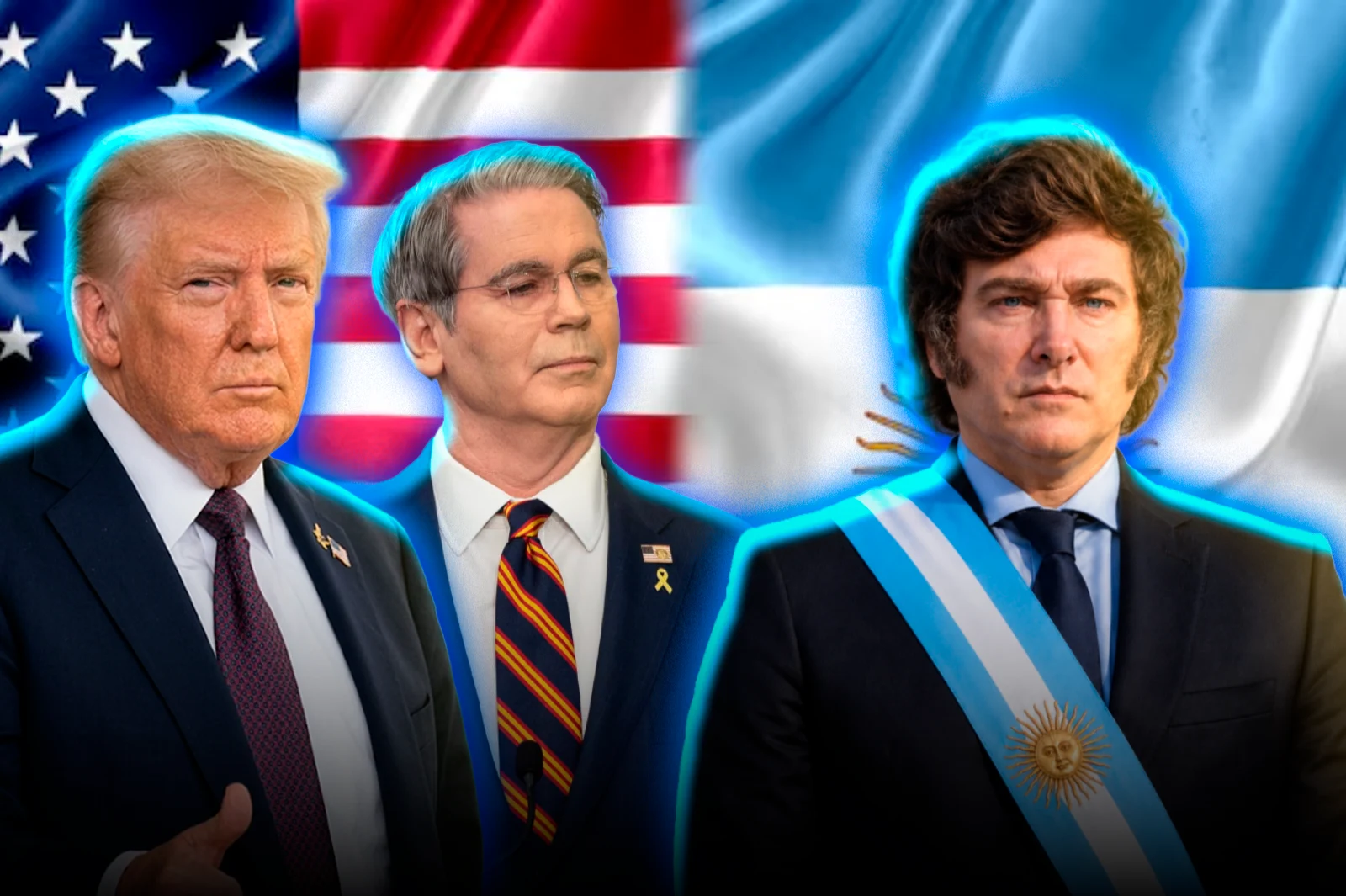
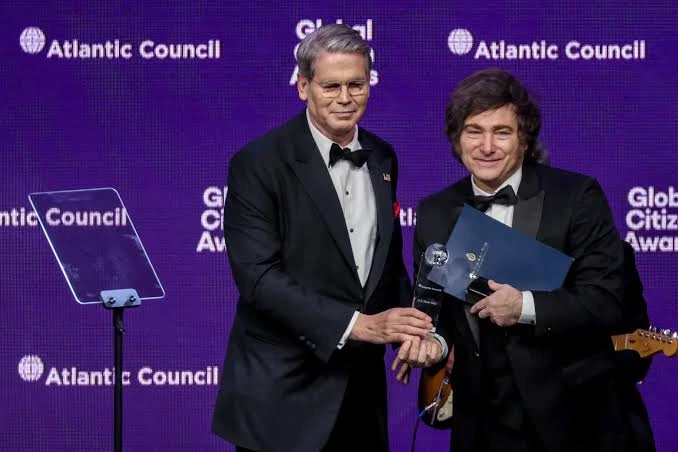
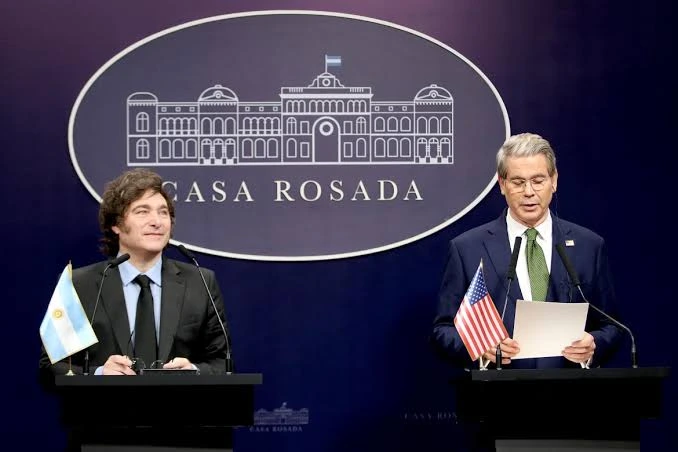
Javier Milei and Scott Bessent
The official linked this strategy to the political changes occurring in various countries in Latin America, mentioning Chile, Colombia, Ecuador, and Bolivia.
Javier Milei and Scott Bessent
Bessent's Praise for Milei
In that same vein, days ago, during a meeting of G20 finance ministers held in Asheville, North Carolina, he praised Milei's economic program.
“Argentina is leading a historic opportunity in the Western Hemisphere,” he emphasized. “If we analyze in detail the last election of President Milei, we see that the poorest sectors of society and the youth —who previously leaned towards the left— gave him their support. So, as you mentioned, we are seeing changes in Argentina, Bolivia, Colombia, Chile, and Ecuador, and I believe we will see many more similar cases.”
However, U.S. support has been questioned in Washington. A report from the U.S. Congress released earlier this year raised doubts about the magnitude and characteristics of the financial assistance to Argentina and described it as an unusual intervention within U.S. financial policy.
Bessent also presented his view on global economic competition and stated that there are three competing models: the growth promoted by the United States, which he placed alongside Latin America and Japan; the European model; and China's state economy. “In 20 years we will see that it was the U.S. model that won,” he asserted