When left-wing terrorism attacked the Azul garrison in the midst of democracy
Compartir:
By Maffuche Santiago, for La Derecha Diario.
The myth that the guerrilla and terrorist organizations that ravaged our country in the 1970s only exercised violence in contexts whose nature was dictatorial has been banished.
In fact, the reality that Juan Domingo Perón achieved a vote share that exceeded 60% in the 1973 elections didn't in the slightest remove the insurrectionary plans of those who wanted to impose, through force and violence, a homegrown Castro-style government. That is to say, they cared little about democracy and they didn't hesitate to continue with their criminal actions.
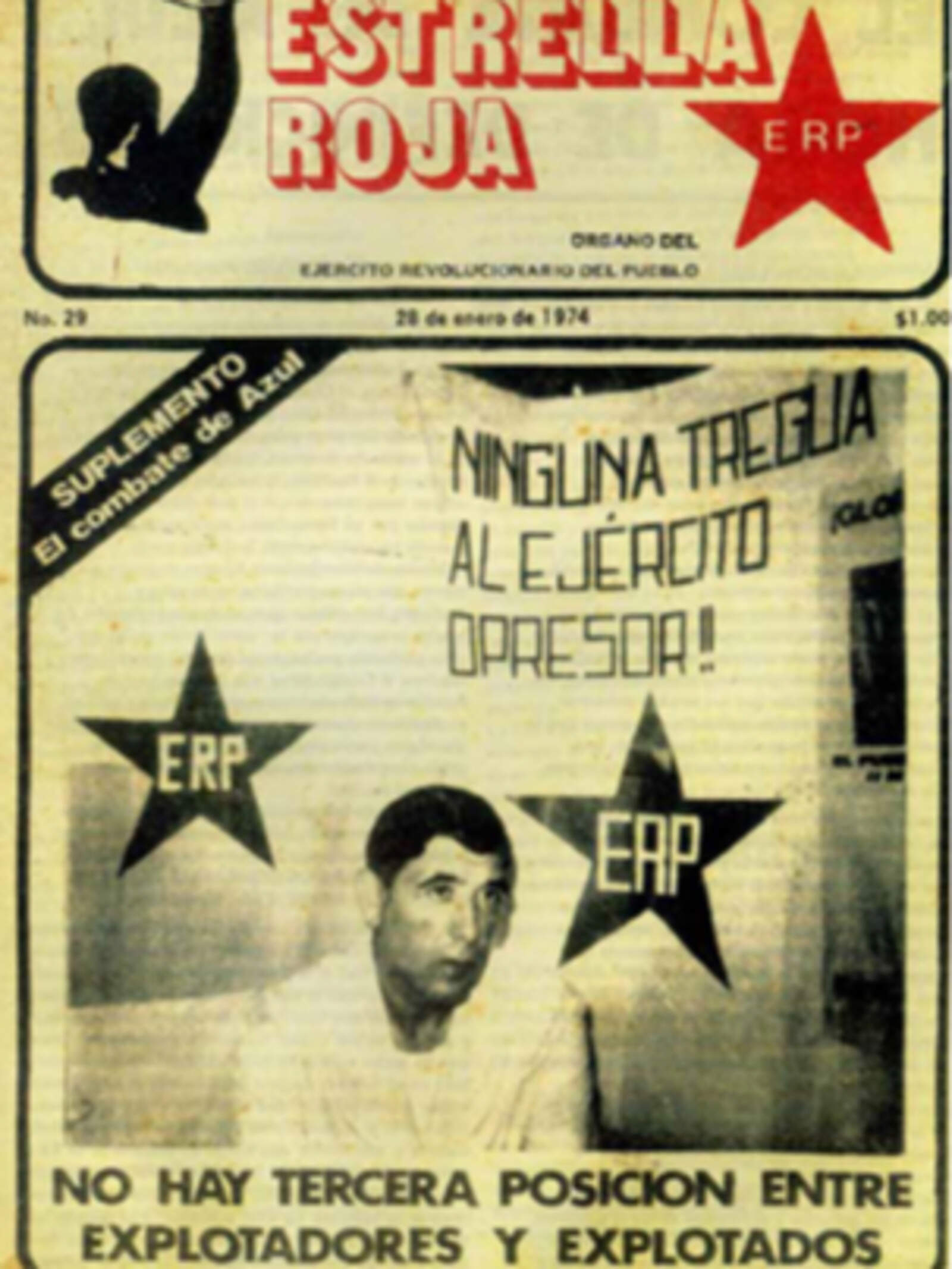
The year 1973 represented the change in vision of the Ejército Revolucionario del Pueblo, with its Guevarist and Marxist impetus, where, in parallel with smaller-scale armed actions such as disarming officers in the streets, isolated murders and bank robberies, the major actions would be added: attacking the heart of the Argentine army.
El ataque a la guarnición militar de Azul.
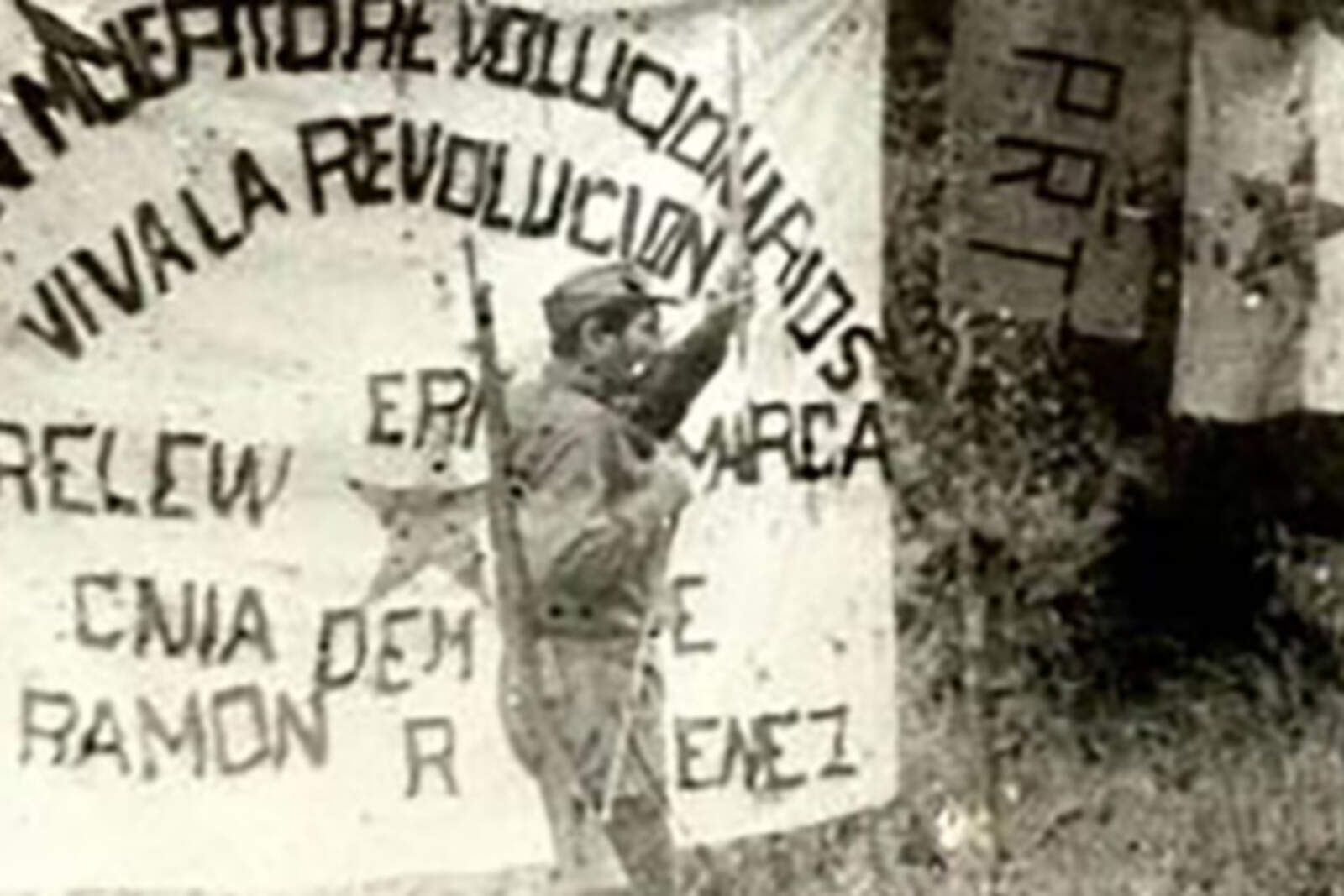
In this regard, on the night of January 19, 1974, the company "Héroes de Trelew," made up of about a hundred ERP guerrillas, attacked the military garrison of Azul, in the province of Buenos Aires, which contained Armored Cavalry Regiment 10 and Armored Artillery Group 1. It was at that time one of the most powerful garrisons in the country.
The operation, whose aims were to steal weaponry and kidnap the high command, was commanded by Enrique Gorriarán Merlo. Before the attack, they occupied a house located nearby, they "subdued" the caretaker and they set off in a convoy with three trucks, in uniform and divided into groups.
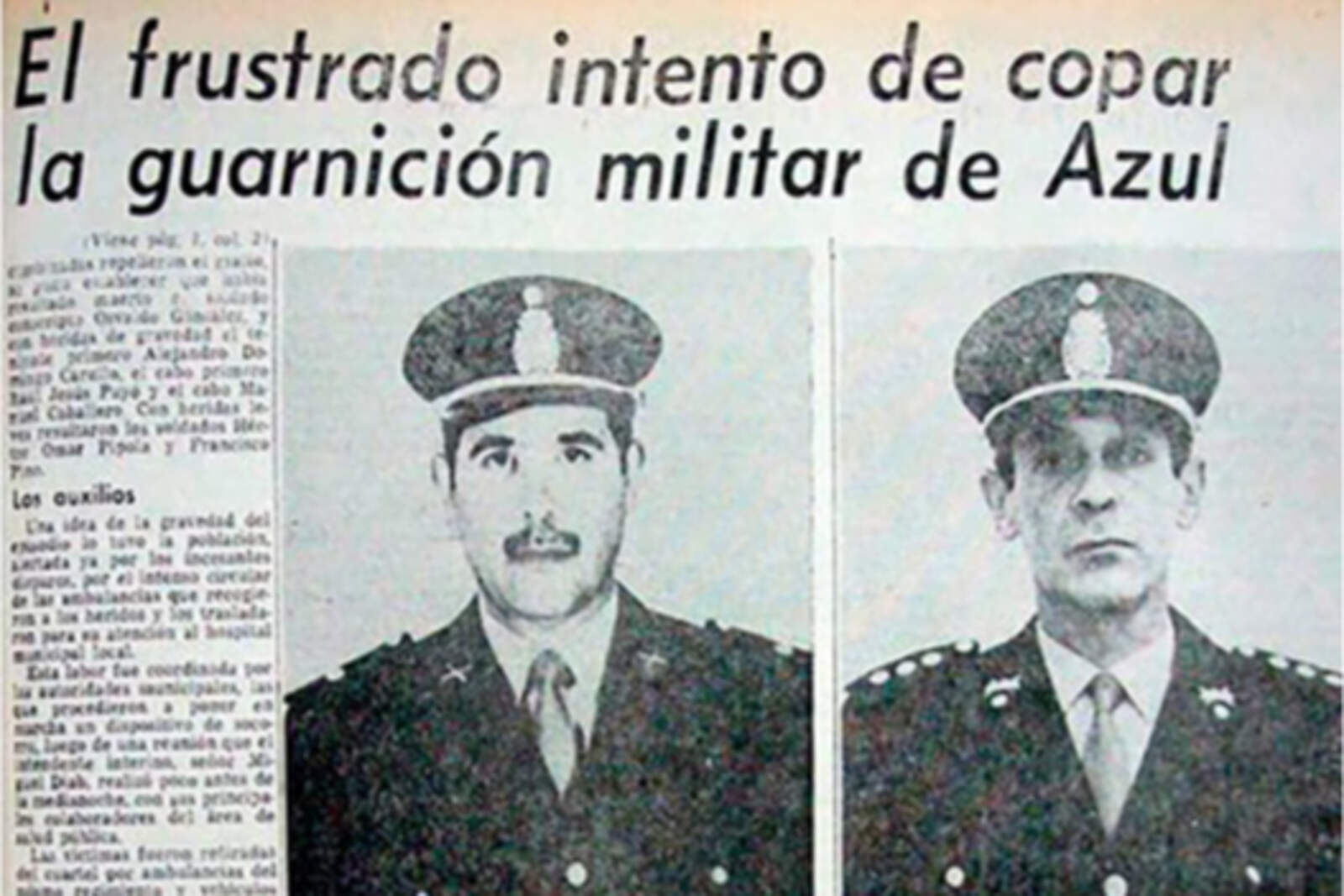
When they burst into the barracks and murdered the guard, the gunshots and unusual movements caused the head of the garrison, Colonel Camilo A. Gay, and the head of the Artillery Group, Lieutenant Colonel Jorge R. Ibarzábal, who lived nearby, to come together to defend themselves.
They were intercepted by the strikers, the first was murdered and the second was kidnapped. They also murdered Colonel Gay's wife before the eyes of their small children, whom they had kidnapped in the Blacksmithing section, thus leaving them, at that very moment, without their father and without their mother. Two guerrillas killed and two others missing were added.
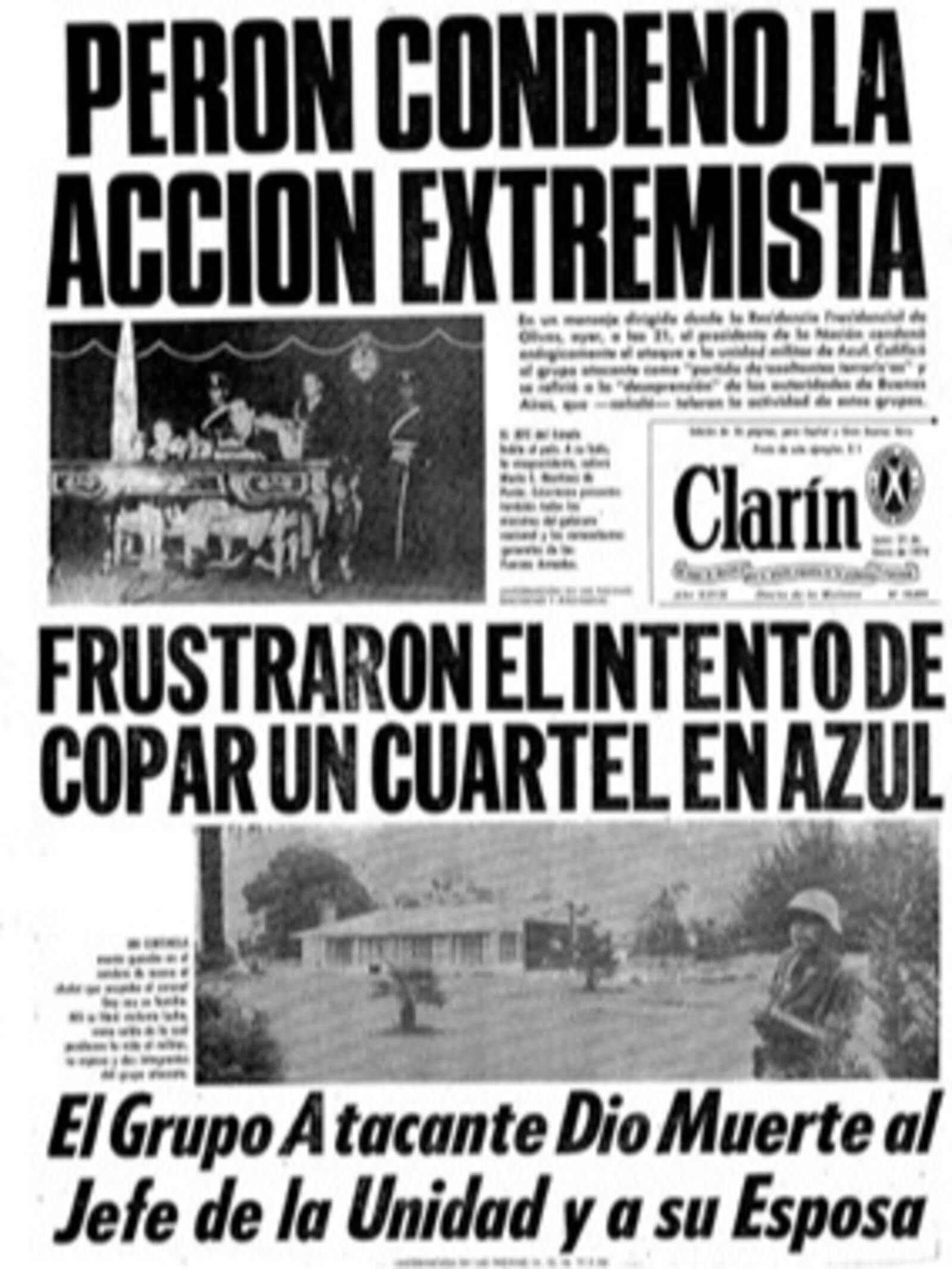
The attack was a failure, it represented the unanimous condemnation of the political spectrum and, in addition, it facilitated the approval of a reform of the Penal Code sent by the ruling party in order to increase the penalties for those who attacked the institutions.
El ataque a la guarnición militar de Azul.
On January 20, an enraged Perón spoke on radio and television dressed in his general's uniform. He accused the Buenos Aires governor Oscar Bidegain of "culpable tolerance," a fact that forced him to submit his resignation. He also sent a harsh message: "To annihilate this criminal terrorism as soon as possible is a task that concerns everyone."
Supporting the personnel of the military garrison, he addressed a letter to them stating that "the small number of psychopaths who remain will be exterminated one by one for the good of the Republic." There were no metaphors.
El Ejército Revolucionario del Pueblo.
Colonel Ibarzábal remained captive in an ERP "people's prison." Ten months after the attack, during a police checkpoint several guerrillas were intercepted, one of them proceeded to open the metal cabinet placed on a small flatbed truck, where they had the colonel tied up, and to murder him. He weighed 35 kilos (77.2 pounds).