The Minister of Economy, Luis "Toto" Caputo, anticipated that the 2027 Budget project that the Government will present to Congress includes, for the fourth consecutive year, a financial surplus.
The official made the statement during an event of the Argentine Republic Exporters Chamber (CERA), where he also defended the main measures implemented by the administration of Javier Milei.
“We will be presenting a financial surplus for the fourth consecutive year; it will be the first time in our history that, not being in default, there will be four consecutive years of financial surplus,” Caputo stated before the audience of exporting businessmen.
The minister also emphasized the importance of the fiscal result achieved by the Government. “To give you an idea of the relevance of this, it will be the first time in history that -not being in default- a Government in Argentina has four consecutive years of fiscal surplus in the financial line,” he added.
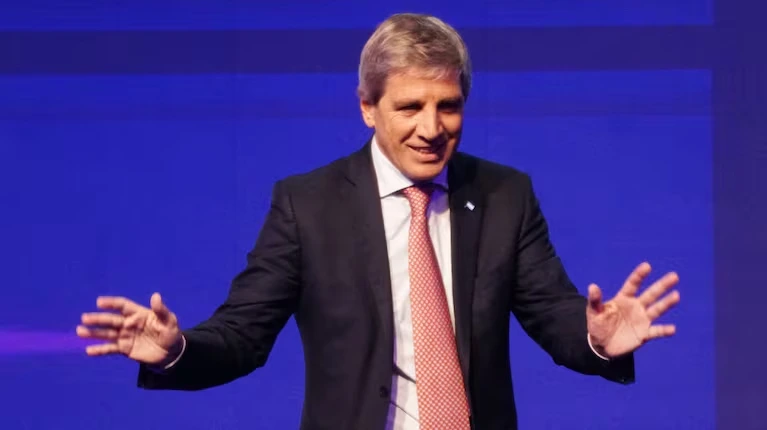
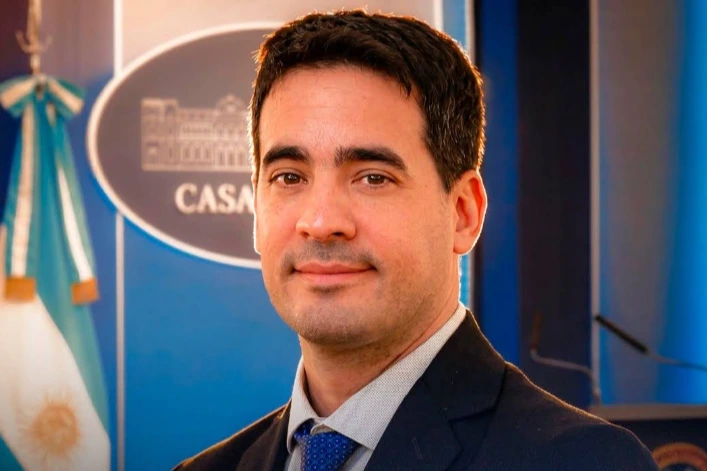
Luis "Toto" Caputo
The statements were made this Tuesday during the event for the Export Day 2026, held at the Palacio Libertad. The meeting included the participation of Foreign Minister Pablo Quirno and will also feature the presence of the Minister of Deregulation and State Transformation, Federico Sturzenegger.
Caputo stated that Argentina has a president willing to move forward with his economic program. “This is the first time we have a president who has the courage to carry out these policies,” he noted. In this regard, he assured that the results obtained are extraordinary and defended respect for contracts and private property.
“There is no doubt that we are on the right path, but I want to emphasize that we did it for the first time respecting private property and the sanctity of contracts,” he assured.
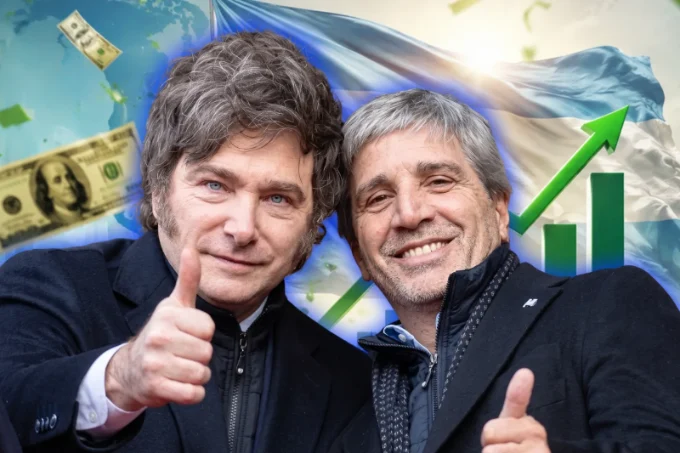
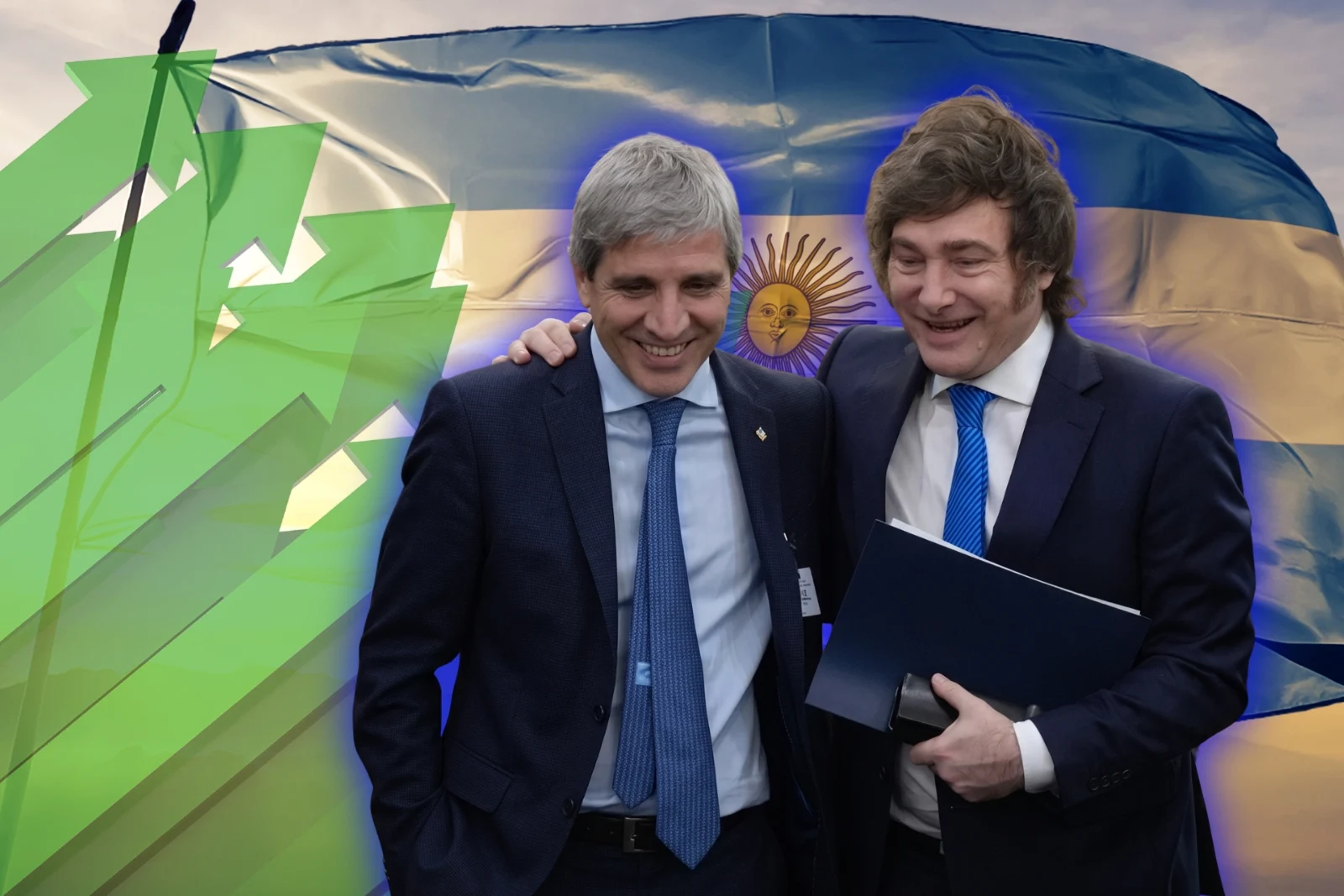
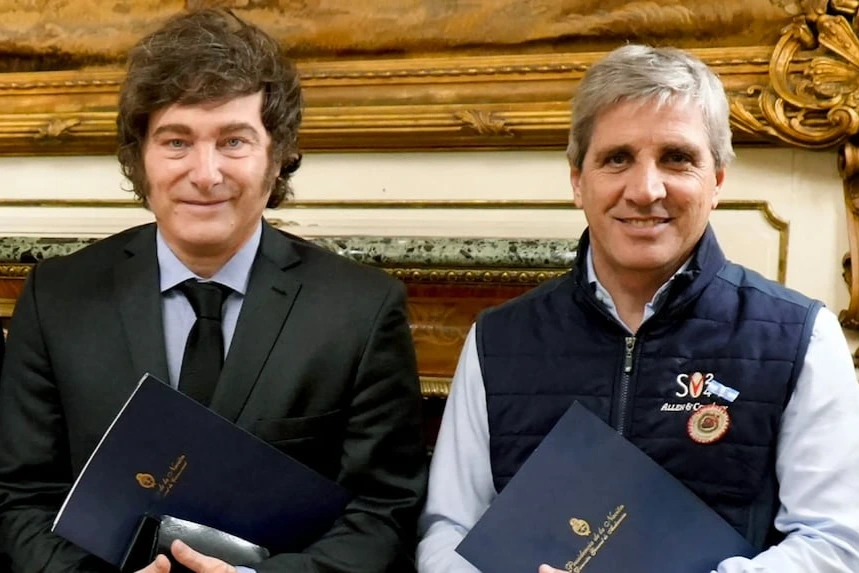
Javier Milei and Luis Caputo
Tax Cuts and Deregulation
Regarding exports, the minister highlighted the reduction of taxes and regulations, along with the decrease in financial costs and investments in infrastructure.
“What did we do to generate an export boom? We eliminated and reduced various taxes, eliminated and reduced 17,000 regulations, significantly reduced financial costs, and are strongly improving infrastructure,” he emphasized.
He also stated: “We opened markets for more than 3.5 billion human beings,” and mentioned the elimination of export duties for regional economies, reductions in withholdings, and lower tariffs on more than 1,000 items.
According to Caputo, tariffs for capital goods dropped from 12% to 2%, while those for cell phones fell from 16% to zero. In parallel, he stated: “We are at record levels in export quantities.”
The official rejected the notion that growth is concentrated solely in energy and mining, pointing out increases in primary products, agro-industrial manufactures, industrial manufactures, fuels, and energy.
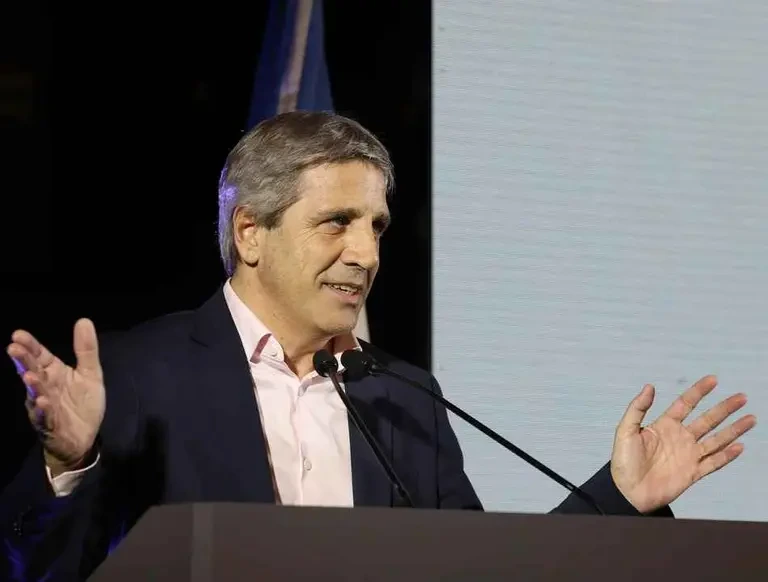
Luis "Toto" Caputo
“What is happening in energy, mining, and agriculture helps the rest of the industries,” he affirmed. For Caputo, the foreign exchange generated by these sectors contributes to “exchange order, stability [and] predictability.”
The minister also called for greater private sector participation through investments and suggested that the economic scenario requires moving beyond the predominance of financial placements.
“There is no longer a financial business; now there has to be a real business,” he expressed. He then added: “The private sector needs to invest.”
During his presentation, he also questioned the prices of certain products in the Argentine market. “It is morally unjust that 48 million Argentines have to pay any product two, three, four, or ten times the value that it has in any neighboring country,” he said.
Finally, Caputo compared the economic program to the opening of Shenzhen in China, stating: “Change Shenzhen for Argentina, and that is exactly what we are doing.”
Referring to the adjustment, he reiterated the importance of respecting contracts and private property: “The most valuable thing we have done is that we managed to do this while respecting the sanctity of contracts, without trampling on private property.”
Lastly, he ruled out increasing spending in light of the electoral scenario of 2027 and quoted Milei: “Populism cannot be fought with more populism; it must be fought with more orthodoxy.” “We will continue to do things right. And that is what we will keep doing,” he concluded.