The highest criminal court demands in-person hearings without recess in order to move forward against K corruption
Nuevo
Agregar La Derecha Diario en
Compartir:
The Federal Criminal Cassation Chamber made the decision to intervene actively to accelerate the oral trial for the Cuadernos de las Coimas case, the largest corruption case in Argentine history, which has among its main defendants Cristina Fernández de Kirchner and 86 other accused individuals, including former officials and Kirchnerist businesspeople.
The court, composed of Daniel Petrone, Gustavo Hornos, Ángela Ledesma, Carlos Mahiques, and Mariano Borinsky, summoned the judges of Federal Oral Court No. 7 to a meeting on November 18, with the aim of defining concrete measures to "provide effectiveness, efficiency, and speed" to the process.
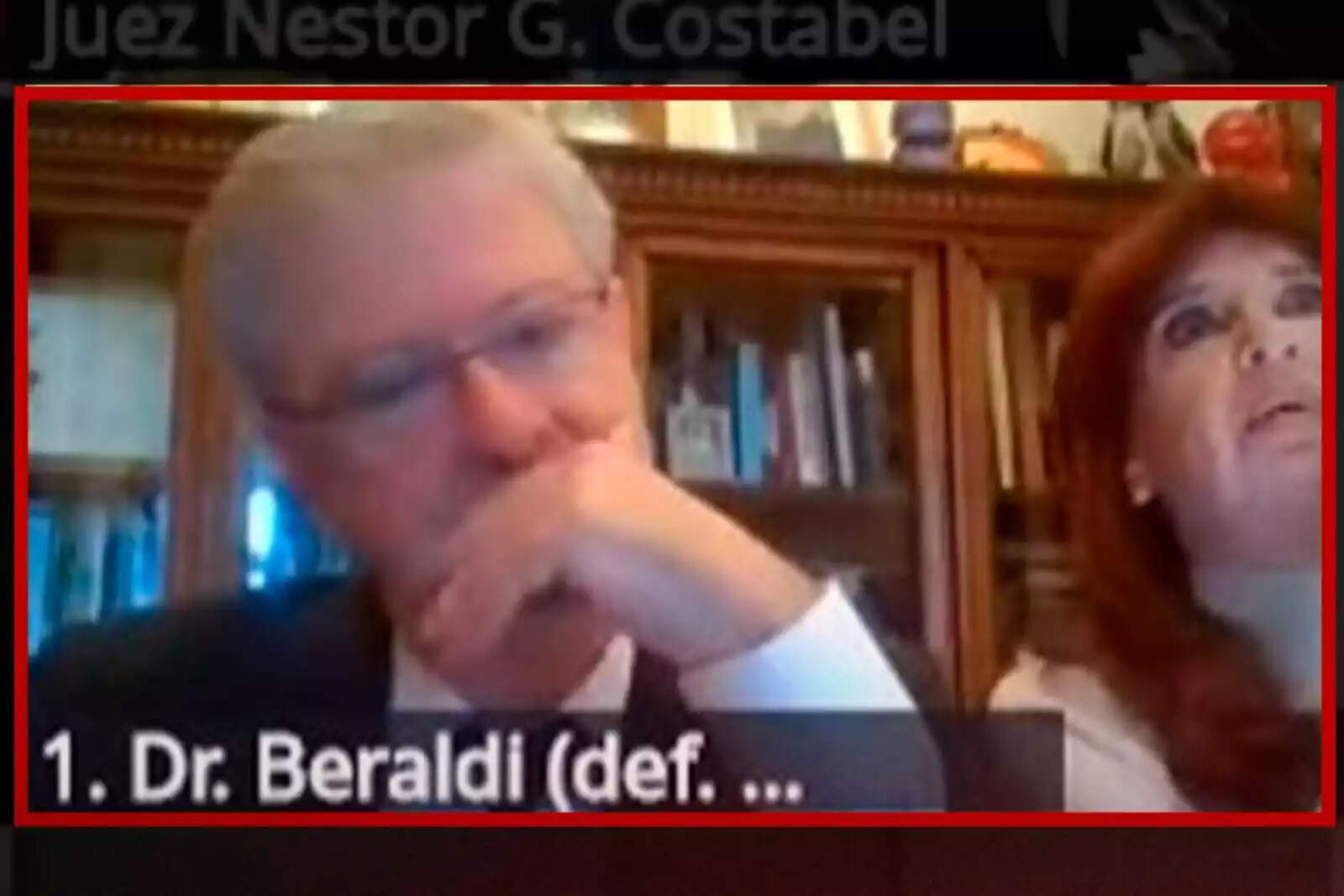
Cfk en conferencia.
Among the proposals is increasing the frequency of hearings, which until now have been held only on Thursdays, moving them to an in-person format and eliminating the summer judicial recess, a measure that would prevent months of paralysis in a case that has faced years of delays.
The appellate judges agree that the current pace of the trial—limited to one weekly session via Zoom—is incompatible with the magnitude of the case. For this reason, they are considering using the new AMIA courtroom at Comodoro Py, recently remodeled, with capacity for 200 people and equipped for public broadcasts. If the work is completed by the end of the month, up to three hearings per week could be held there.
The judges of TOF 7, Enrique Méndez Signori, Germán Castelli, and Fernando Canero, must agree with Cassation on the logistical and administrative adjustments to implement the changes, while also determining the possibility of continuing the proceedings during January.
The decision comes just one week after the hearings began, on November 6, with 87 defendants and their attorneys connected via Zoom. The reading of the first indictment—corresponding to the first section of case file 9608/2018, signed by prosecutor Carlos Stornelli—will require several more sessions: the document exceeds 225,000 words and its reading could extend until the end of the year if the frequency is not increased.
Cristina Kirchner, charged as the head of the illegal fundraising structure that operated from the Ministry of Planning, also faces other judicial proceedings for corruption, including the Vialidad case and the money laundering trial in Los Sauces and Hotesur, in which she has already been convicted in the first instance or remains under investigation.
Cristina Kirchner, condenada por corrupción.
The reading of the first indictment—corresponding to the first section of case file 9608/2018, signed by prosecutor Carlos Stornelli—will require several more sessions: the document exceeds 225,000 words and its reading could extend until the end of the year if the frequency is not increased.
If Cassation manages to impose the new schedule, the Cuadernos trial could finally move forward at the speed the country has demanded for more than five years.