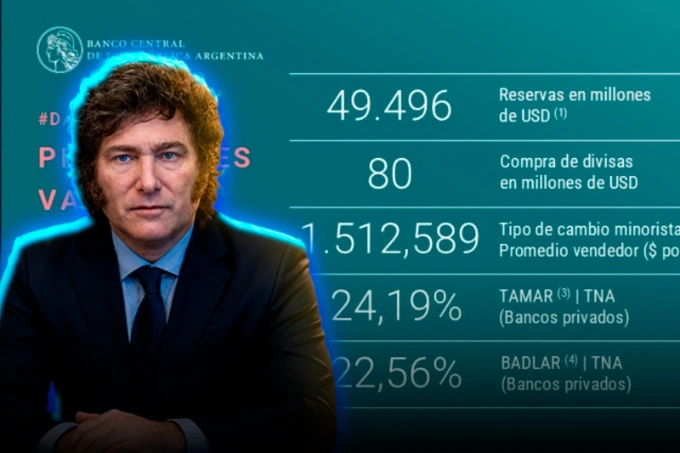

In this virtuous scenario of financial sanitation, the Central Bank of the Argentine Republic (BCRA) recorded an outstanding milestone during the day by acquiring the impressive amount of US$ 80 million for its reserves. This purchase represents the highest amount so far in August, consolidating a spectacular accumulation of US$ 329 million for the month.
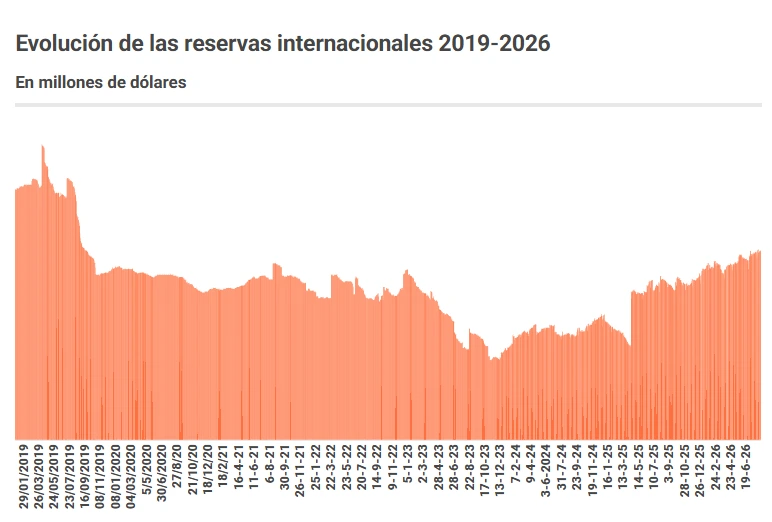
The change in trend is undeniable: the BCRA masterfully takes advantage of the sharp decline of the greenback to absorb foreign currency without putting pressure on exchange rates in the currency market. With these successful operations, the current management is decisively moving towards the ambitious goal of adding US$ 10 billion anticipated by the specialist Daza.
Stability and confidence were clearly evidenced by the collapse of the currency's exchange rates. The wholesale dollar ended the session with a decrease of 4.50 pesos or 0.3%, closing at an absolute floor of $1,487.50, which meant a cumulative compression of 11 pesos throughout the week and placing it at its lowest value so far this month.
In this regard, the prominent operator of ABC Currency Market, Nicolás Merino, detailed that “towards the end it couldn't hold that level and decompressed to reach a minimum of $1,487.50, the price at which the wholesale dollar finally closed. In addition to being the intraday minimum, it became the lowest value of the month”.
For its part, the retail dollar followed this victorious downward trend by discounting five pesos or 0.3% of its value, trading at just $1,510 on the screens of the Banco Nación, also returning to its minimum levels since July 31.
Additionally, the official exchange gap demonstrated the solvency of the model: the limit of the floating exchange rate bands set at $1,860.62 left the official exchange rate at a distance of 373.12 pesos or 25.1% from that ceiling, consolidating the widest gap since May 29.

Complementing this productive rebirth, the administration of Economy Minister Luis Caputo took a crucial step towards full deregulation of credit by easing the granting of foreign currency bank loans for companies, allowing them to use up to 15% of their dollar deposits.