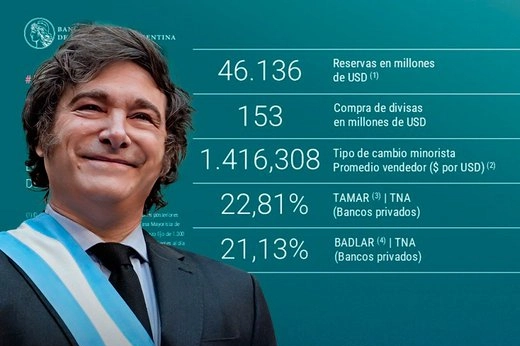

In a scenario of recovering international trust, the Central Bank of the Argentine Republic (BCRA) has achieved a fundamental milestone by surpassing 82.34% of its annual foreign currency purchase target for the current year. This achievement is supported by an unprecedented reserve accumulation strategy, which added a new positive chapter this Monday by incorporating USD 153 million after operating in the Free Exchange Market (MLC).
With this result, the entity has achieved a historic streak of 89 consecutive days with a net purchase balance, a clear testament to the effectiveness of the new monetary scheme implemented since January. Since the beginning of the year, the monetary authority, led by Santiago Bausili, has accumulated purchases totaling USD 8.234 billion. The performance has been consistent, with April standing out as the month with the highest activity, with acquisitions reaching USD 2.769 billion.
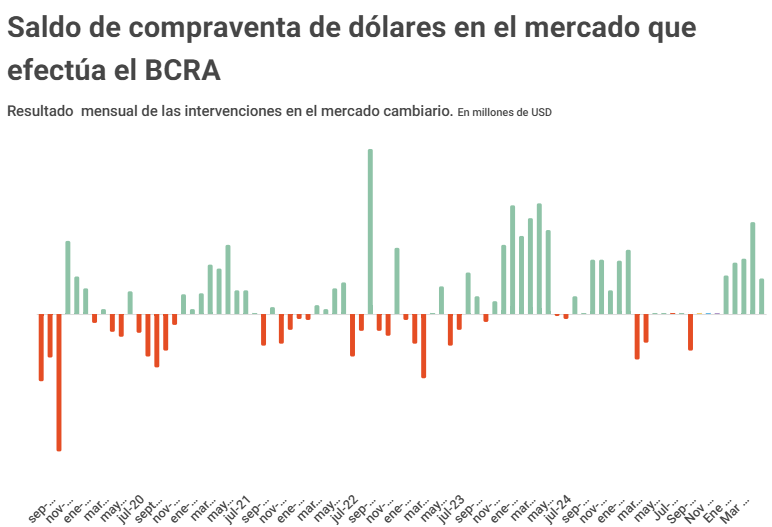
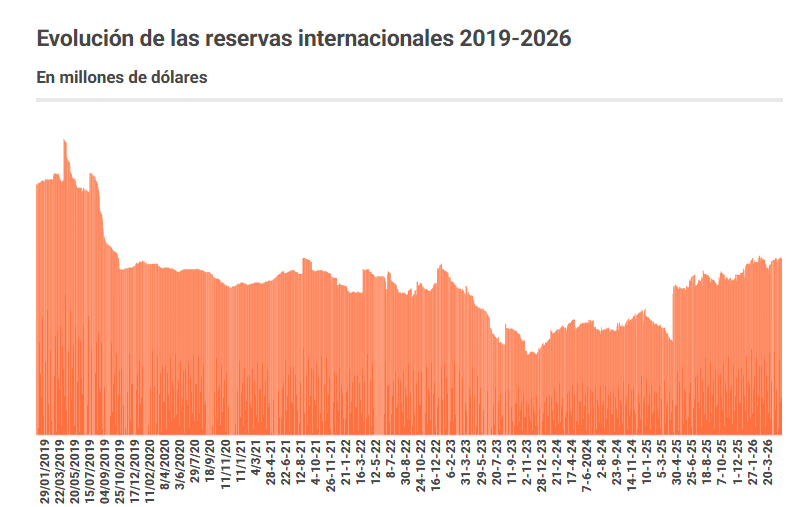
Just during the past week, the BCRA managed to absorb USD 596 million, raising the provisional total for May to USD 1.079 billion, consolidating the upward trend. At the close of the last trading day, international reserves stood at USD 46.136 billion, maintaining levels of solidity not seen since 2018, when in February the peak of USD 46.905 billion was reached.
This process of stabilization has been carried out through a mechanism of surgical precision: the BCRA issues pesos for the purchase of foreign currency without the need for direct sterilization, while the National Treasury fulfills its role by absorbing liquidity surpluses through the issuance of debt in local currency.
This synergy aims not only to contain inflation but also to neutralize any pressure on the exchange rate. Official projections are extremely optimistic, anticipating a net purchase balance for 2026 of between USD 10 billion and USD 17 billion, depending on domestic demand for pesos.