Additionally, the government seeks to promote the reconstruction of regions affected by fires and natural disasters through new funds for housing, infrastructure, and support for small and medium-sized enterprises. The plan also includes subsidies to protect formal employment and measures aimed at reducing unemployment.
President Kast personally defended the initiative and stated that Chile needs to regain economic growth, fiscal stability, and security to attract investments again. “There is no time to lose. It is time to rebuild Chile,” the president said during the official presentation of the project.
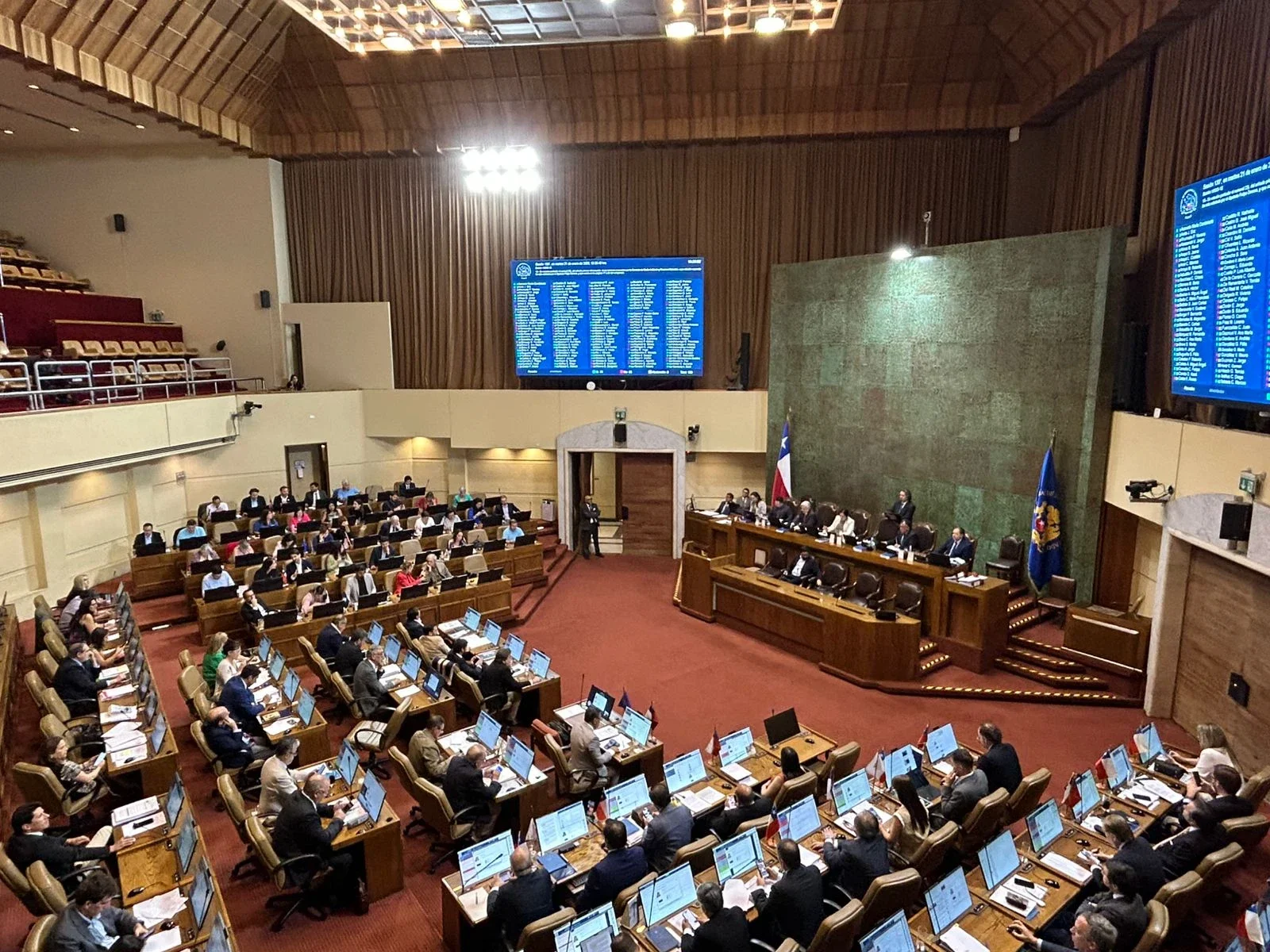
The Chamber of Deputies of Chile
From the ruling party, they maintain that the Chilean economy has gone through more than a decade of stagnation, low growth, and loss of competitiveness, a situation worsened by the political instability of recent years. The government claims that the reform will restore confidence in the private sector and generate hundreds of thousands of formal jobs in the coming years.
Furthermore, business sectors and economists close to the ruling party defended the project arguing that Chile needs to recover investment, productivity, and economic growth to avoid further deceleration.
Now the discussion will move to the Senate, where Kast's government will face more complex negotiations due to the balance of parliamentary forces. Nevertheless, the progress of the reform represents an important political victory for the ruling party and strengthens the economic agenda promoted by the Chilean president.
The government of Chilean President José Antonio Kast achieved one of its greatest legislative victories since taking office after the Chamber of Deputies approved the so-called “National Reconstruction Plan,” an ambitious mega economic and social reform that will now be debated in the Senate.
The project is considered the main political and economic bet of the conservative administration to reactivate growth, boost investments, and address the economic deterioration accumulated over the past years.
The initiative was approved with 90 votes in favor, 59 against, and one abstention, far exceeding the initial expectations of the ruling party and demonstrating the government's ability to build parliamentary agreements even without having its own majority.
President Kast with Javier Milei
The project includes more than 40 economic, tax, and social measures aimed at accelerating the Chilean economic recovery and promoting formal employment.
Among the most important points is the gradual reduction of the corporate tax from 27% to 23%, tax incentives for new investments, simplification of bureaucratic permits, and elimination of contributions for seniors on their primary residence.