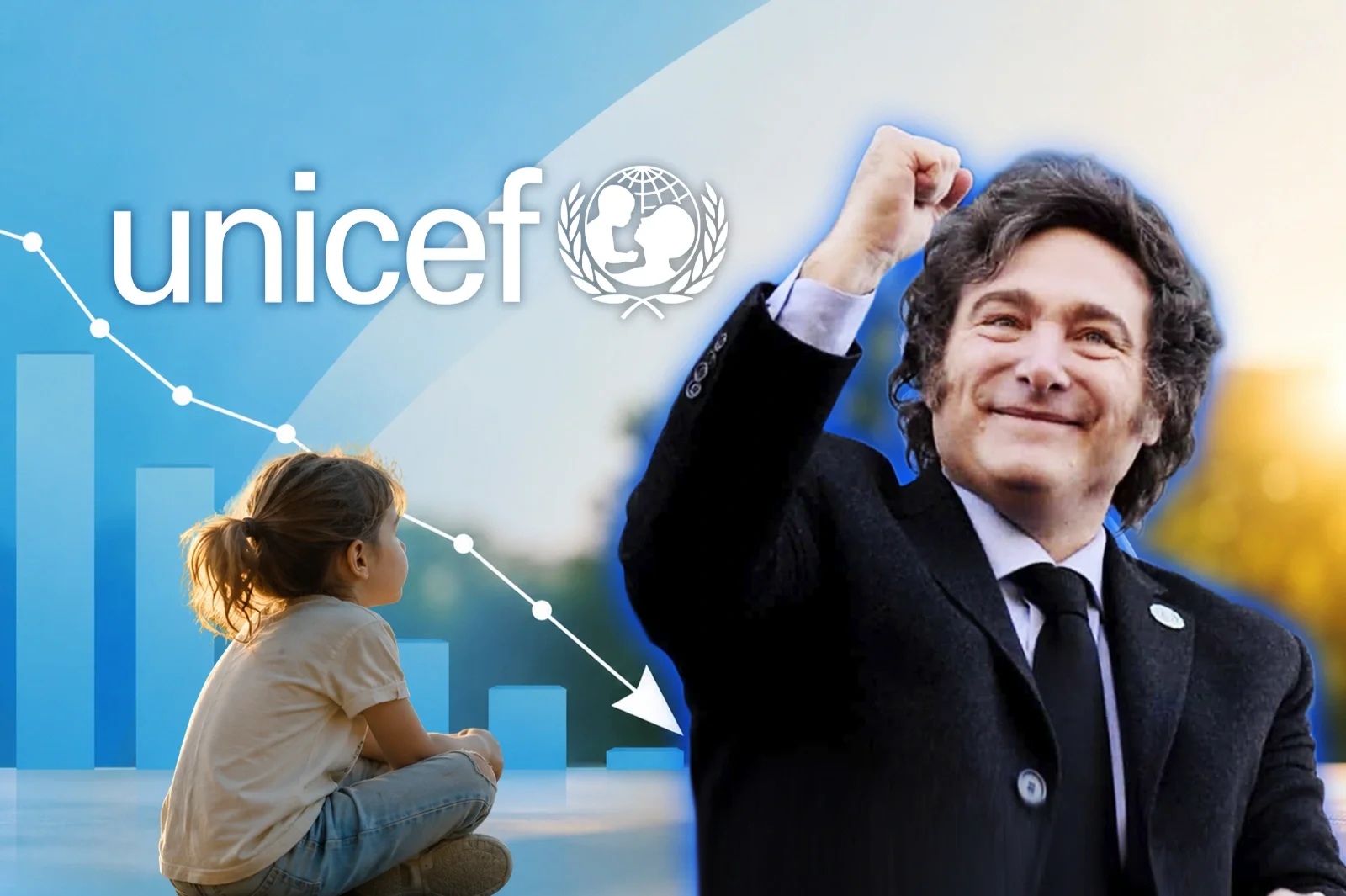
Child poverty in Argentina showed a huge drop during 2025 and reached its lowest level since 2018, according to a report released by UNICEF Argentina.
The study placed the rate at 42.3% during the second half of last year, reflecting a significant reduction compared to previously recorded levels, thanks to the successful economic plan of the Government of Javier Milei.
The report, titled “Monetary poverty and deprivations related to rights in children. Argentina 2016-2025”, evidenced a sustained decline over the past year, allowing more than 1.3 million children and adolescents to stop living in poor households. In absolute terms, the figure fell from 6.3 million in 2024 to 5.1 million by the end of 2025.
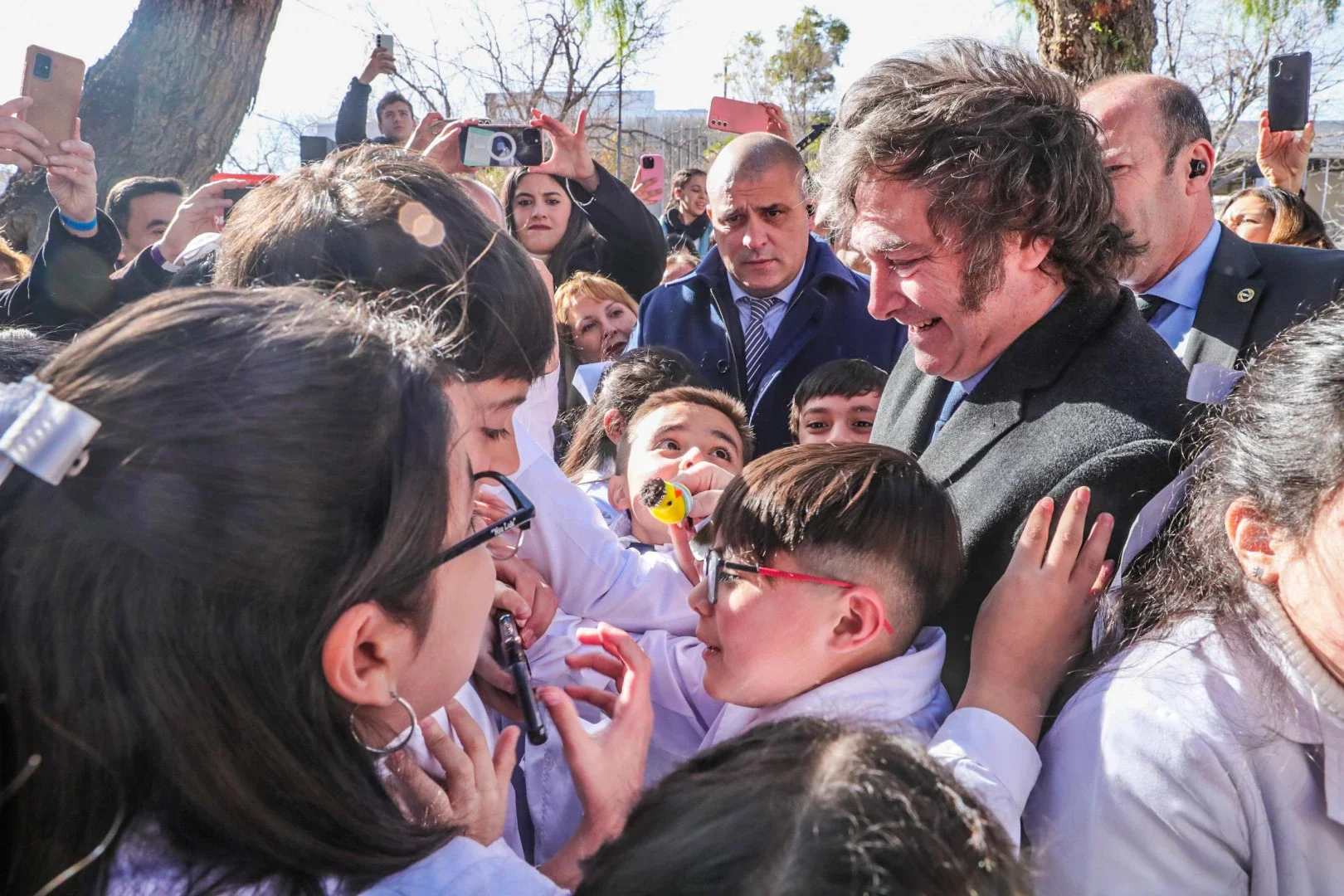
President Javier Milei
The improvement was also reflected in the levels of child indigence. According to the study, the indicator fell to 9.4%, which equates to 1.1 million minors in households whose income is insufficient to cover the basic food basket, much less than what was recorded in previous years.
This progress is even more significant when compared to the most critical point of the recent series. During the first half of 2024, child poverty had escalated to 67.1%, while indigence reached 27.3%.
At that time, around 8.1 million children lived in poor households and 3.3 million in conditions of extreme vulnerability.
Since that peak, the recovery has been remarkable under Milei's Government. Nearly three million children and adolescents managed to escape poverty, and more than two million left behind indigence, marking a significant reversal of the deterioration caused by Kirchnerism.
President Javier Milei
The report also highlights that child poverty remains higher than that of the overall population. While the general rate stood at 28.2% in the second half of 2025, among those under 18 it reached 42.3%. A similar difference is observed in indigence, with 6.3% for the total population compared to 9.4% in childhood.
Despite this structural gap, the document emphasizes that the improvement recorded in the last year managed to reduce the incidence of the phenomenon in all segments, consolidating a positive trend after the previous severe deterioration.
Vulnerable Sectors
In parallel, the study identified the sectors where poverty continues to concentrate with greater intensity. Among children living in households with a very low educational climate, the incidence reached 68.8%, while in popular neighborhoods it reached 68.3%. The situation becomes even more critical when the main economic support of the household is unemployed: in those cases, poverty rises to 74.8%.
The evolution of family incomes, the behavior of basic baskets, the labor market, and social transfers will be decisive in sustaining this trend.
In this context, the data from 2025 marks a turning point after the previous crisis, with a recovery that is already translating into millions of children who managed to escape poverty.