

Fate's shutdown is not a surprise for those who warned that an industrial scheme artificially sustained by tariffs, import restrictions, and constant pressure for a favorable exchange rate was sooner or later going to collapse. What for years was defended as "protection of national industry" ended up revealing itself for what it was: a model dependent on the State.
The company, controlled by Javier Madanes Quintanilla, was one of the main beneficiaries of Argentine protectionism. Every time trade liberalization was discussed, the company warned about "unfair competition" and demanded protectionist measures to shield the domestic market. The problem is that shielding is not the same as strengthening.
Completely absurd tire prices
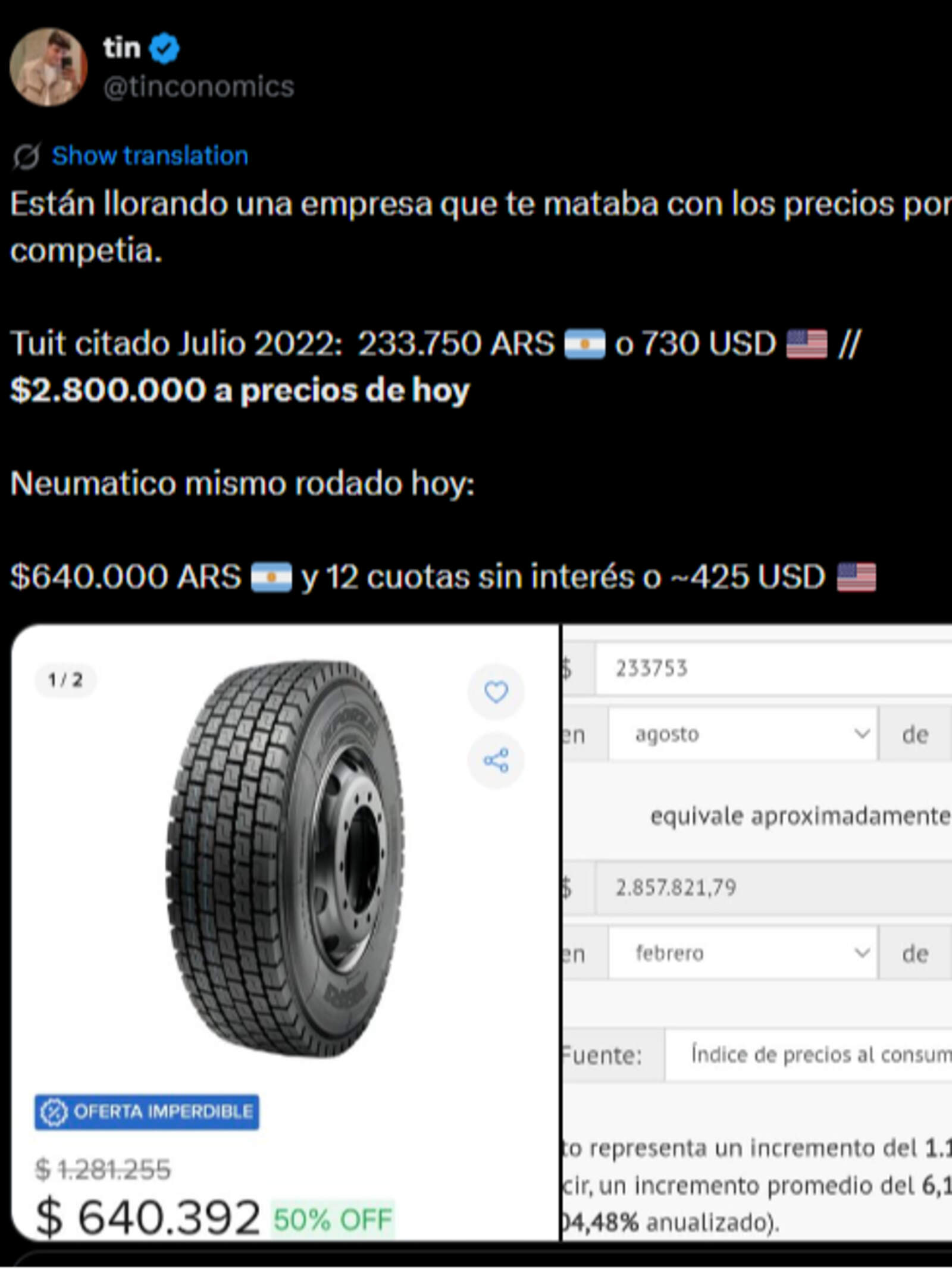
For years, tires in Argentina were sold at prices far higher than in neighboring countries. In many cases, a set of tires doubled or tripled the regional price. The lack of effective competition made it possible to sustain high margins in a practically captive market.
When more imported products with lower prices and equivalent quality began to enter, the structural weakness of the model became evident. Trade liberalization did not destroy an efficient company: it exposed that it was not one.
Industrially unviable without protection
The core of the problem was the lack of real competitiveness. An industrial company that can only sustain itself behind high tariffs is not solid: it is vulnerable.
While the global tire industry advanced in automation, cost reduction, and international scale, Fate remained focused on the protected domestic market. It did not build a significant export position or develop lasting comparative advantages. It bet that the regulatory framework would continue to shield it.