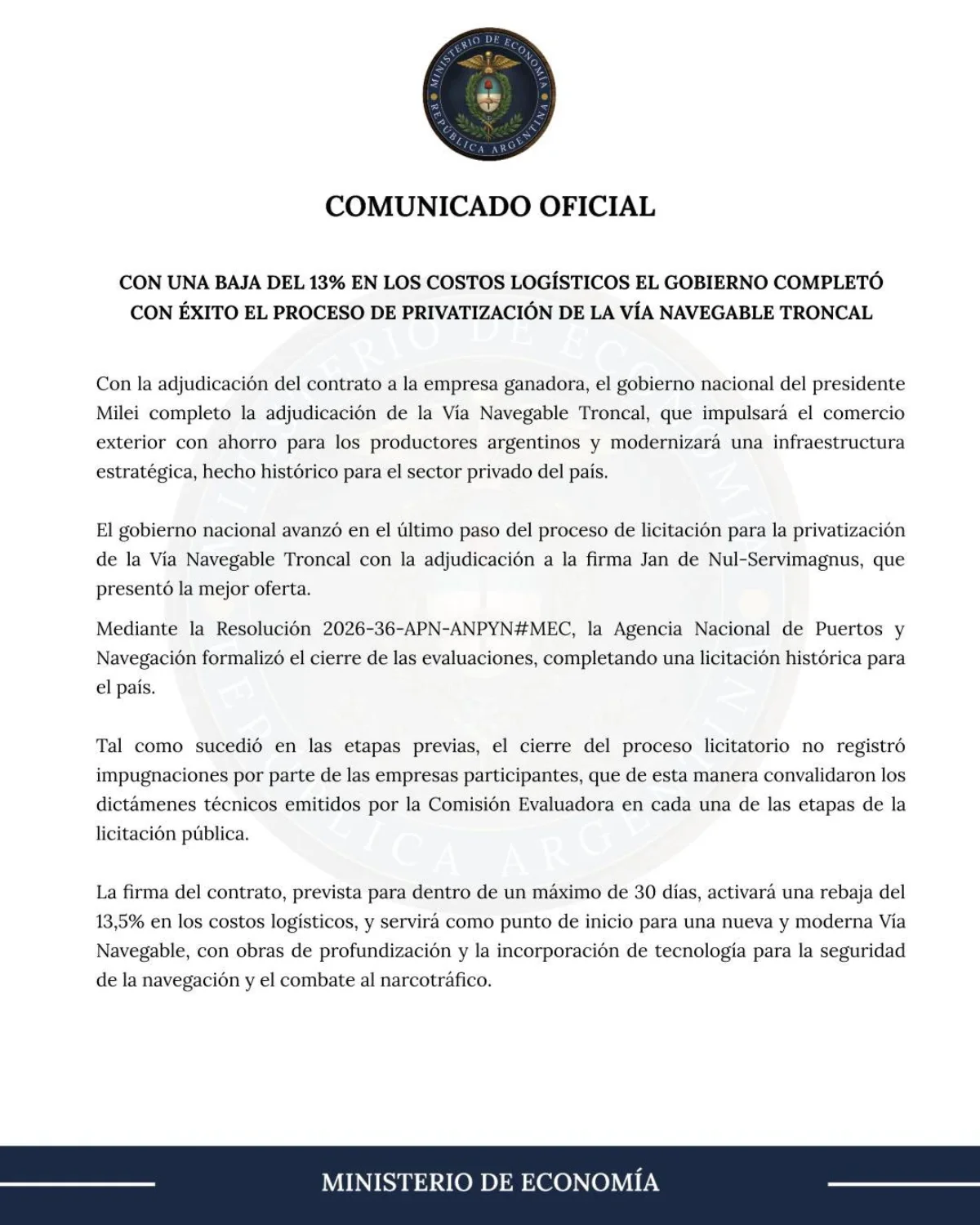
The Ministry of Economy emphasized that the closure of the bidding process did not register any challenges from the participating companies. Thus, the companies validated the technical opinions issued by the Evaluation Commission at each stage of the public tender.
The government of President Javier Milei successfully completed the privatization process of the Vía Navegable Troncal, one of the most important strategic infrastructures in the country, through which nearly 80% of Argentine foreign trade circulates. This measure marks the end of a stage of inefficient state management and opens a new phase based on private investment, logistical efficiency, and greater competitiveness for productive sectors.
According to an official report from the Ministry of Economy, the National Agency of Ports and Navigation formalized the award to the firm Jan de Nul-Servimagnus, which submitted the best offer in the bidding process. The decision was established through Resolution 2026-36-APN-ANPYN#MEC, which concluded the technical and administrative evaluations of the tender.
Fragment of the statement issued by the Ministry of Economy
One of the central points of the announcement is that the signing of the contract, scheduled to take place within a maximum period of 30 days, will trigger a 13.5% reduction in logistics costs. For the Government, this will have a direct impact on production, industry, and exports, as it will allow ships to complete loading at origin ports, reducing overall costs and strengthening Argentine competitiveness.
The project also includes deepening the navigable waterway and incorporating technology aimed at improving navigation safety. Additionally, the Ministry highlighted that modernization will strengthen control and combat tools against drug trafficking, a key point in a river route of enormous commercial and strategic relevance.
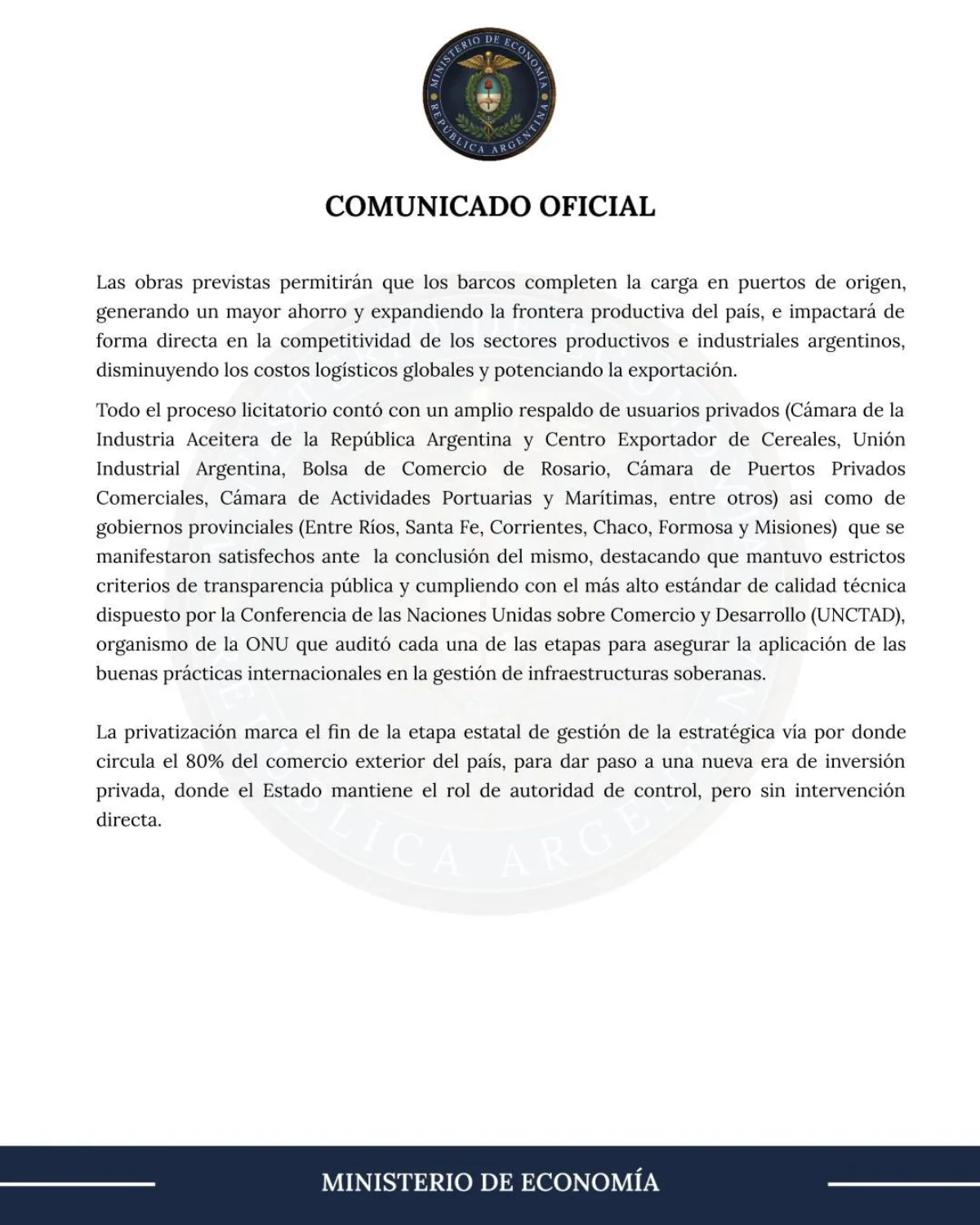
Fragment of the statement issued by the Ministry of Economy
The procedure also had the support of private users, including the Chamber of Oilseed Industry of the Argentine Republic, the Exporter Center of Cereals, the Argentine Industrial Union, the Rosario Stock Exchange, the Chamber of Private Commercial Ports, and the Chamber of Port and Maritime Activities.
Furthermore, provincial governments such as Entre Ríos, Santa Fe, Corrientes, Chaco, Formosa, and Misiones expressed satisfaction with the conclusion of the process. According to the official statement, the bidding maintained strict criteria of public transparency and complied with technical standards audited by the United Nations Conference on Trade and Development.