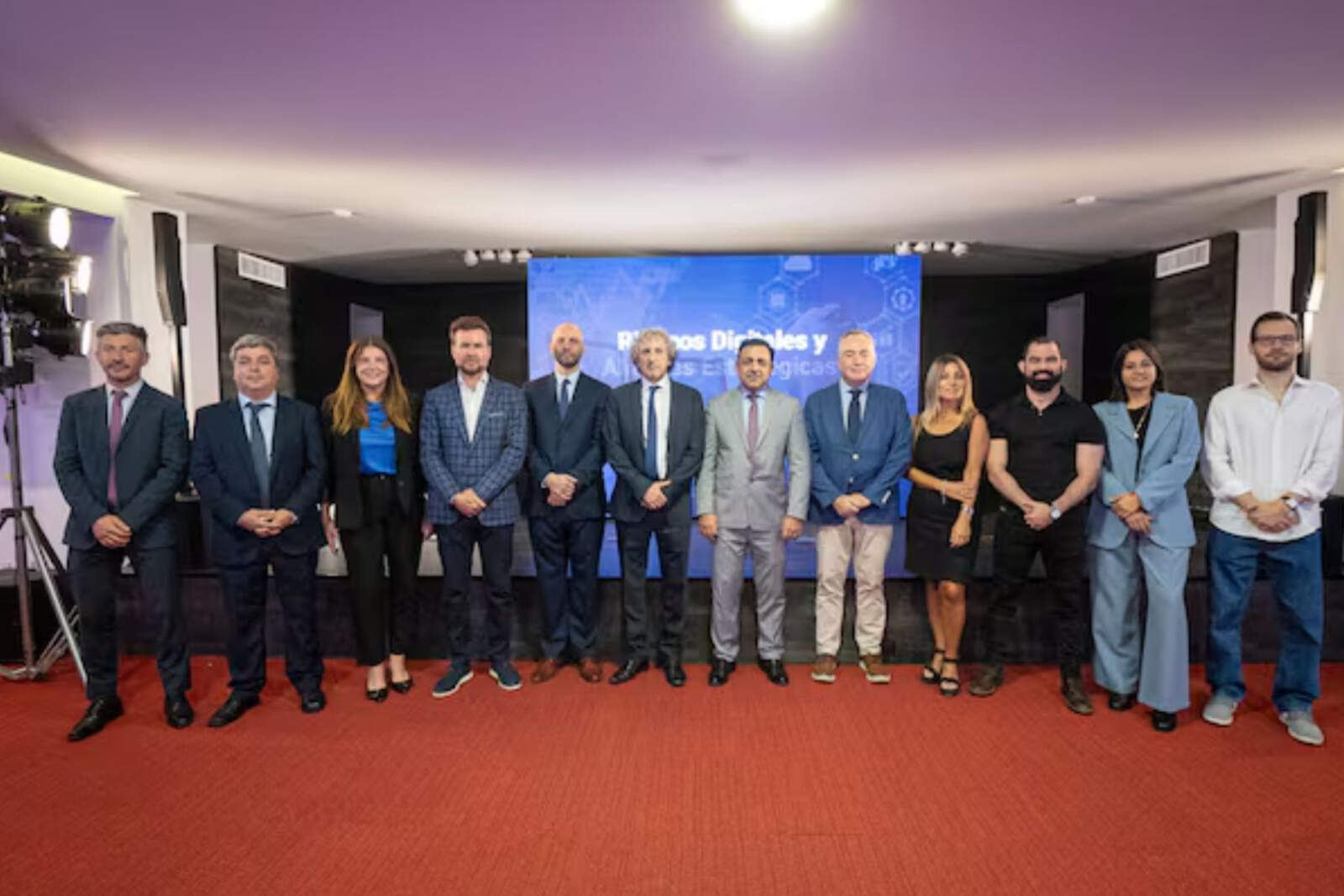
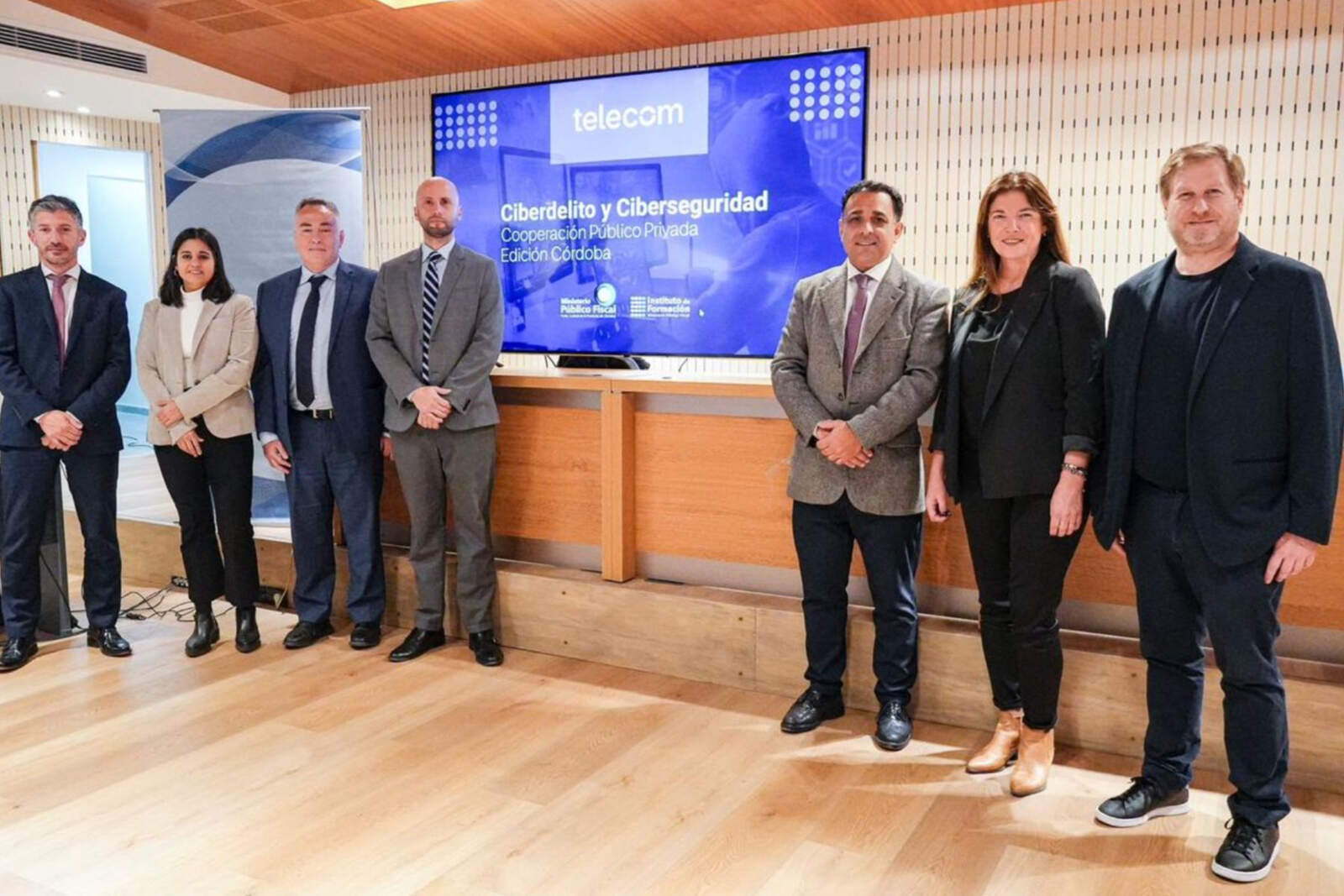
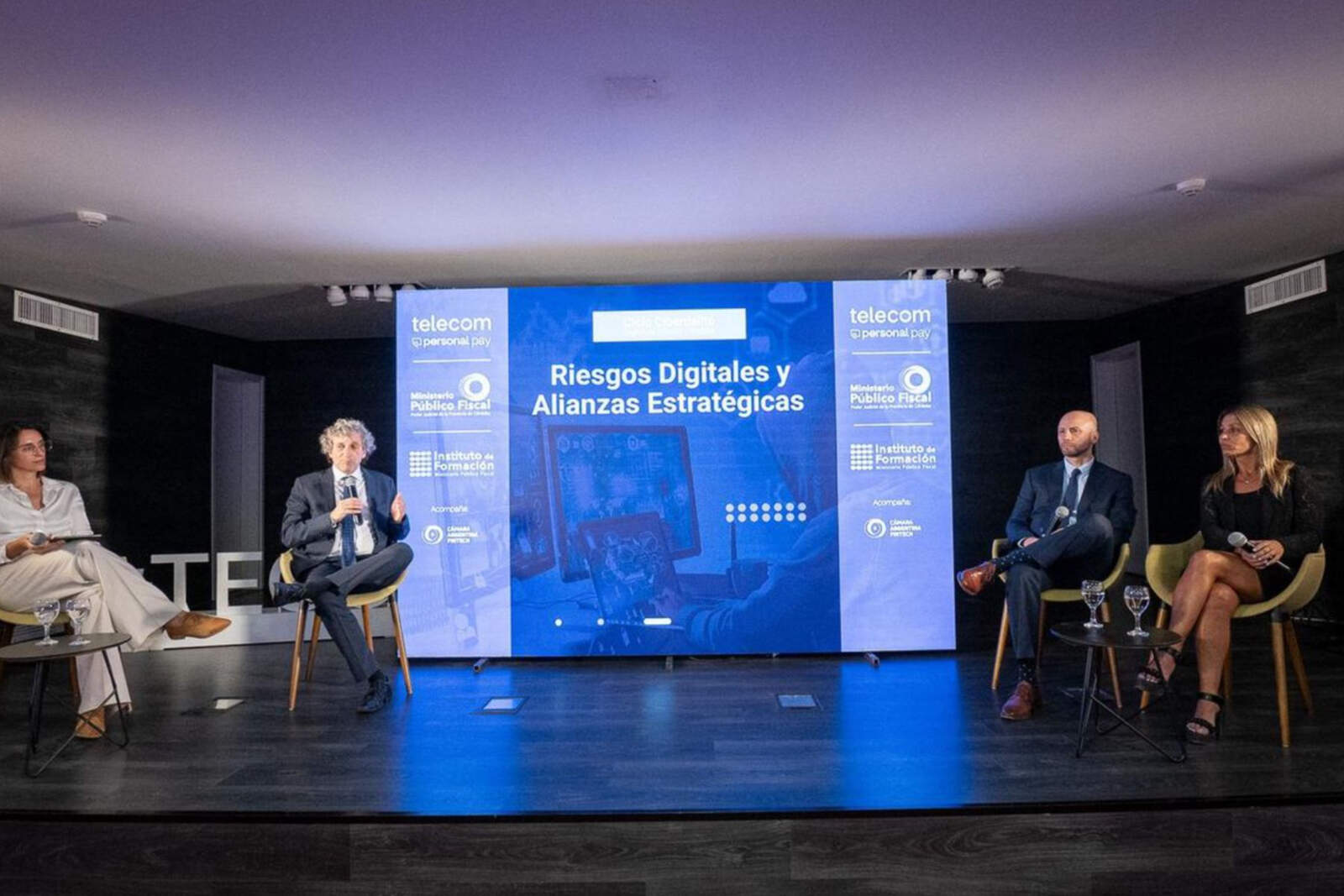
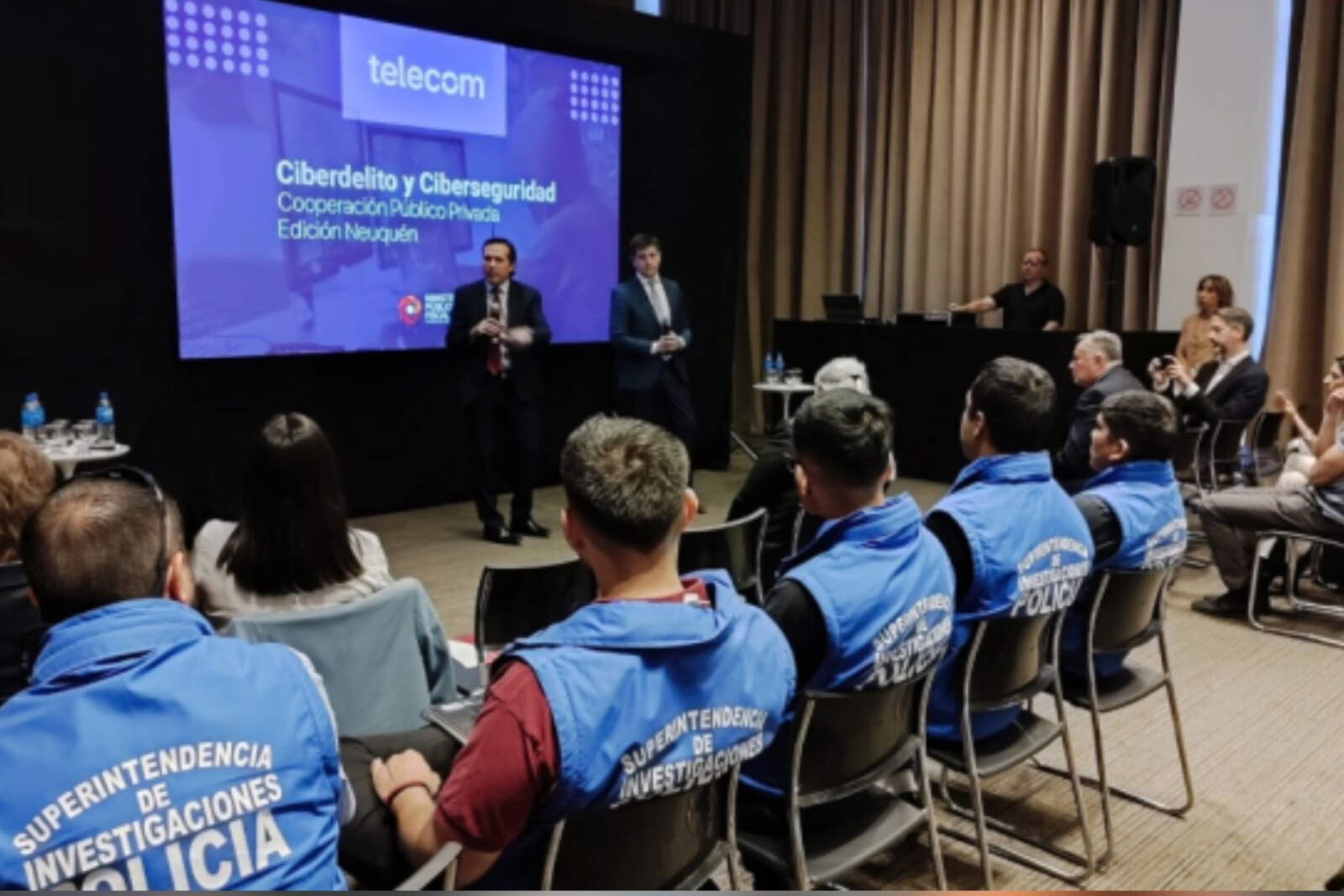
The event 'Cybercrime: digital risks and strategic alliances' brought together prosecutors and experts from the fintech ecosystem
Compartir:
Telecom and the Public Prosecutor's Office (MPF) of Córdoba held the second edition of the "Cybercrime: digital risks and strategic alliances" series. The event brought together prosecutors, security experts, and private sector leaders to discuss the new challenges of digital fraud. The session took place in Telecom's corporate auditorium, focusing on the risks of the fintech ecosystem and artificial intelligence.
During the opening, Susana Menéndez (Telecom), Juan Manuel Delgado (MPF's Attorney General), and Marcos Salt (Argentine Fintech Chamber) participated. All agreed that public-private cooperation is essential to anticipate threats and strengthen user protection. They highlighted that coordination between the justice system and companies accelerates investigations and improves the response to complex crimes.
In a context of accelerated digital transformation, the specialists emphasized that technological education and prevention are key to safeguarding individual rights. They also stressed that the justice system must adapt to an environment where cyberattacks cross borders and test the State's institutional capacity.
El evento reunió a fiscales, expertos en seguridad y referentes del sector privado para debatir sobre los nuevos desafíos del fraude digital.
Fraud, cryptocurrencies, and transnational crime
The first panel of the series addressed the investigation of financial fraud and digital crimes, with the participation of prosecutors from Córdoba and Salta. The speakers warned that cybercrime operates transnationally and requires more agile regulatory frameworks and international judicial cooperation. They agreed that Argentina's justice system faces the challenge of modernizing tools to track assets in digital and blockchain environments.
Prosecutor Franco Pilnik highlighted the importance of working with the private sector to obtain useful and real-time information. Specialist Sofía Cornejo pointed out that the traceability of financial data is key to identifying criminal structures and their money flows. Both emphasized that technological collaboration makes it possible to dismantle networks without violating user privacy.
Marcos Salt, from the Argentine Fintech Chamber, stated that new forms of digital fraud require clear regulatory frameworks without excessive state intervention. He proposed encouraging technological innovation without sacrificing security, under the premise of a balance between economic freedom and criminal responsibility.
Marcos Salt, de la Cámara Argentina Fintech, sostuvo que las nuevas formas de fraude digital demandan marcos regulatorios claros y sin exceso de intervención estatal.
Illegal gambling and institutional control
The second panel analyzed the rise of illegal online gambling and the risks of unregulated platforms. David Urreta (Córdoba Lottery), Juan Pablo Paredes (Mercado Libre), and Carolina Bertola (Telecom) participated. The speakers agreed that cooperation with the judiciary is essential to detect illicit operations that affect users and companies.
Urreta stressed that digital competition requires strengthening controls without stifling the development of the legal industry. Meanwhile, Paredes argued that electronic commerce faces a dilemma: protecting the consumer without creating regulatory overload. Both emphasized that the State must act as a referee, not as an economic actor.
Bertola highlighted the role of telecommunications in the early detection of fraud, emphasizing private investment in cybersecurity systems. She stressed that technological innovation and corporate responsibility are effective tools to curb digital crimes.
El evento dejó en claro que el ciberdelito exige coordinación entre justicia, empresas y tecnología, pero también límites a la injerencia estatal.
Judicial technology and artificial intelligence
In the third panel, MPF and fintech sector specialists presented digital tools that improve interaction between companies and the justice system. Javier Vellido (MPF's Cybercrime Office), Matías Pellegrino (Naranja X), and Sergio Piris (Telecom) participated. They explained how electronic management systems enable traceability and transparency in judicial requests.
The speakers agreed that automation speeds up processes and reduces administrative costs for the State. They highlighted that digitalization strengthens judicial efficiency without the need to expand the bureaucratic structure. They also emphasized that the responsible use of artificial intelligence improves data analysis capabilities and fraud prevention.
El cierre estuvo a cargo de Manu Hersch García (Lemon) y Gastón Benoit (Personal Pay), quienes abordaron los desafíos del reconocimiento facial y la suplantación de identidad.
The closing was led by Manu Hersch García (Lemon) and Gastón Benoit (Personal Pay). They addressed the challenges of facial recognition and identity theft. They analyzed how the misuse of biometric data can affect digital trust, a central value for the functioning of the market and institutional stability.
In times when artificial intelligence is redefining the rules of the game, institutional cooperation and respect for individual freedoms emerge as pillars for a secure and competitive digital future.