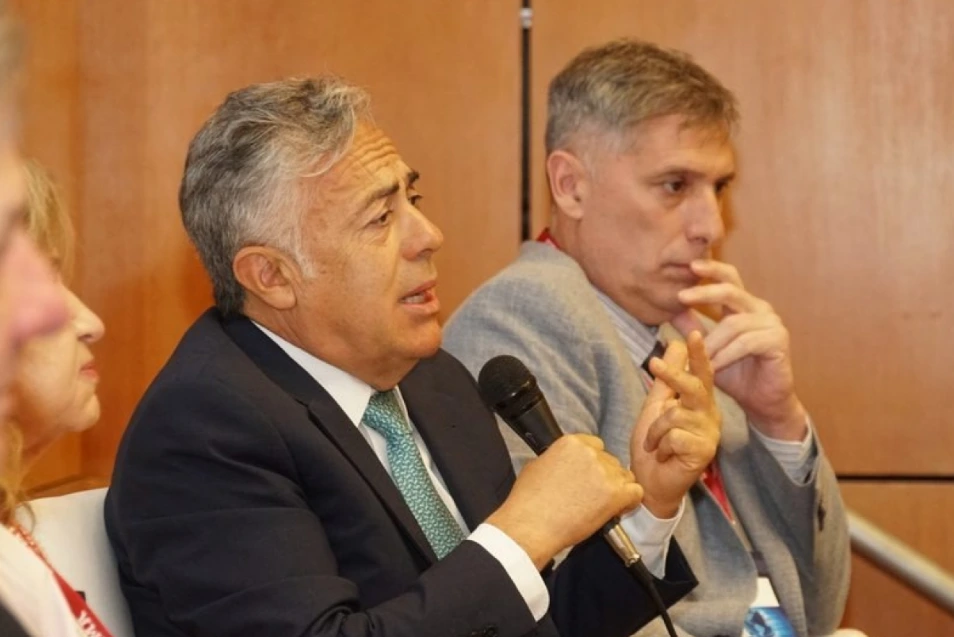

The governor of Mendoza, Alfredo Cornejo, called for advancing a comprehensive tax reform to create conditions that promote investment and economic growth in Argentina. During his participation in the XV Ibero-American Local Financing Conference, held in the Autonomous City of Buenos Aires, he defended the Mendoza administration model and raised the need to review the tax system, federal revenue sharing, and the efficiency of public spending.
The governor stated that the country's economic transformation requires lasting political agreements and macroeconomic stability. In this regard, he considered that structural reforms cannot depend solely on one government but require consensus that allows for the maintenance of economic rules in the long term.
During his presentation, Cornejo showcased the results of Mendoza's fiscal management as an example of reorganizing state resources. According to the indicators he shared, the province managed to reduce real public spending by 20% over the last decade while improving the standards of public service delivery.
Cornejo highlighted the reduction of public spending and investment in infrastructure
One of the main focuses of the presentation was the transformation of Mendoza's budget structure. Cornejo explained that the province implemented various administrative reforms to improve resource utilization and increase the state's investment capacity.
Among the indicators presented, he highlighted that the share of spending on human resources within the budget decreased from 52% to 42%. At the same time, investment in infrastructure and capital reached 13%.
The governor used these results to defend an administration aimed at improving spending efficiency and preventing the majority of public resources from being concentrated on the current functioning of the state.
The provincial strategy aims to preserve the capacity to provide public services while simultaneously freeing up resources for works and infrastructure that accompany economic development.
In this context, Cornejo argued that the Argentine fiscal discussion must incorporate criteria of efficiency and responsibility in the management of public funds.
The tax reform proposed by Alfredo Cornejo
Another central point of his presentation was the need to review the Argentine tax structure. The governor specifically mentioned Gross Income, taxes on fuels, and the tax on bank debits and credits as taxes that should be part of a comprehensive discussion.
However, he warned that the elimination of provincial taxes cannot be proposed without considering how those resources will be replaced and what financial responsibilities each jurisdiction will have to assume.
"This reform undoubtedly has a tax component that is key. The issue of Gross Income is relevant, but it has to be comprehensive. It cannot be about pressuring the provinces, nor in public opinion, but there has to be a plan behind the substitution of one income for another," he stated.
The proposal aims for any modification of the tax scheme to consider the financing needs of the provinces and establish mechanisms that allow for reducing tax pressure without compromising the functioning of public services.
For Cornejo, the reform should also contribute to improving the competitiveness of companies, facilitating private activity, and creating conditions to expand the taxpayer base.