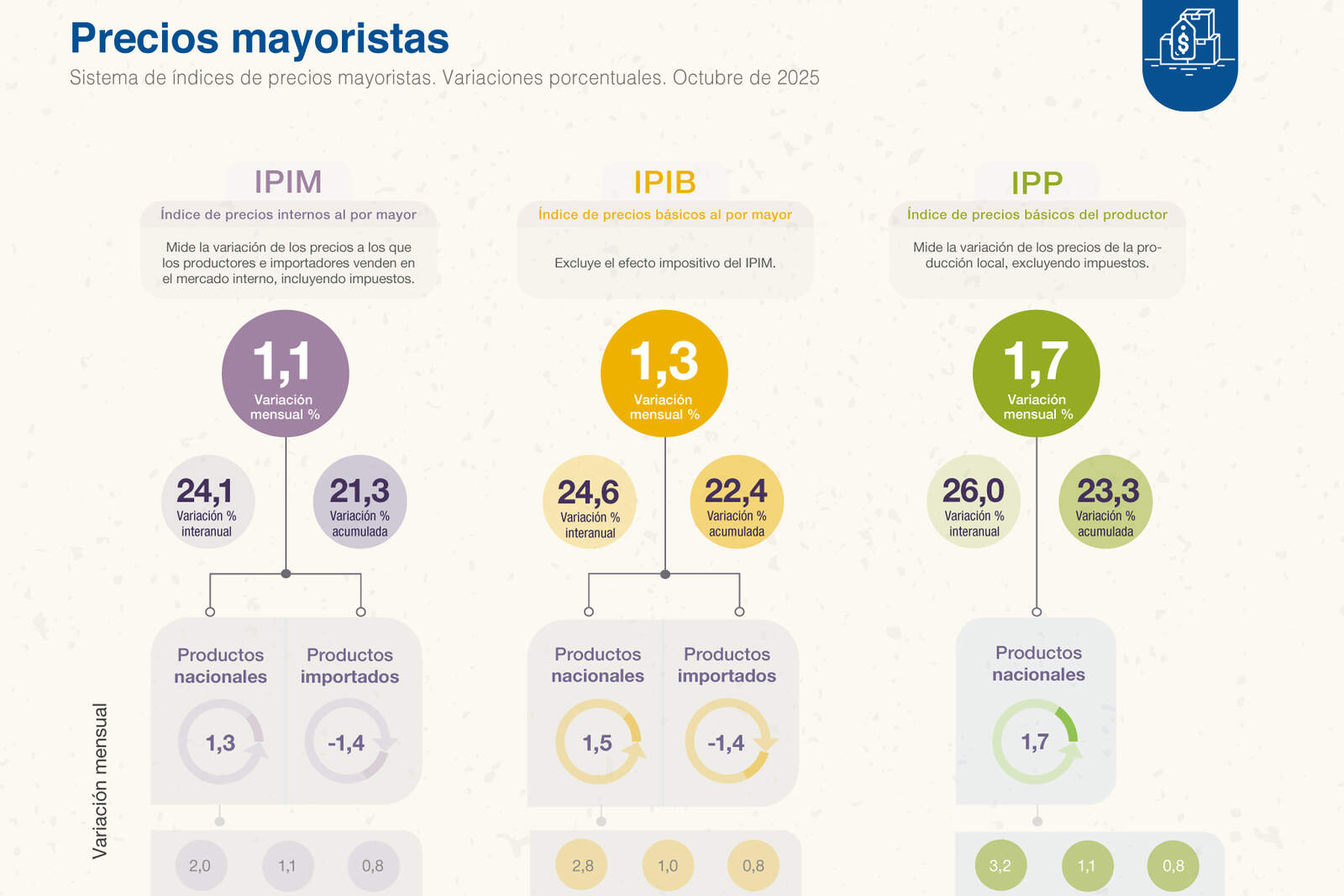
According to INDEC, imported goods showed a deflation of 1.4%
Nuevo
Agregar La Derecha Diario en
Compartir:
In a month marked by financial volatility and pre-election uncertainty, wholesale inflation recorded in October an increase of just 1.1%, according to the National Institute of Statistics and Censuses (INDEC).
The figure not only remained well below the Consumer Price Index (CPI), which rose 2.3% in the same period, but also represented a marked slowdown compared to September, when wholesale prices had increased 3.7%.
The statistical agency detailed that the behavior of the Wholesale Domestic Price Index (IPIM) was influenced by a slight increase of 1.3% in domestically produced goods, while imported goods showed a decline of 1.4%.
Datos del INDEC.
The decrease in the latter helped to cushion the overall pressure on wholesale values and allowed the monthly variation to remain significantly limited despite the context of exchange rate volatility.
With these results, the IPIM accumulates in the first ten months of the year an increase of 21.3%. On a year-on-year basis, the indicator recorded an increase of 24.1%, reflecting a trajectory that shows clear signs of moderation.
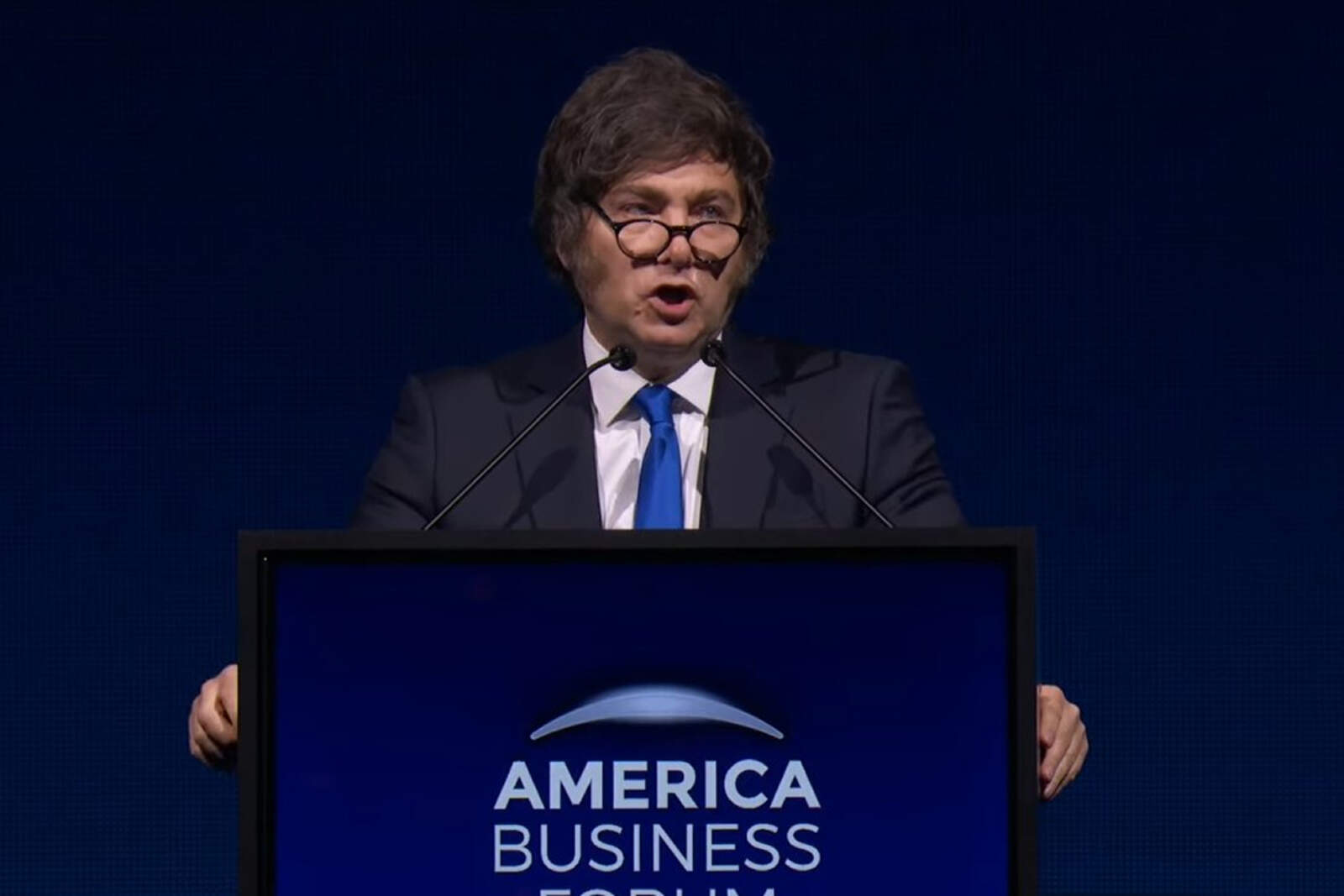
Milei brinda su discurso.
The decline in wholesale inflation became known while the foreign exchange market is experiencing days of fluctuation. On Monday, the wholesale dollar closed at $1,387, after recording a daily decrease of $16. The decrease moved the exchange rate away from the ceiling of the exchange band, set at $1,504.98.
During his participation in April at the Argentine Economic Congress, held as part of Expo EFI 2025, Argentine President Javier Milei stated: "Inflation has a death date set for the middle of next year." His statement once again reflected optimism about the consolidation of the deceleration process.