Archaeologists have found tools in Gran Canaria that prove that ancient canaries processed barley between the tenth and thirteenth centuries, long before the Spanish conquest.
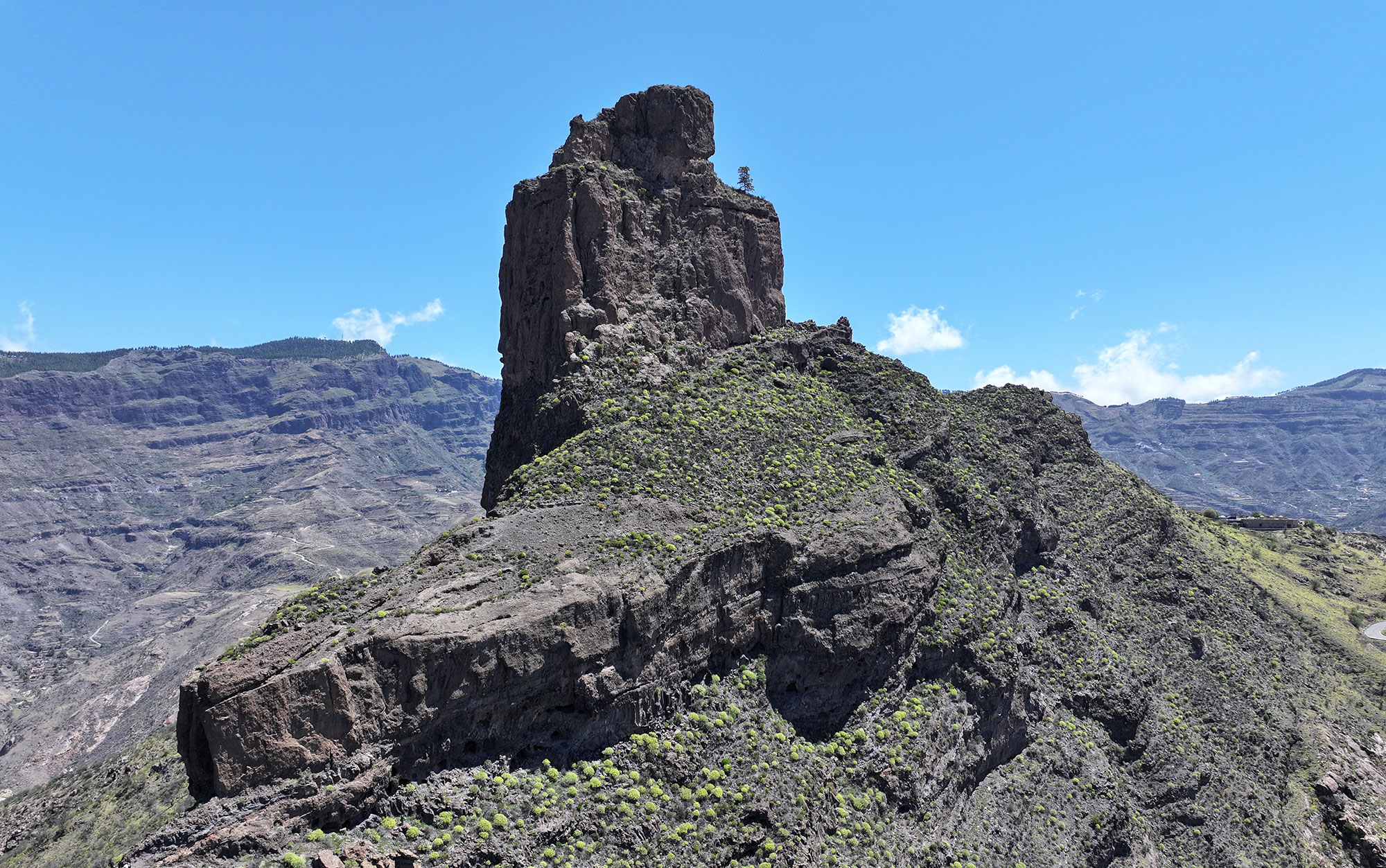
In the rock formation of Roque Bentayga, in Gran Canaria, a team of archaeologists discovered the oldest evidence of cereal processing in the Canary Islands. The discovery occurred in the C008 cave complex, a site that functioned as a barn and plant processing space, and was later used as a burial
site.
Ancient canaries, of Amazigh or Berber origin, inhabited these caves between the tenth and thirteenth centuries. The excavations made it possible to recover more than 200 lithic artifacts, including a small basalt knife that showed characteristic marks
under the microscope.
The tools that change the landscape
The analysis of the wear patterns on these pieces revealed that they were used repeatedly to cut barley stalks, similar to the use given to sickles. This fact is key because until now there has been a debate among specialists about whether the original inhabitants had this technology before the arrival of the Spaniards in the
15th century.
Evidence suggests that pre-Hispanic canaries already mastered advanced agricultural techniques for their time and insular environment. The site suggests a social organization that included grain storage and systematic plant processing.
The discovery was announced through a report in The Green Compass and has been published in detail in the Journal of Archaeological Science: Reports.
Historical context of the discovery
This new information enriches knowledge about the Berber communities that populated the islands long before the conquest. Canaries developed ways of life adapted to the insular environment, with practices that are now confirmed to be more sophisticated than previously thought.
The subsequent use of caves as funerary space also speaks to the continuity of the place in the lives of these populations over the centuries. The artifacts analyzed not only confirm agricultural activity but also provide data on the tools and techniques used
.
Researchers highlight that these types of findings allow us to better reconstruct the pre-Columbian history of the archipelago and understand how resources were managed
in a geographically isolated environment.
The basalt knife becomes an essential piece for rewriting part of Canarian prehistory.
With this advance, archaeological studies in the Canary Islands continue to reveal layers of a rich and complex history, directly linked to the North African roots of their first settlers. The scientific community hopes that future excavations in the area will provide even more details about the daily practices of these
ancient inhabitants.
This finding closes a long discussion and opens up new questions about technological development on islands before the European era.