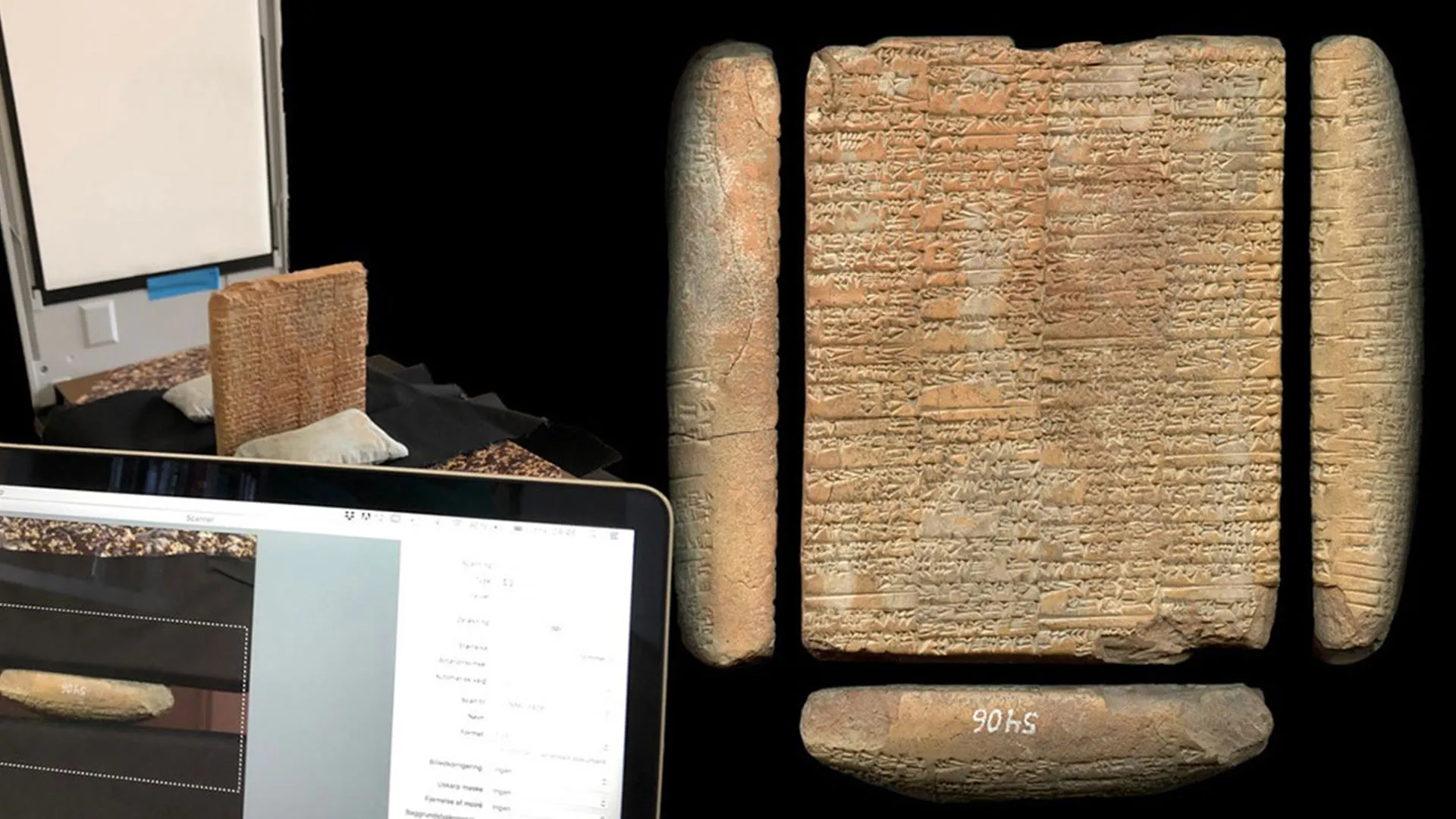
Researchers from the University of Copenhagen and the National Museum of Denmark deciphered an important collection of clay tablets that are more than 4,000 years old. These artifacts, written in cuneiform, offer a unique window into the magic, politics and daily life of the ancient civilizations of what is now
Iraq and Syria.
For more than a century, these pieces remained in the museum without being studied in depth. Now, thanks to the “Hidden Treasures” project, they have been completely analyzed, identified and digitized, revealing texts ranging from magical rituals
to administrative records.
One of the most striking findings comes from the ancient Syrian city of Hama. These tablets, almost 4,000 years old, were part of what appears to have been a large temple library. Medical treatments and magical enchantments were found there
.
Rituals to protect kings
Among them, an anti-witchcraft ritual of enormous importance for royal authority in Assyria stands out. According to the Assyriologist Troels Pank Arbøll, this text had the capacity to ward off misfortunes such as the political instability
that monarchs could suffer.
The ritual lasted all night and involved burning small figures of wax and clay while an exorcist recited specific enchantments. “One of the tablets turned out to contain an anti-witchcraft ritual that was of enormous importance to royal authority in Assyria,” Arbøll explained. Their finding is surprising because Hama was on the outskirts of the empire.
Another key piece is a copy of a list of kings that records both mythical and historical rulers, dating back to times before the Flood. This version, apparently used for teaching, includes monarchs from the end of the third millennium BC
.
Evidences of Gilgamesh and ancient bureaucracy
“That makes this list of kings one of the few vestiges to suggest that Gilgamesh actually existed. We had no idea that we had a copy here in Denmark. It's quite spectacular,” Arbøll said. The legendary king is known for the Epic of Gilgamesh.
Other texts come from Tell Shemshara, in present-day northern Iraq, and date back to around 1800 BC. They include correspondence between a local leader and an Assyrian king, as well as administrative records that demonstrate how writing was key to managing complex societies.
Most of the tablets reflect a highly developed bureaucracy. There are inventories, staff lists and financial accounts. “It's not surprising that one of the tablets contains something as common as a very old beer receipt,” Arbøll concluded
.
This writing system, which emerged about 5,200 years ago, made it possible to record assets, people and decisions, which boosted the growth of organized cities and governments. The texts combine the extraordinary with the everyday, showing both fears of kings and the daily management of resources
.
The project, led by Nicole Brisch and Anne Haslund Hansen, was supported by several foundations and now makes these “hidden treasures” accessible to the studio and the public. The tablets not only enrich knowledge about the first civilizations, but they humanize their inhabitants by revealing their fears, their organization and even their usual consumption
.