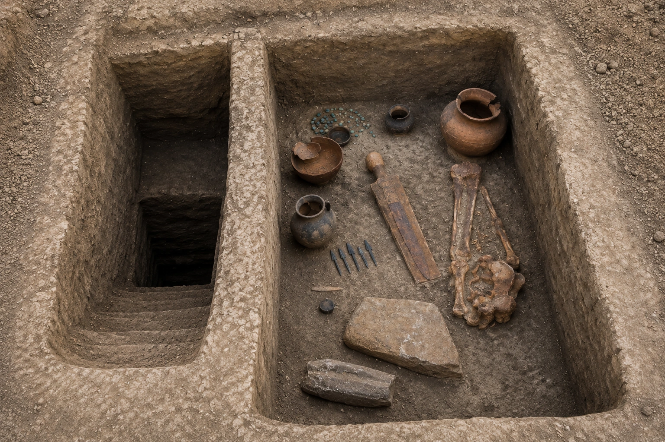
Archaeologists from the National Archaeology Agency of Moldova discovered a Scythian tomb dated to the 3rd century BC in the Dniester region, in the eastern part of the country.
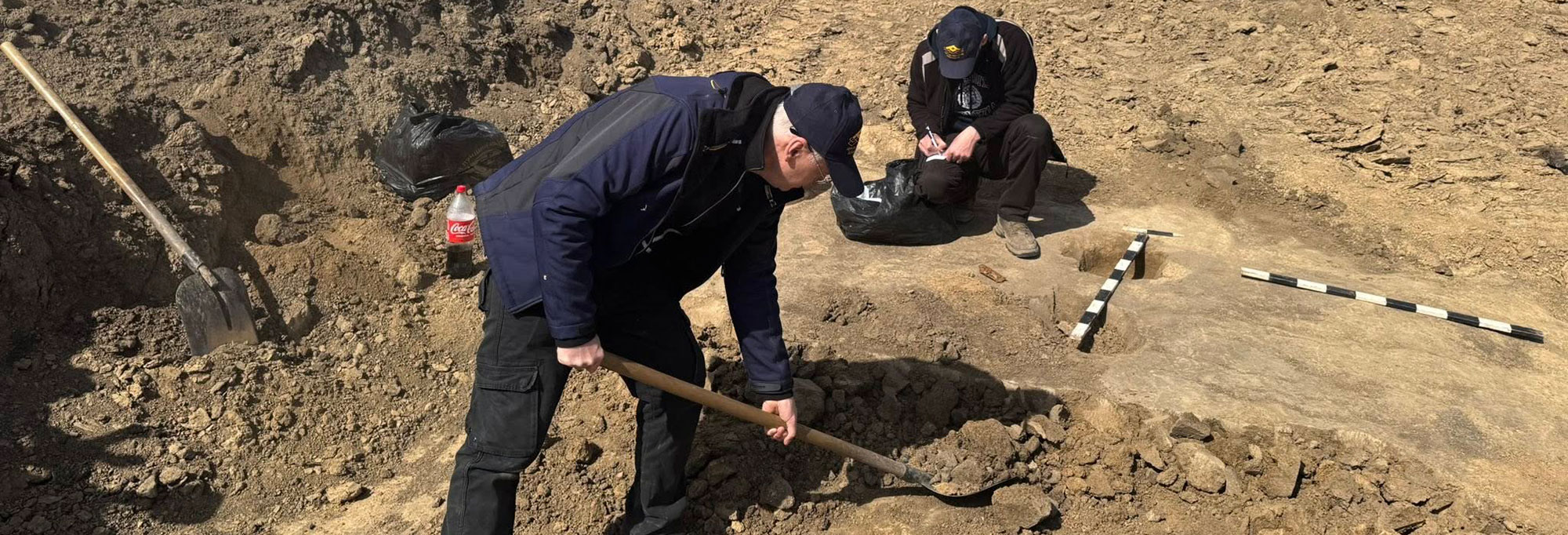
The finding occurred during rescue excavations at the Gura Bacului necropolis. The funerary structure includes an access pit, a corridor, and a burial chamber.
Among the recovered objects are ceramic vessels, arrowheads, beads, a sheathed knife, an incense burner, and a worked stone that may have functioned as an altar.
The ceramic incense burner is of a rare type, according to Vlad Vornic from the National Archaeology Agency, and was key in confirming the dating of the burial.
Details of the funerary context
The Scythians, known for their nomadic and warrior practices, left in their tombs elements that reflected both their daily life and their rituals. This discovery provides new information about their customs in the region.
The researchers highlighted the quality and state of preservation of the artifacts, which include both military and ritual elements. This reinforces the idea that it was an individual of some status within the Scythian community.
These findings help to better understand the funerary rites of the Scythians in the Black Sea areas and adjacent regions during the late Hellenistic period.
Regional importance
The National Archaeology Agency of Moldova continues to work at the site to document and preserve the materials. The discovery adds to other evidence of Scythian presence in Eastern Europe.
The objects will be analyzed in the laboratory to obtain more details about their manufacture, origin, and specific use. Specialists hope that the study will contribute to the general knowledge about the migrations and customs of this ancient people.
For now, the focus is on protecting the archaeological context and responsibly disseminating information to avoid damage to the heritage.