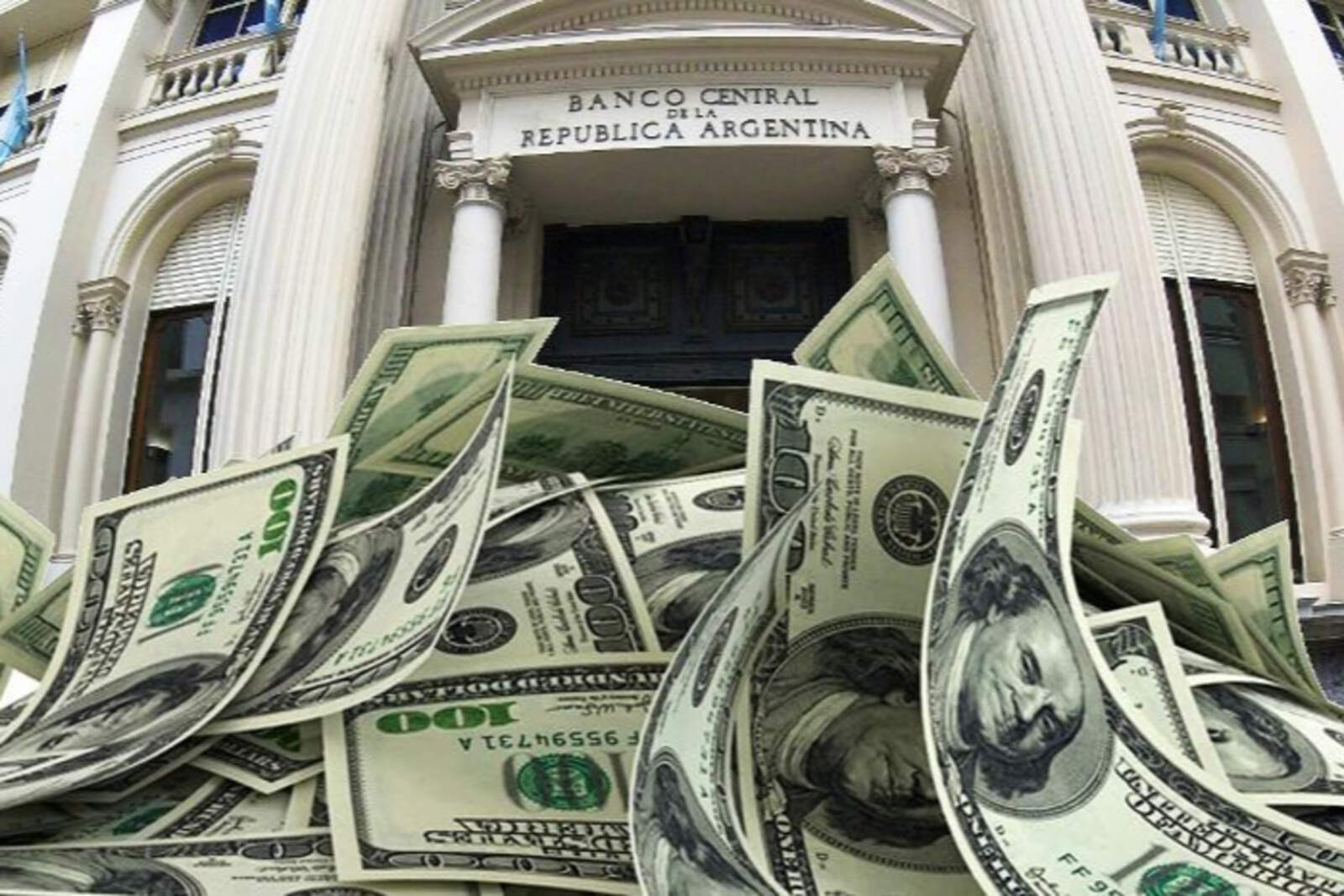
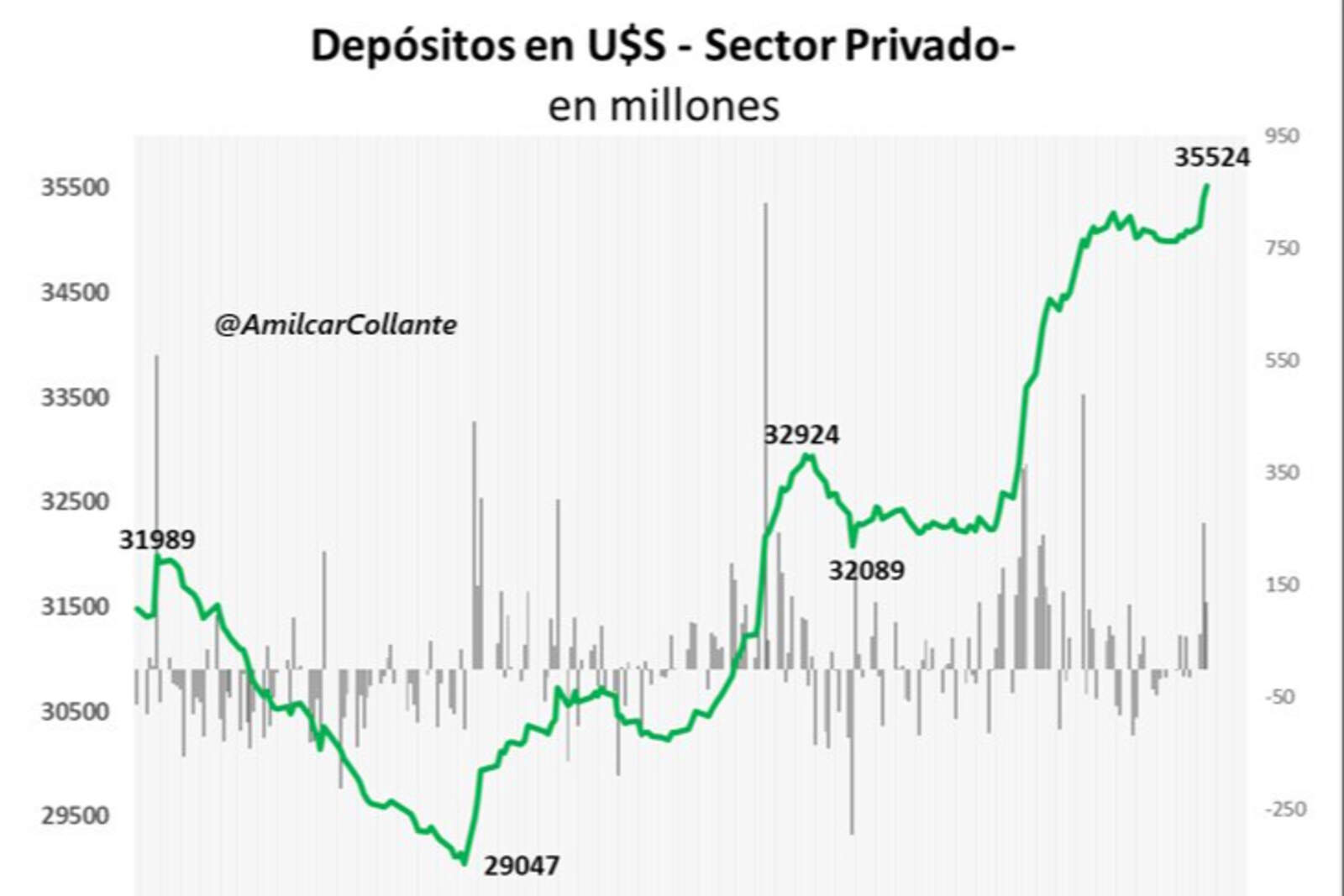
Under the government of Javier Milei, US dollar deposits in the Argentine financial system are experiencing a period of strong growth and reached a new historical record last week of USD 35.524 billion.
This is the highest level since the end of convertibility and consolidates a trend that strongly contrasts with the sustained decline in peso deposits.
According to data published by the Central Bank (BCRA), local currency placements, which months ago had reached a peak of $100 trillion, fell to $94 trillion as of November 18.
Los depósitos en dólares crecen fuertemente.
This divergent behavior between both currencies reflects several simultaneous movements. On one hand, October showed strong growth in US dollar deposits, which increased by almost USD 1.2 billion. Traditionally, electoral periods drive greater dollarization of portfolios as a hedge against uncertainty, but unlike previous years, most of those funds were not withdrawn from the system.
According to estimates by consulting firm LCG, only USD 570 million would have left the banks, a relatively low figure for an electoral context. This suggests that, despite political and economic tensions, savers maintained confidence in the stability of the financial system under Milei's government.
Gráfico sobre el crecimiento de los depósitos en dólares.
Another explanation pointed out by analysts is that part of the increase could be linked to operations related to tourism and services. Some expenses abroad, especially those requiring payments in foreign currency, are often managed through temporary US dollar deposits that are later used to pay for consumption or reservations. That operation would also have contributed to increasing the total volume of deposits.
Meanwhile, the dynamics of credit in US dollars showed signs of weakness in recent months, a situation that seems to have ended after the electoral process of October 26.
After 17 consecutive increases, loans to the private sector in US dollars fell by USD 640 million in October, a contraction marked by the enormous uncertainty prior to the elections. The decrease suggests a more cautious attitude on the part of the private sector, which reduced its level of US dollar indebtedness in the face of lack of predictability.