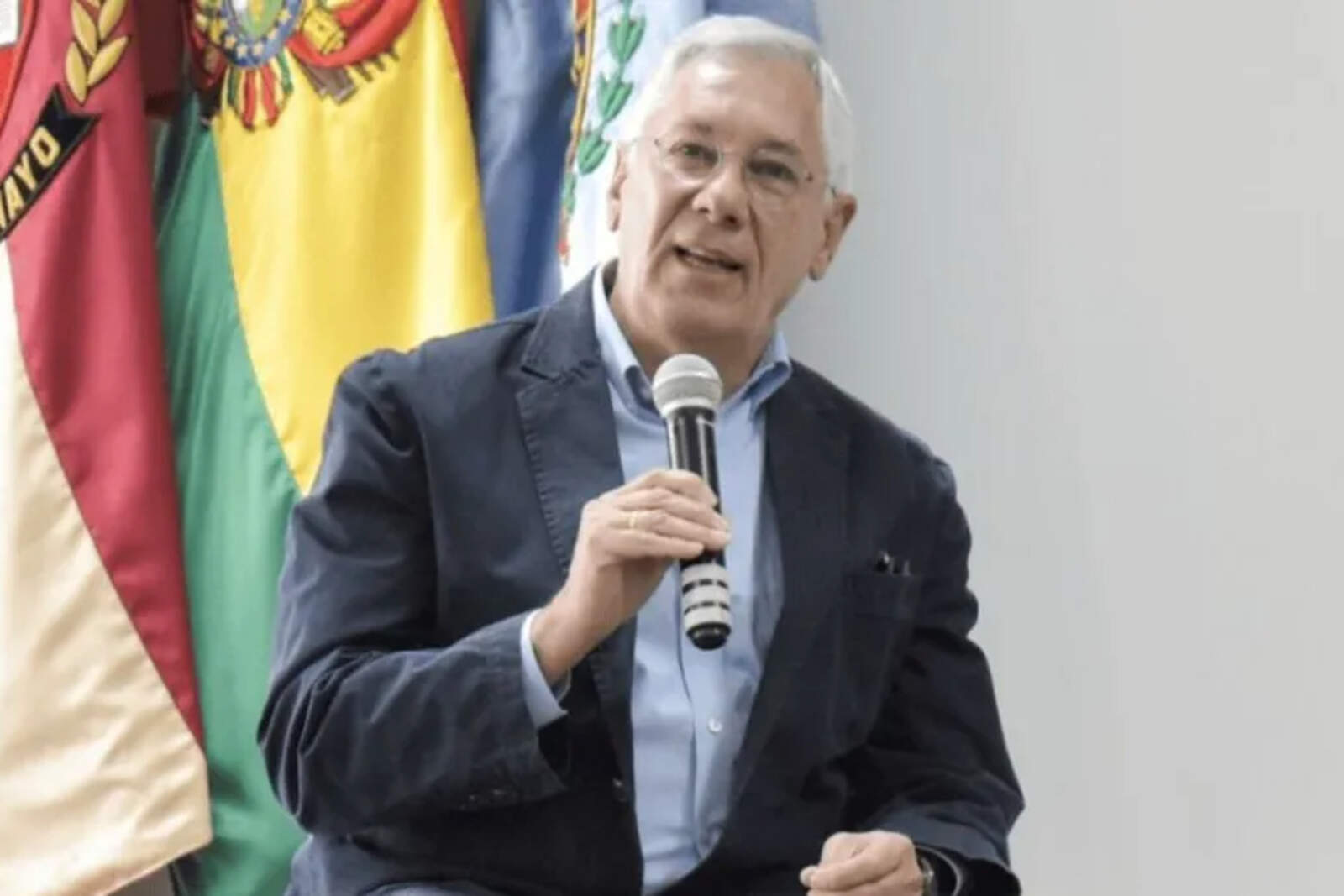

Eduardo Rodríguez Veltzé rejected the party's invitation this Monday, “Evo Pueblo,” the organization had asked him to accompany the former dictator in the August elections. Rodríguez Veltzé appreciated the gesture, but was emphatic that he will not participate in any formula. From his account on the X network, he reaffirmed his commitment to democracy and emphasized that he will continue to support the right to vote freely.
The rejection occurred after leaders of the evismo announced their decision at a national meeting. The meeting took place on Sunday in Lauca Ñ, a stronghold of former President Morales in the Tropics of Cochabamba. Gonzalo Choquehuanca, a member of the party's leadership, was responsible for making the resolution public.
The Unique Federation of Peasants and the Bartolinas of Cochabamba supported the proposal. Its Executive, Mario Soto, stated that Rodríguez Veltzé could help Morales face the political crisis. He argued that the country needs a constitutional figure to restore order and defended the unity of the evista bloc.
Rodríguez Veltzé was interim president of Bolivia between 2005 and 2006. He assumed the position after Carlos Mesa's resignation, amid a severe political crisis. He is a lawyer and doctor in Constitutional Law, with studies at the Universidad Mayor de San Simón.
He was also president of the now-defunct Supreme Court of Justice. In 2013, Morales appointed him as an agent before the Hague Court in the maritime claim against Chile.
It is not the first time Veltzé has rejected involvement in the electoral contest, he previously denied rumors about an alliance with Andrónico Rodríguez. Through his networks, he denounced that his privacy was being violated with unfounded speculations. He questioned the journalists who published images of an informal meeting in La Paz.
Rodríguez Veltzé has pointed out on more than one occasion that indefinite reelection should not be part of the democratic system. He emphasized that Bolivia needs a reform that prohibits all forms of reelection because hyper-presidentialism and caudillismo are threats to institutionalism.
He has been critical of the Constitutional Court's rulings that enabled Evo Morales in 2019. He also questioned the current magistrates' self-extension.
He emphasized the need for independent justice and a more balanced political system. His stance contrasts with that of the evismo, which promotes a return of former President Morales.