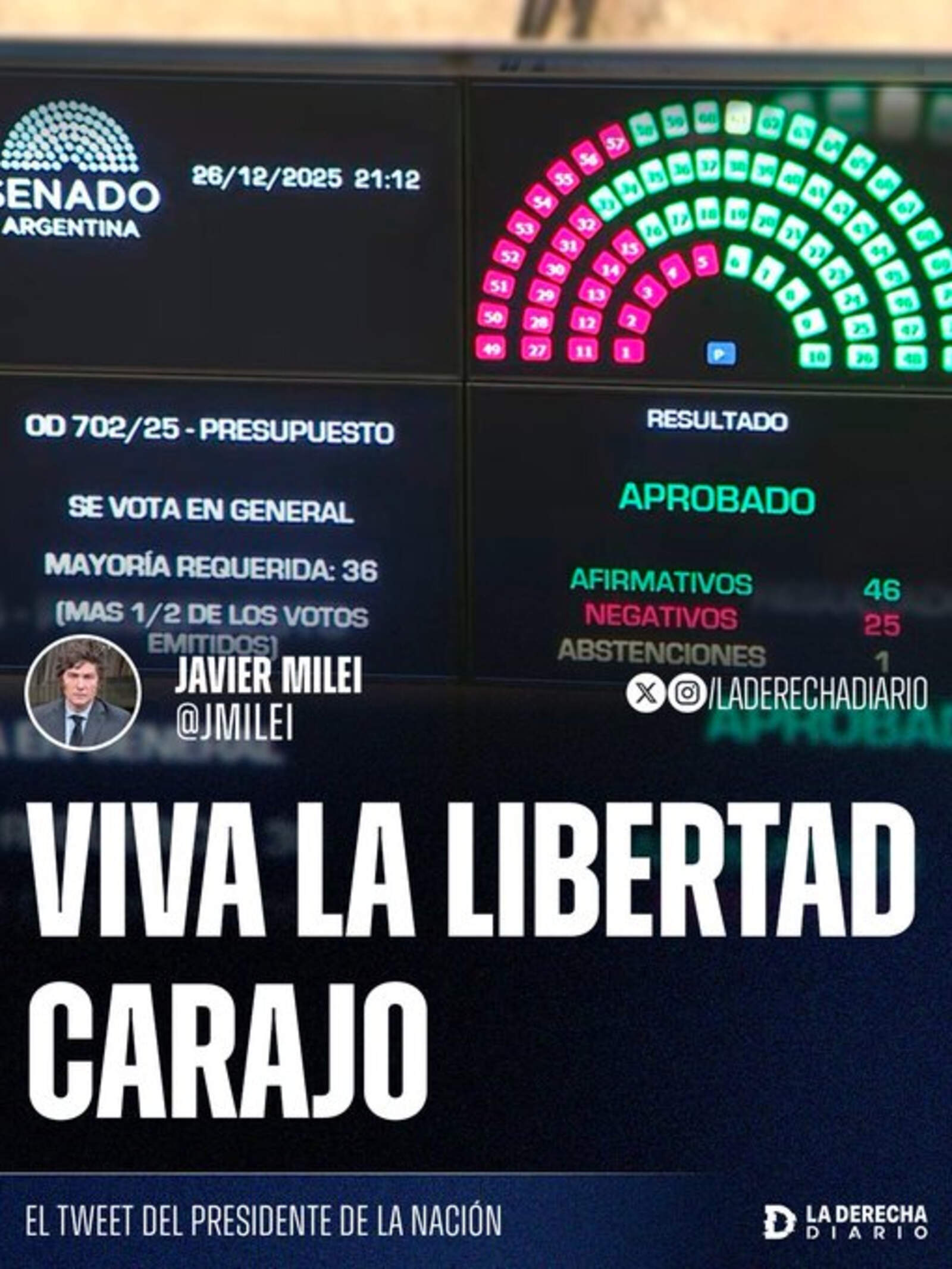

The national government achieved on Tuesday one of the most relevant political and economic victories of its administration: the approval of the 2026 Budget. After more than eight hours of debate in the Senate, the initiative was passed with 46 affirmative votes in the general vote—just two short of reaching two-thirds, with full attendance—against 25 rejections and one abstention. This way, Javier Milei's administration manages to present to the market and the international community a spending plan endorsed by Congress at the beginning of the second half of its term.
The support was not limited to the general vote. In the specific vote, all chapters of the bill were also approved, including the second chapter, which contains article 30, questioned by the opposition for enabling possible cuts in education allocations. That section obtained 42 positive votes, a comfortable figure that dispelled any doubt about the enactment of the law.
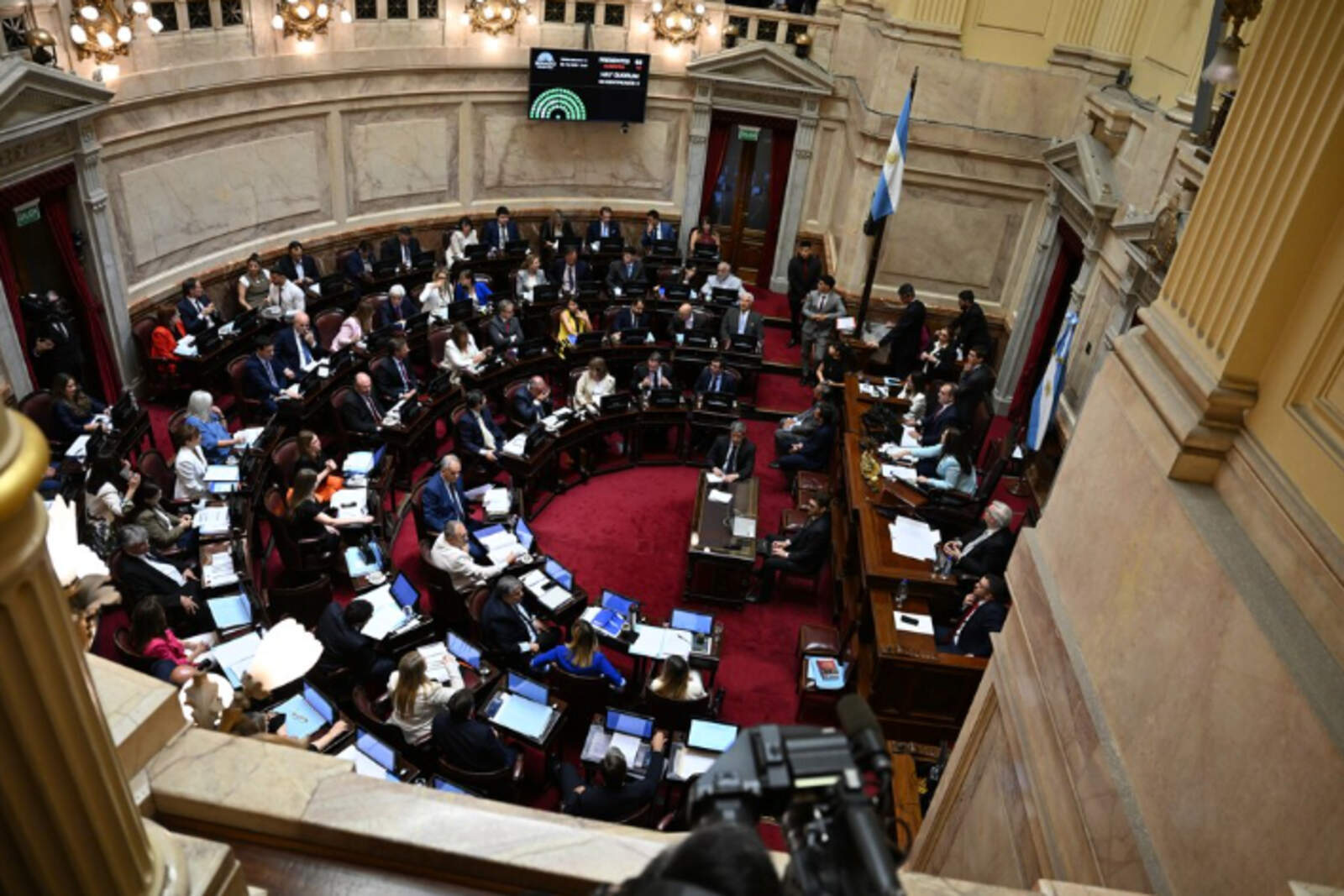
The parliamentary engineering left a central political fact: in addition to the 21 senators from La Libertad Avanza, the ruling party added the support of the ten legislators from Unión Cívica Radical, three from PRO, provincial senators and, significantly, votes from Peronism that broke with Cristina Kirchner's order. Guillermo Andrada (Catamarca), Sandra Mendoza (Tucumán) and Carolina Moisés (Jujuy) supported the government. The dissident Justicialist Alejandra Vigo (Córdoba) abstained on the entire bill, while other senators did so on specific sections, such as Julieta Corroza (La Neuquinidad).
The 2026 Budget establishes the Executive's main macroeconomic variables: a GDP growth of 5%, an annual inflation of 10.1%, an exchange rate that would be around $1,423 in December of next year and a primary surplus equivalent to 1.5% of GDP. The financial result, meanwhile, would be positive at 0.2%. In addition, an increase in exports of 10.6% is projected. The message is clear: fiscal balance, predictability and a break with the logic of chronic deficit.