The Secretariat of Agriculture, Livestock, and Fisheries of the Argentine Nation
In practice, the registry ended up becoming another cog in the Argentine bureaucracy, forcing the private sector to incur costs without any criteria. According to representatives of the productive sector, only a few sanctions would have been imposed during its entire duration, which were appealed and never collected.
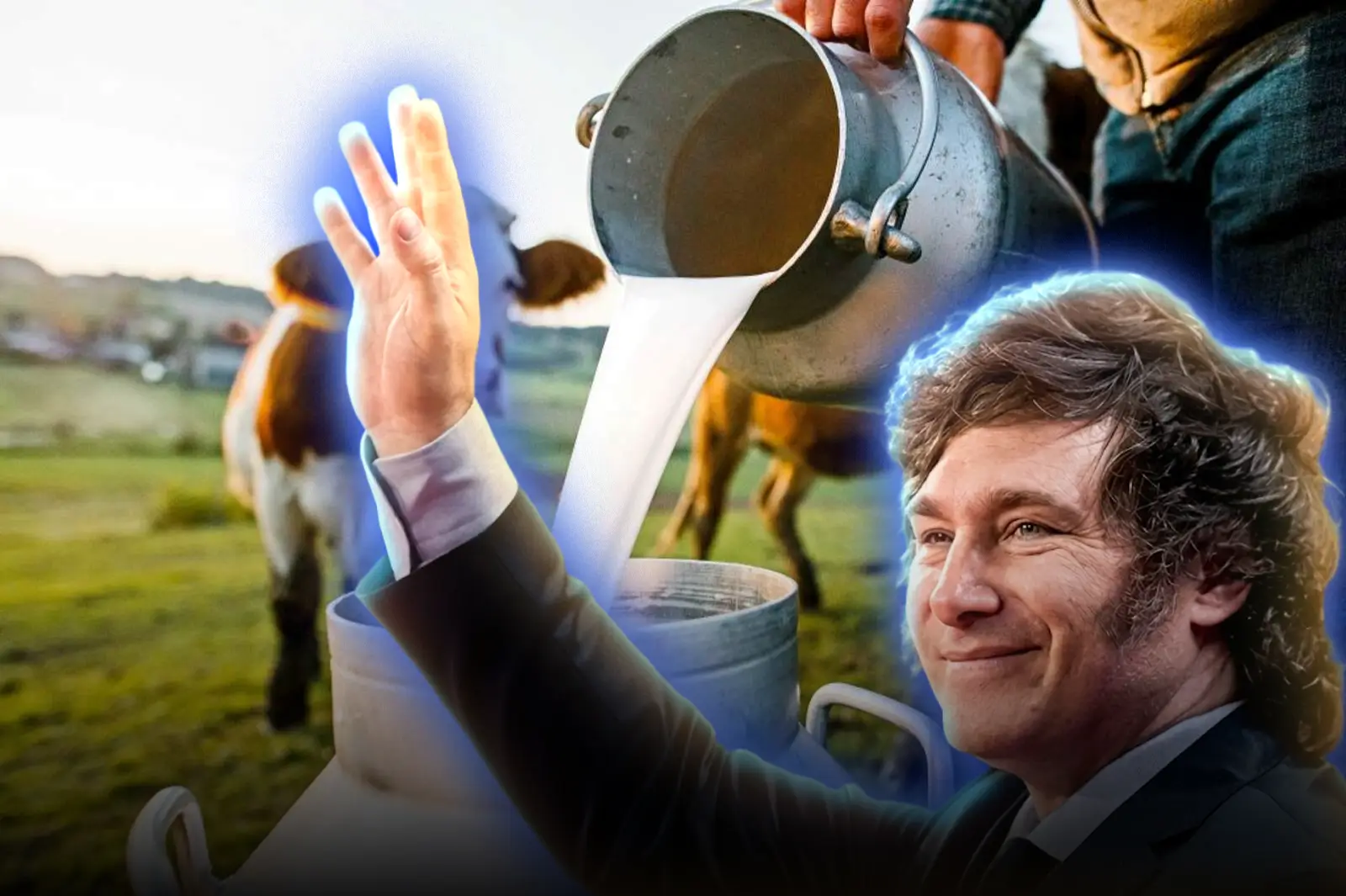
The Government of Javier Milei has moved forward with a new deregulation of the dairy chain by eliminating redundant procedures and updating technical standards to facilitate the marketing of Argentine products within Mercosur. The measures affect more than 460 companies and aim to reduce administrative costs, provide more predictable rules, and improve conditions for exporting.
One of the main changes was the definitive elimination of dairy operators from the Information System of Meat and Dairy Operators (SIOCAL), a registry that included plants, cooperatives, industries, warehouses, and marketers. At the time of its removal, there were 468 registered operators who had to allocate resources to comply with a useless administrative obligation as a control mechanism.
Javier and Karina Milei at La Rural
From the Secretariat of Agriculture, Livestock, and Fisheries, they described the procedure as an unproductive burden lacking utility for commercial oversight. The system accumulated information but did not have a specific sanctioning regime or sufficient legal tools to intervene in the event of possible irregularities.
The scheme was created in 2006 with the intention of incorporating the dairy sector into a supervision model similar to that existing in the meat and grain chains. However, for almost two decades its functions began to overlap with the tasks of ARCA, SENASA, provincial tax collection agencies, and various authorities responsible for food control.
At the same time, the Executive updated the Argentine Food Code through Joint Resolution 7/2026, which harmonized the regulations for UHT milk (known as long-life milk) with the technical criteria in force in Brazil and the rest of the Mercosur countries.
Javier Milei, President of the Argentine Nation
The modification does not alter production conditions or lower quality and safety controls. On the contrary, it adapts national definitions and terminology to regional parameters that the Argentine industry was already complying with, eliminating possible regulatory duplications and providing greater legal certainty to commercial exchange.
The official strategy aims to replace bureaucratic and in-person controls with digital tools, such as electronic delivery notes between farms and industries. With these measures, the Government of Javier Milei makes it clear once again that its objective is for the State to stop being an obstacle for producers.