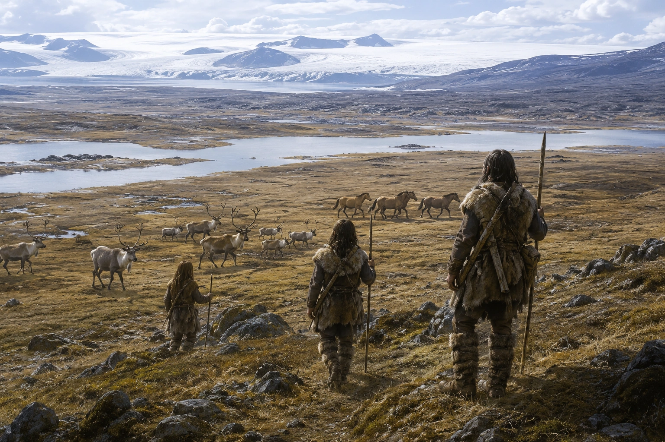
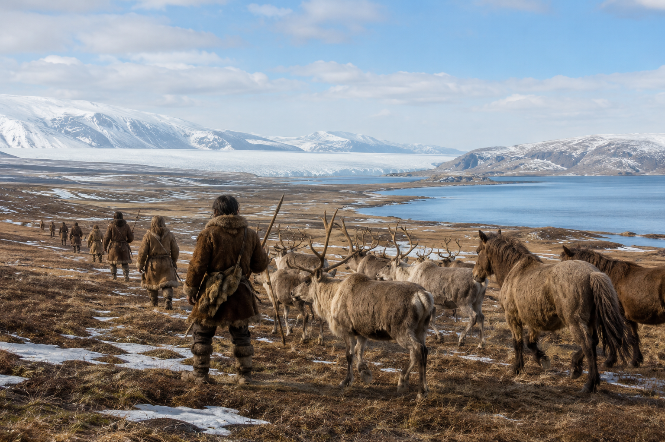
New evidence indicates that repopulation occurred around 15,200 years ago, following herds of reindeer and horses in a landscape that was rapidly warming and greening after the retreat of the ice.
Humans returned to the British Isles much earlier than previously thought. According to a recent study, human presence was recorded about 15,200 years ago, nearly 500 years earlier than previous estimates. This occurred shortly after the large ice sheets began to retreat at the end of the last glaciation.
At that time, Britain was still connected to the European continent, facilitating the movement of people and animals. The first inhabitants followed herds of reindeer and horses moving north in search of grasslands that expanded with the warmer climate.
The return coincided with a significant increase in summer temperatures in southern Britain. These more benign conditions, combined with the availability of prey, made the region habitable again after periods of extreme cold.
Reevaluating post-glacial warming
After the last ice age, northwestern Europe experienced at least two significant shifts from cold to warm climates. These shifts occurred quite rapidly, within a few decades. The study focused on the first warming period during the Late Upper Paleolithic.
Previous research had estimated that significant warming in the region occurred around 14,700 years ago and that humans arrived afterward. However, improvements in dating techniques and new analyses of human remains and artifacts altered that view.
The recalibration of radiocarbon dates confirmed human presence between 15,200 and 15,000 years ago. This raised a question: did humans survive in glacial conditions, or was the climate of Britain different from what was believed?
Clues from the Welsh lake
The answer came from Llangorse Lake in southern Wales. The preserved sediments there offer a detailed environmental record of the last 19,000 years. The site is near a cave in the Wye Valley where some of the earliest human evidence was found.
Researchers analyzed fossil pollen, chironomids, and chemical signatures in the sediments. The results showed that Britain warmed differently than the rest of northwestern Europe and Greenland. Summer temperatures jumped from between 5-7°C to 10-14°C about 15,200 years ago, half a millennium earlier than previously estimated.
Additionally, reindeer and horses had already become more common in southern Britain 15,500 years ago, taking advantage of the environmental improvement. Humans followed, adapting to these somewhat warmer summers.
Implications for understanding migrations
By combining archaeological evidence with climatic and environmental records, scientists constructed a more accurate timeline of when humans could reoccupy previously uninhabitable areas. The study highlights that modest increases in summer temperatures were sufficient to drive significant population movements.