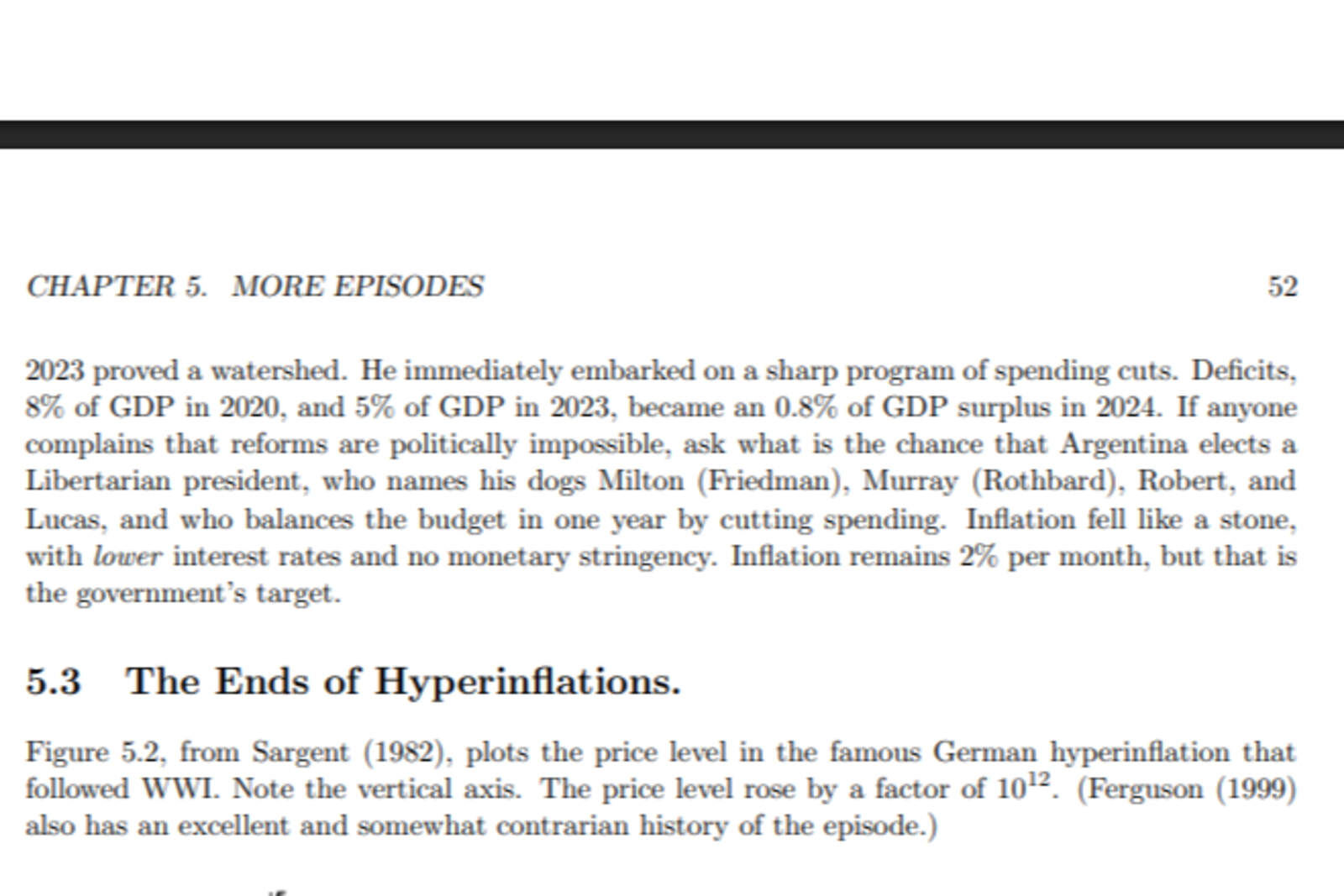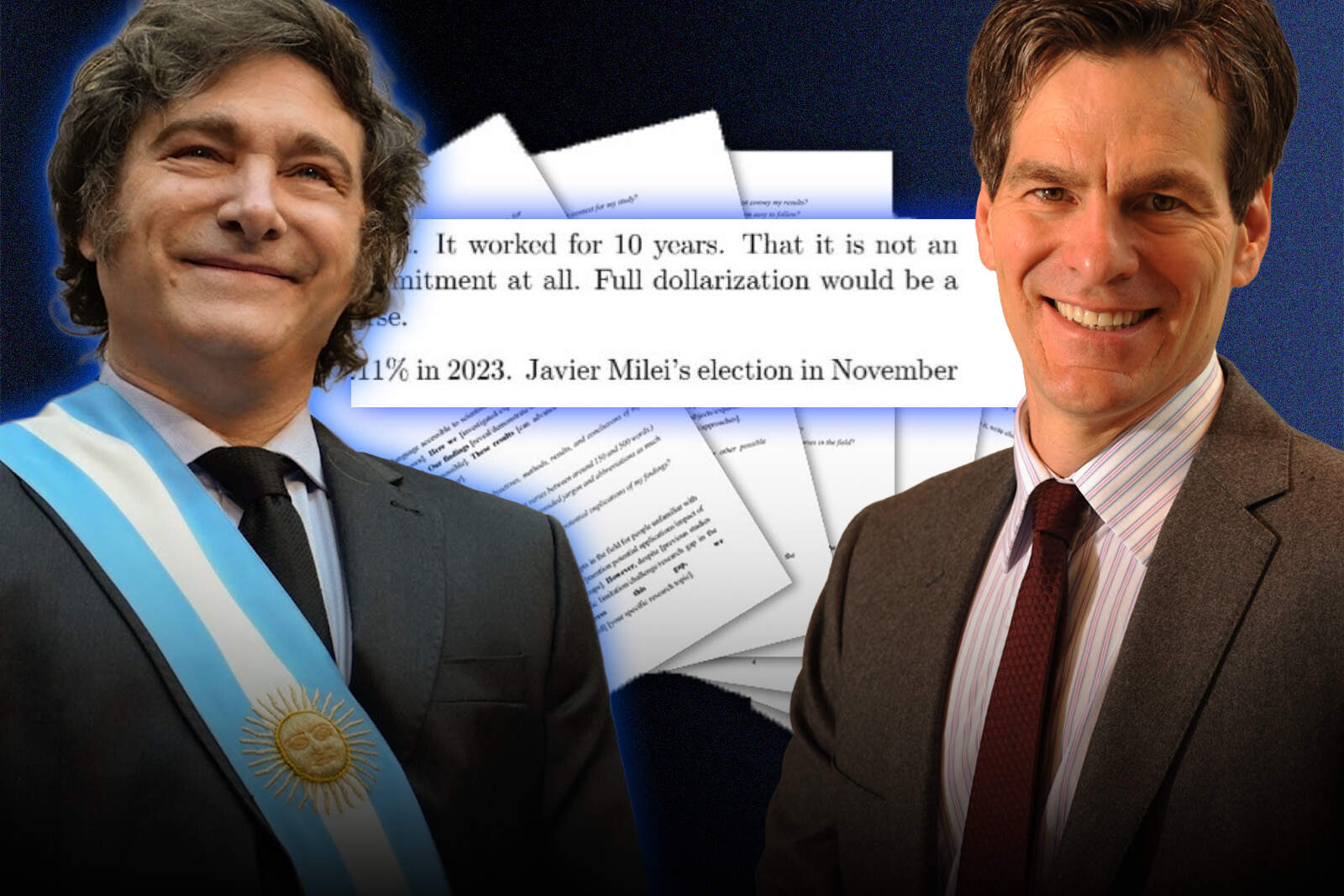

The prestigious American economist John H. Cochrane highlighted the successful economic plan of the Government of Javier Milei in a recent academic paper titled “Inflation”, where he analyzed the stabilization process carried out in Argentina and emphasized the results obtained in fiscal and monetary matters.
Cochrane, born in 1957, is a figure recognized for his contributions to financial economics and macroeconomics. Since 2015 he has served as Rose-Marie and Jack Anderson Senior Fellow at the Hoover Institution of Stanford University, and he is a professor of finance and economics (by courtesy) at the Stanford Graduate School of Business. Previously, he was a distinguished professor for more than two decades at the Booth School of Business of the University of Chicago, between 1994 and 2015.
In his paper, the economist reviewed the evolution of the Argentine economy and contextualized the fiscal problems that preceded the current libertarian administration. “Argentina's fiscal problems returned, in particular the spending of state governments. The government repealed the currency board, devalued the peso, and confiscated assets", he recalled about the country's economic history.
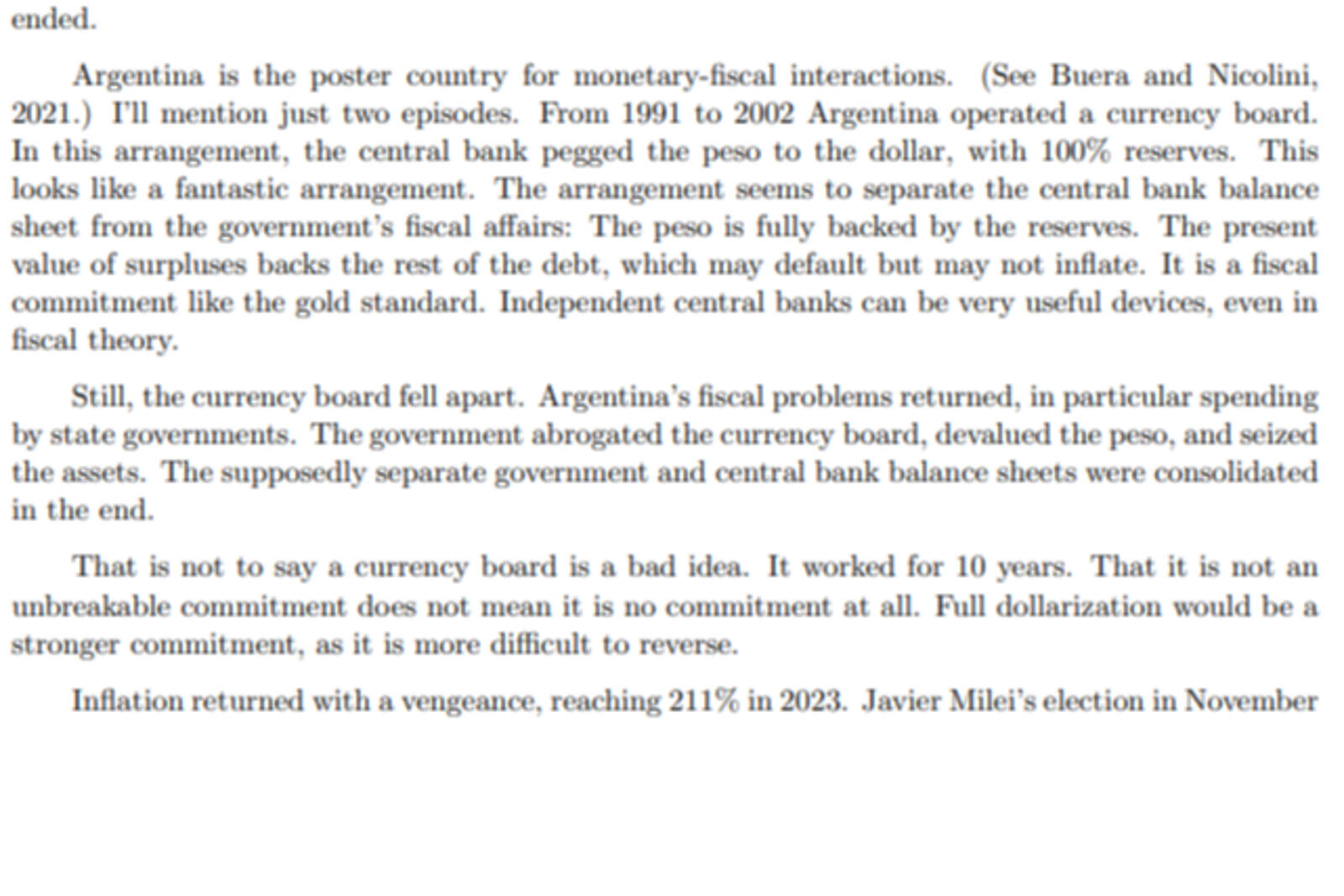
"The supposedly separate balance sheets of the government and the central bank eventually consolidated. This doesn't mean that a currency board is a bad idea. It worked for 10 years. The fact that it is not an unbreakable commitment doesn't mean that it is not a commitment at all. Full dollarization would be a firmer commitment, since it is more difficult to reverse. Inflation returned strongly, reaching 211% in 2023. The election of Javier Milei in November”, he pointed out.