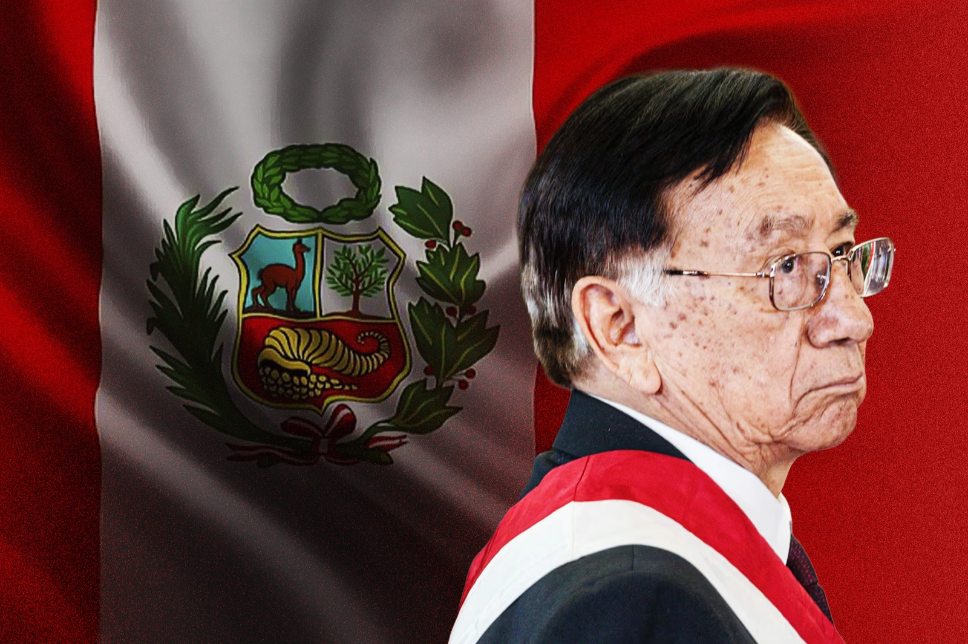
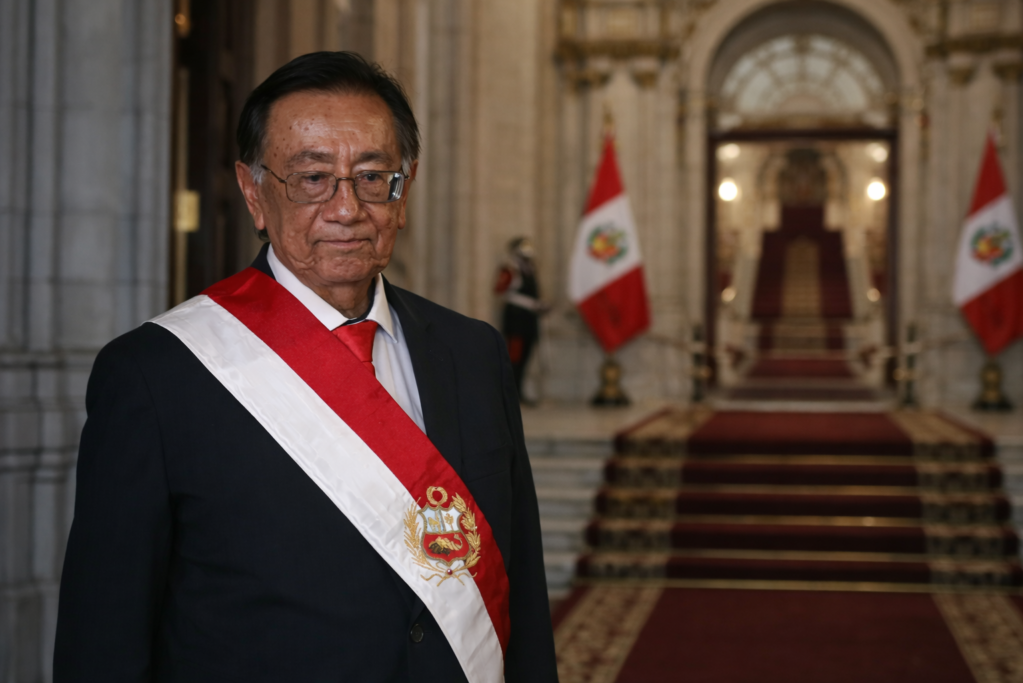
The interim president of Peru, José María Balcázar, faces a strong wave of criticism after making anti-Semitic statements during an official speech in Lima, which caused immediate rejection by the Jewish community and various political and social sectors.
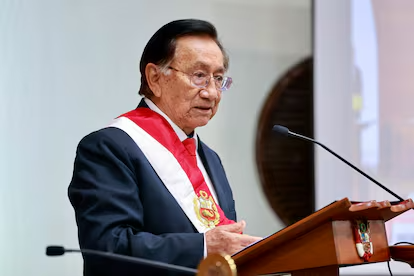
The controversy originated during an event for the anniversary of the Lima Chamber of Commerce, where the socialist addressed historical issues related to international trade. In this context, Balcázar stated that Germany was “pushed into a war also because, in part, of the Jews”, to whom he attributed influence in banking and practices
such as usury.
Although at first the president's words went relatively unnoticed, their subsequent dissemination in the media and social networks generated an immediate reaction. The Jewish Association of Peru issued a statement in which it expressed its “astonishment” at what happened and condemned the use of arguments that it described as “worthy of dark medieval times”. The organization argued that such statements blame the victims for their own extermination, in reference to the Holocaust, and demanded a public apology
from the head of state.
The statement also underscored the seriousness of the context in which the statements were made: an official event before ministers, businessmen and diplomatic representatives. For the organization, this not only amplifies the impact of words, but it also projects a worrying image of the position of the Peruvian State on issues of historical memory
and human rights. The interim president of Peru made disparaging comments against the Jewish community and the repudiation was not long in coming
The episode has rekindled questions about Balcázar's suitability to hold the interim presidency. The 83-year-old president took office in February after a political succession marked by institutional instability. His recent trajectory already included controversies, such as his opposition to initiatives to prohibit marriage with minors, a position that generated criticism from human rights organizations
.
In addition, his previous record includes several judicial accusations, including crimes such as fraud and prevarication, although Balcázar himself has maintained that these charges were dismissed and respond to defamation campaigns. However, this background contributes to a climate of distrust surrounding their leadership
.
Analysts believe that the recent statements cannot be interpreted as an isolated event, but rather as part of a pattern of controversial positions that show a worrying disconnect with contemporary standards in the area of human rights and democratic coexistence. In this sense, they warn that this type of discourse can have consequences both internally and on the country's international image
.
So far, the president has not issued a public apology, which has increased pressure from different sectors to speak out and rectify his words. The controversy also opens up a wider debate about the responsibility of political leaders in addressing sensitive historical issues and the need to avoid the dissemination of misinformation or prejudice from spaces of
power. Balcazar has been criticized for not being considered fit to hold the office of interim president