In addition, Labor Assistance Funds (FAL) are created. They will receive a 3% contribution on the computable remuneration. They will serve as economic support in the private sector, under strict rules of use and settlement.
Consejo de Mayo, el plural equipo que negoció la reforma
Digitalization of salaries, leaves, and special regimes
The proposal establishes digitalization of pay slips, timesheets, and labor documentation. These records will have the same validity as paper, and the same will apply to medical certificates, which may be submitted and verified in centralized systems. The labor authority may require more information to ensure payment transparency.
In the case of common or occupational illness, digital medical clearance will be a condition for reinstatement. If the return is partial, the salary will be proportional to the work capacity.
The Government sent the Labor Modernization Bill to Congress. It is the centerpiece of the plan to update a framework that has remained frozen in the face of technological and economic changes over recent decades. The goal isto lower hiring costs, reduce litigation, and bring millions of workers out of informality, especially young people and employees of SMEs.
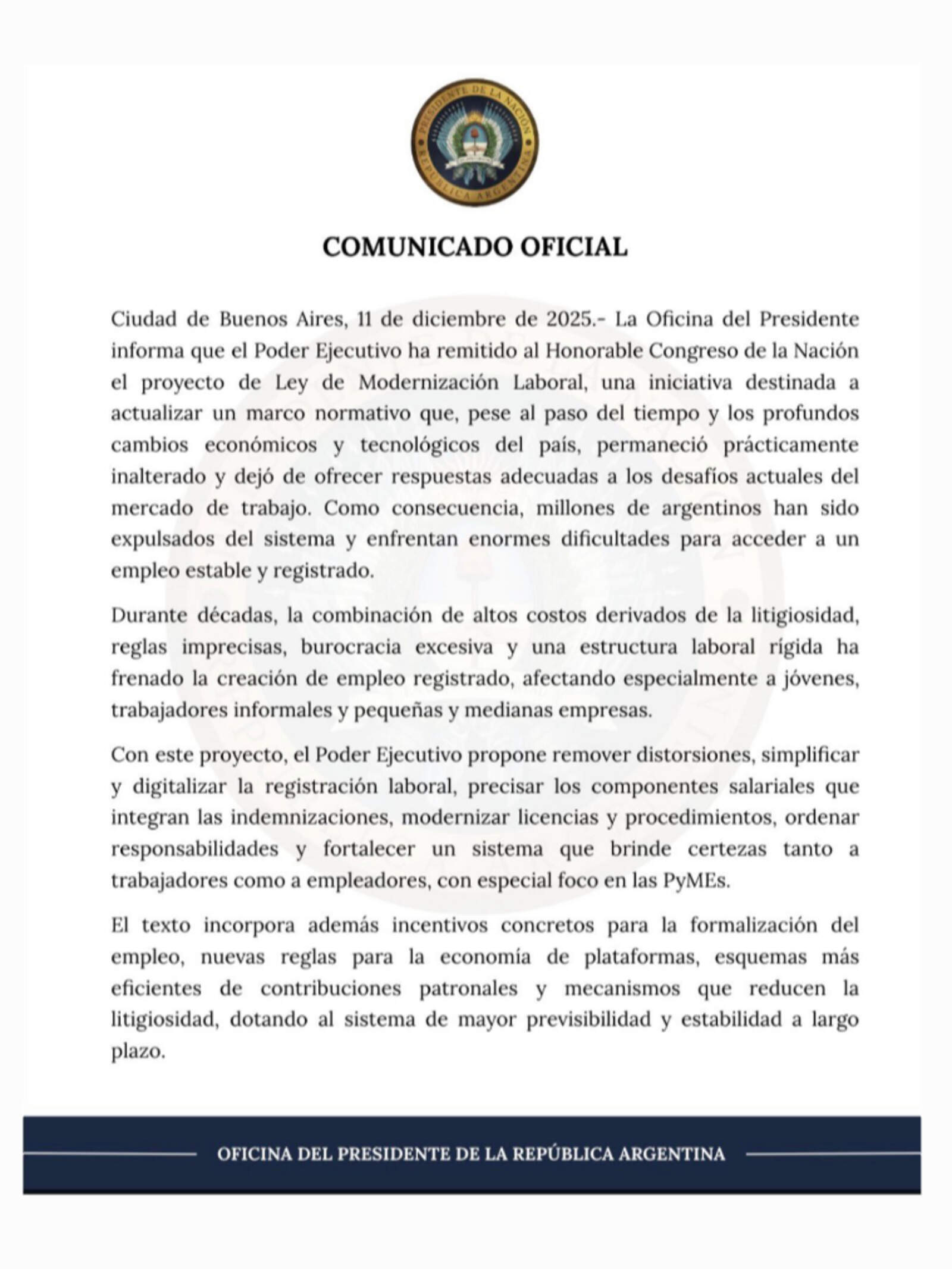
The statement from the Office of the President of the Argentine Republic (OPRA) made this clear. "Millions of Argentines have been expelled from the system and face enormous difficulties in accessing stable and registered employment", it stated. The reform aims for a simpler and more predictable model, with incentives for formalization and specific rules for sectors that have almost none, such as delivery platforms.
Comunicado oficial de la OPRA
Below, we will outline the main points you need to know.
More flexible and split vacations
The bill keeps the right to paid vacations and the minimums established by the Labor Contract Law. However, it allows for greater flexibility.
Employer and employee may agree, individually or collectively, to extend the number of rest days. The period for granting them will remain from October 1 to April 30 of the following year. The company must provide written notice 30 days in advance.
The new feature is splitting: each segment may not be less than seven consecutive days. In addition, at least once every three years, the worker will be guaranteed the enjoyment of vacations during the summer. It will only be possible to deviate from the usual period with justified reasons and authorization from the labor authority. The official logic: to adapt rest to family life and production cycles, without losing the baseline of rights.
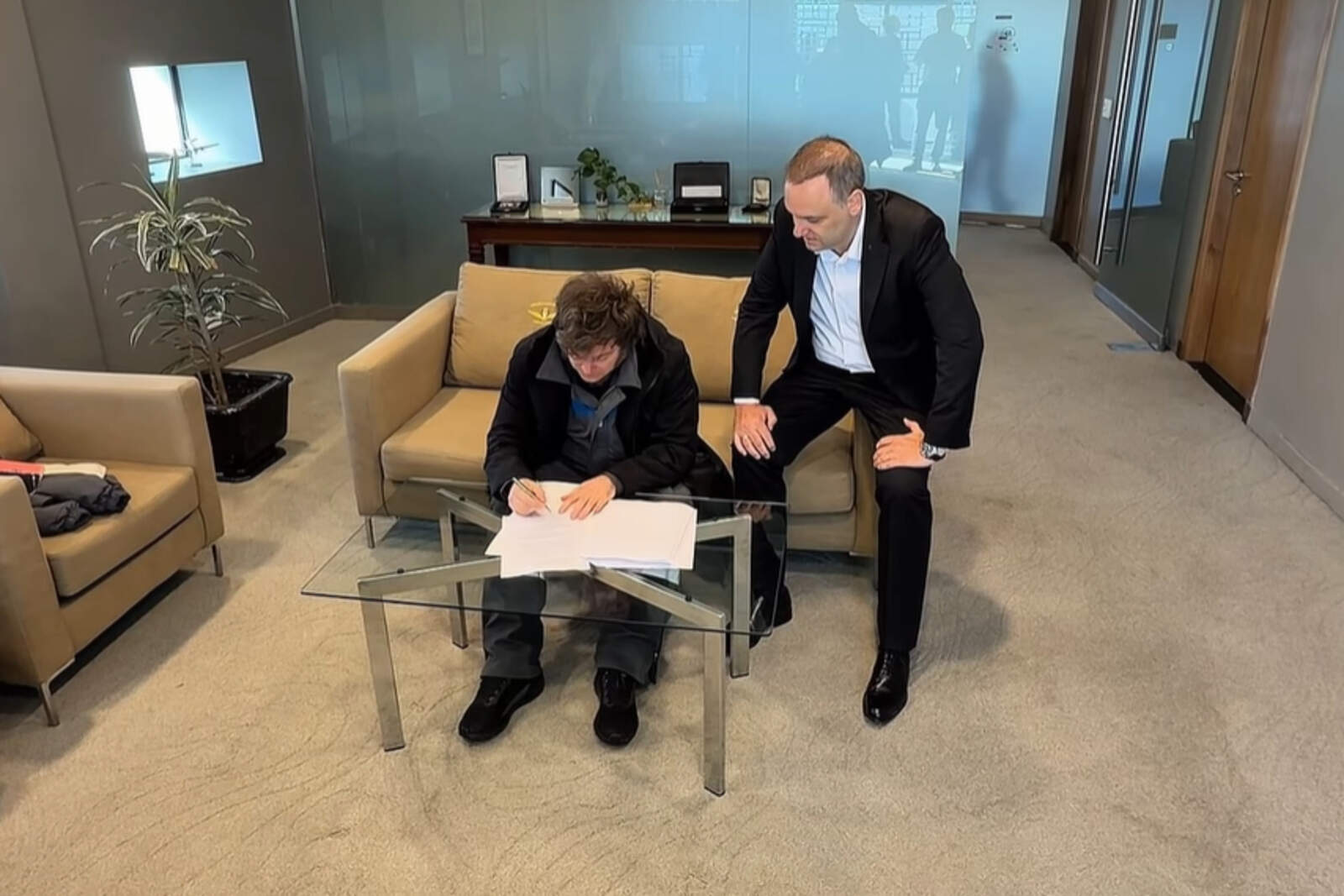
Javier Milei recien llegado de Oslo firmando el Proyecto
Hour bank and more dynamic workdays
Another key point is the hour bank. The initiative allows written agreements to compensate overtime with subsequent time off. It will be voluntary and a record must be kept of hours worked and hours available for rest.
Collective agreements may set maximum workdays based on averages, provided that a minimum of 12 hours is respected between workdays and 35 hours of weekly rest. The framework allows for longer days followed by shorter days, within the legal limit. According to the Government, this makes work organization more efficient in sectors with high seasonality or demand peaks.
Severance, dismissals, and Labor Assistance Funds
The reform changes the core of the severance system. It opens the door to replacing the traditional model with sector-based severance funds or insurance. These will be financed by monthly employer contributions and will act as a cushion in the event of dismissals.
The calculation base will include base salary, regular payments, and seniority. Extraordinary bonuses are excluded, and the reference will be the normal and regular remuneration accrued for at least six months in the last year. Ceilings and floors are set: the base may not exceed three times the average salary of the agreement, nor be less than 67% of that value.
The bill regulates the installment payment of severance and details beneficiaries in the event of the worker's death. In dismissals without cause, the guideline of one month's salary per year worked or fraction greater than three months is maintained, based on the best remuneration of the last year.
For domestic workers, the probationary period is extended to six months. Pay slips will be electronic and the bank receipt will be sufficient to prove payment. Specific rules are set regarding rest, work clothing, food, and insurance.
In the agricultural regime, a permanent continuous service contract is created, with an eight-month probationary period. During that period, either party may terminate without cause and without severance, with 15 days' notice. Salaries will continue to be determined by collective bargaining and may never be below the minimum living wage.
Platforms, unions, and the end of ultra-activity
Javier Milei con trabajadores de apps
The law incorporates a Personal Delivery and Messaging Services Regime, aimed at workers who operate through apps. They must register, contribute, and have social coverage. They will have the right to reject orders, know the reasons for blocks or suspensions, and keep 100% of tips.
In union matters, minimum services in essential activities are regulated. Internal assemblies will require prior authorization and the time spent in the assembly will not be remunerated. The time credit for delegates is reduced to 10 hours per month, and blockades and plant takeovers are considered very serious offenses.
It also eliminates the full ultra-activity of collective agreements. When an agreement expires, the conditions are maintained only until there is a new agreement or an express extension. The authority may suspend clauses that generate severe distortions.
Toward a more formal and freer labor market
Javier Milei con operarios de YPF
Together with these changes, the bill creates the Labor Formalization Incentive Regime, with temporary reductions in contributions for newly registered jobs. The objective is to bring out of informality those who currently work without contributions and without coverage, and to provide predictability to companies that want to hire.
If Congress approves Labor Modernization, the Government aims to inaugurate a new era: an Argentina where formal employment grows, contributions increase, and the system is restored after years of patches, lawsuits, and precariousness.
A labor market where opportunities for workers multiply and there is true freedom to choose where to work, under what conditions, and with what type of relationship. Legislation designed so that, this time, registered work becomes the rule and not the exception.