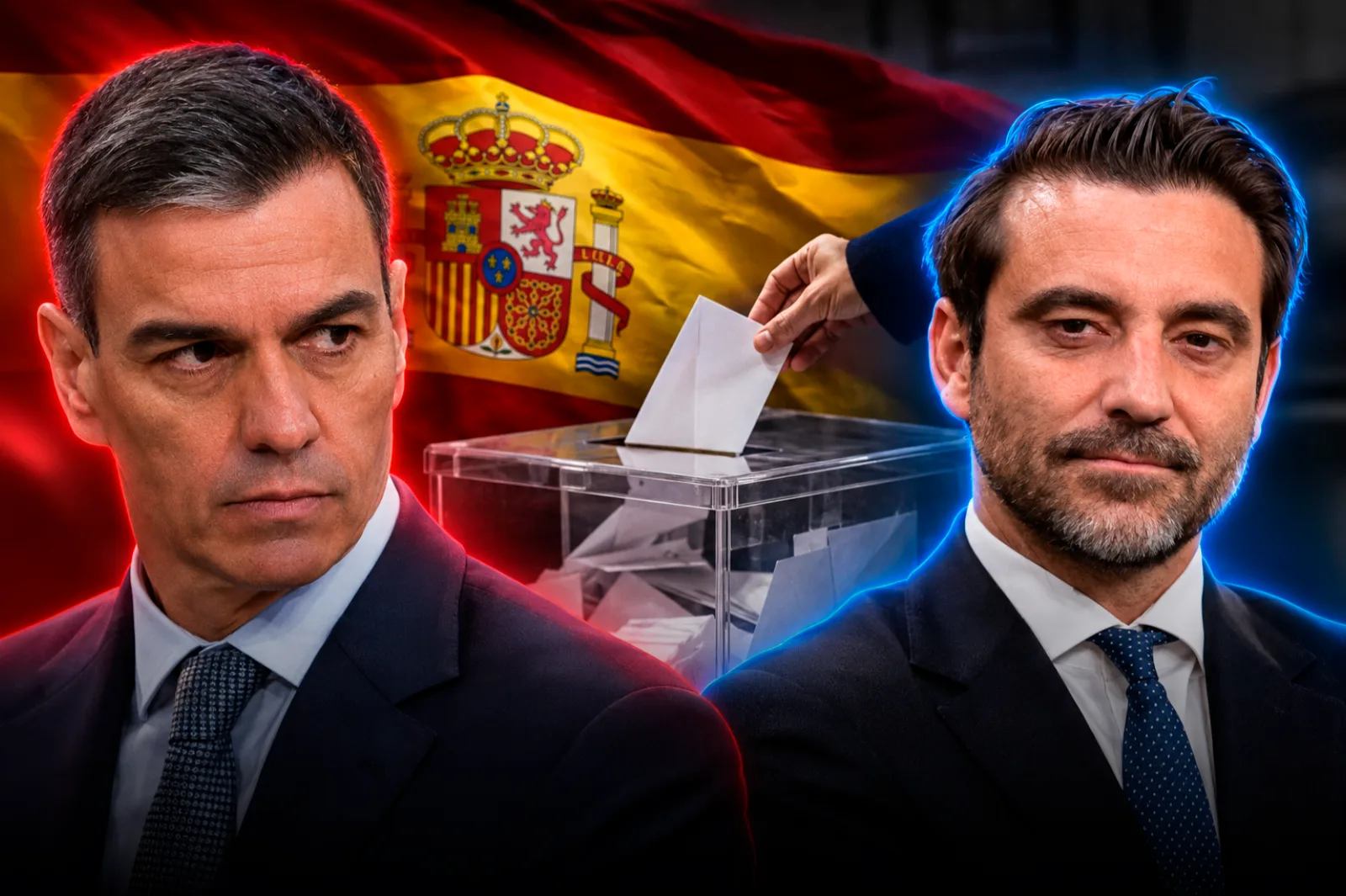
"Are you calm, president? Are you going to commit electoral fraud, president?" were the questions from the director of La Derecha Diario to the nefarious socialist candidate during the lead-up to the electoral debate
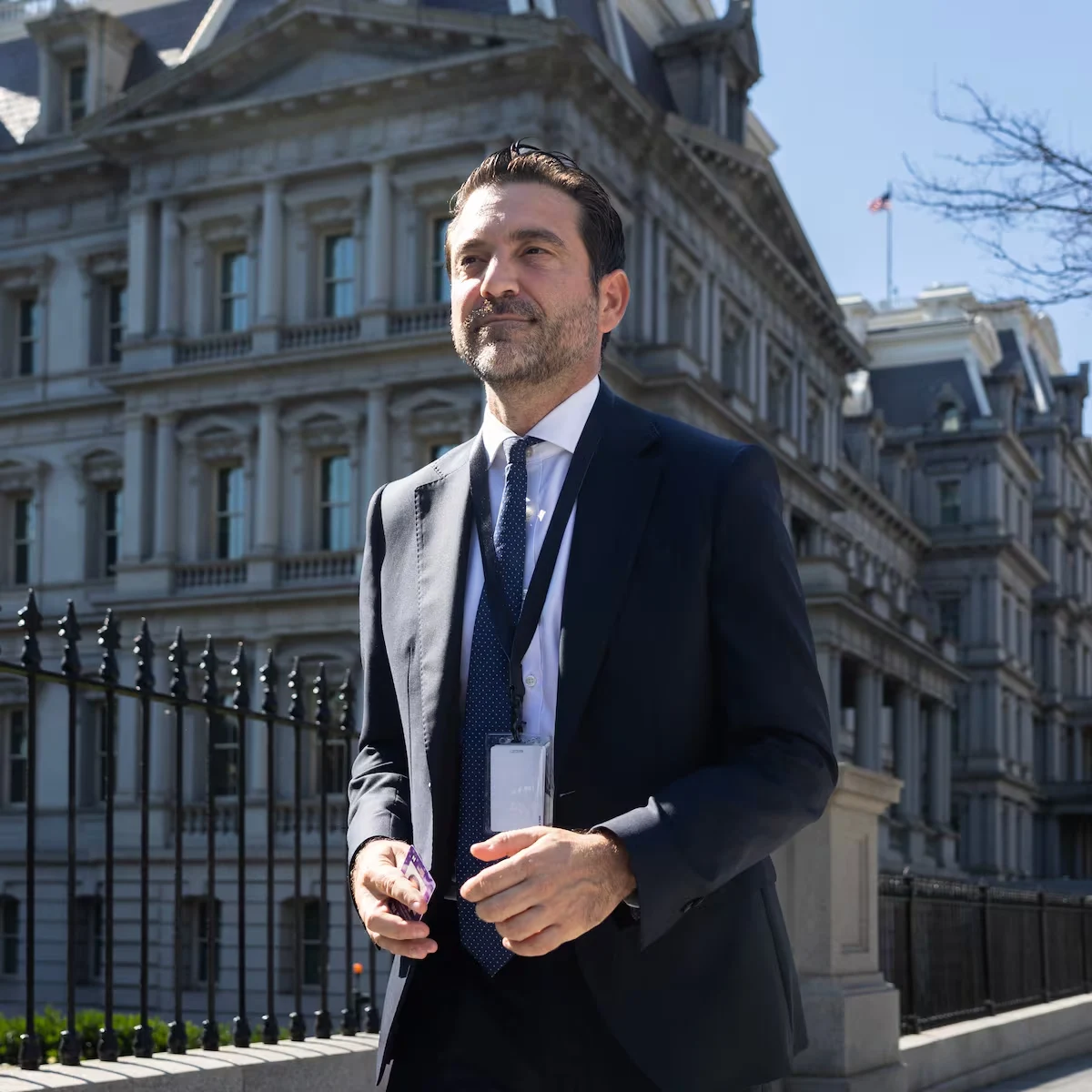
In a crucial episode for the international right-wing movement, Javier Negre, journalist and director of La Derecha Diario, confronted the president of the Government of Spain, Pedro Sánchez, directly and uncompromisingly in the lead-up to the decisive debate before the general elections.
Breaking the media complacency surrounding the disastroussocialist candidate, Javier Negre questioned Pedro Sánchez bluntly in front of the cameras: "Are you calm, Mr. President? Are you going to commit electoral fraud, Mr. President?".
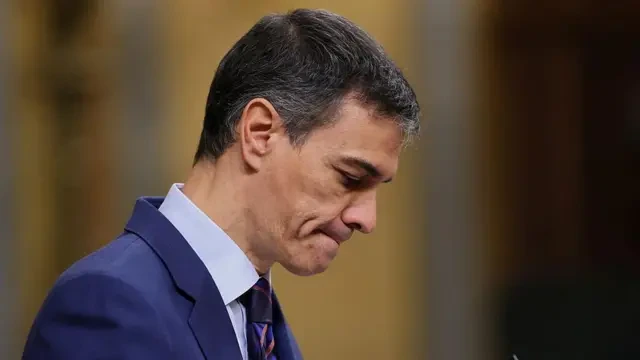
The tense exchange highlighted the extreme nervousness of a Pedro Sánchez cornered by social discontent and public rejection. Upon descending from his vehicle at the television studio, the leader of the PSOE—who receives a public salary of over 110,000 euros annually—was met with severe heckling and boos from the gathered audience, limiting himself to stating to the press that he was "excited and expectant" before becoming the last candidate to enter the premises.
The confrontation led by Javier Negre took place just hours before the highly anticipated four-way debate at 10:00 PM, organized by the Television Academy in Madrid Content City located in Tres Cantos (Madrid). With three days to go until the elections and on the eve of the campaign closure, the national political atmosphere is dominated by deep political polarization. Major polls consistently predict the victory of the Popular Party led by Alberto Núñez Feijóo, a party that would require a pact with Vox to secure an absolute majority, placing the controversial CIS (Center for Sociological Research) as the only organization insisting on positioning the PSOE in first place.
Javier Negre
The arrival of the presidential candidates at the studio reflected the different stances and tensions of each political space:
Santiago Abascal (Vox): He was the first candidate to arrive at the Tres Cantos venue, flanked by his executive team composed of Garriga, Lluis Zancajo, and Méndez Monasterio. The conservative leader, who earns 61,591.18 euros annually as a parliamentary deputy, faces the contest with radical proposals against uncontrolled mass immigration and the economic plan presented by his spokesperson José María Figaredo to implement a cut of 112 billion euros in public spending.
Alberto Núñez Feijóo (PP): He entered second, accompanied by his spokesperson Borja Sémper. When asked if he was maintaining his composure, Feijóo silently nodded to the journalists, promoting key commitments such as declaring risk profession status for the National Police and the Guardia Civil.
Ada Colau (Frente Amplio): She was the third to arrive at the venue, accompanied in the same vehicle by the Minister of Social Rights, Pablo Bustinduy. The only woman participating in the panel, publicly supported by former mayor Manuela Carmena, confessed to the media that she felt "nervous but happy".
Pedro Sánchez (PSOE): He arrived last amid widespread booing, seeking to defend his management after the call for early elections triggered by the halt of his housing decrees in the Congress of Deputies.
Pedro Sánchez
To the cornered position of the Executive was added this Thursday a significant setback in the courts. The Supreme Court dismissed the appeal filed by the State Attorney's Office and formally confirmed that a total of 163,355 people naturalized under the 'grandchildren's law' will not be able to cast their vote next Sunday. This ruling excludes the vast majority from a census of 163,000 naturalized individuals, only allowing 901 people who proved their formal connection through consular certification. The decision provoked immediate outrage from the PSOE, whose parliamentary spokesperson, Patxi López, labeled the judicial measure as an "absolute barbarity" and "democratic aberration".
Additionally, the Central Electoral Board (JEC) stirred the scene by opening a sanctioning file against the Madrid president Isabel Díaz Ayuso following complaints raised by the socialist representation. In parallel, the JEC opened another sanctioning file against the communicator Silvia Intxaurrondo for comments made on RTVE, which prompted strong support from the Board of Directors of the public entity in favor of the journalist. The firm stance exhibited by Javier Negre in confronting Pedro Sánchez reaffirms the line of La Derecha Diario as an unbreakable bastion in the oversight of the power of Moncloa, exposing the fragility of a government cornered by justice and popular discontent.