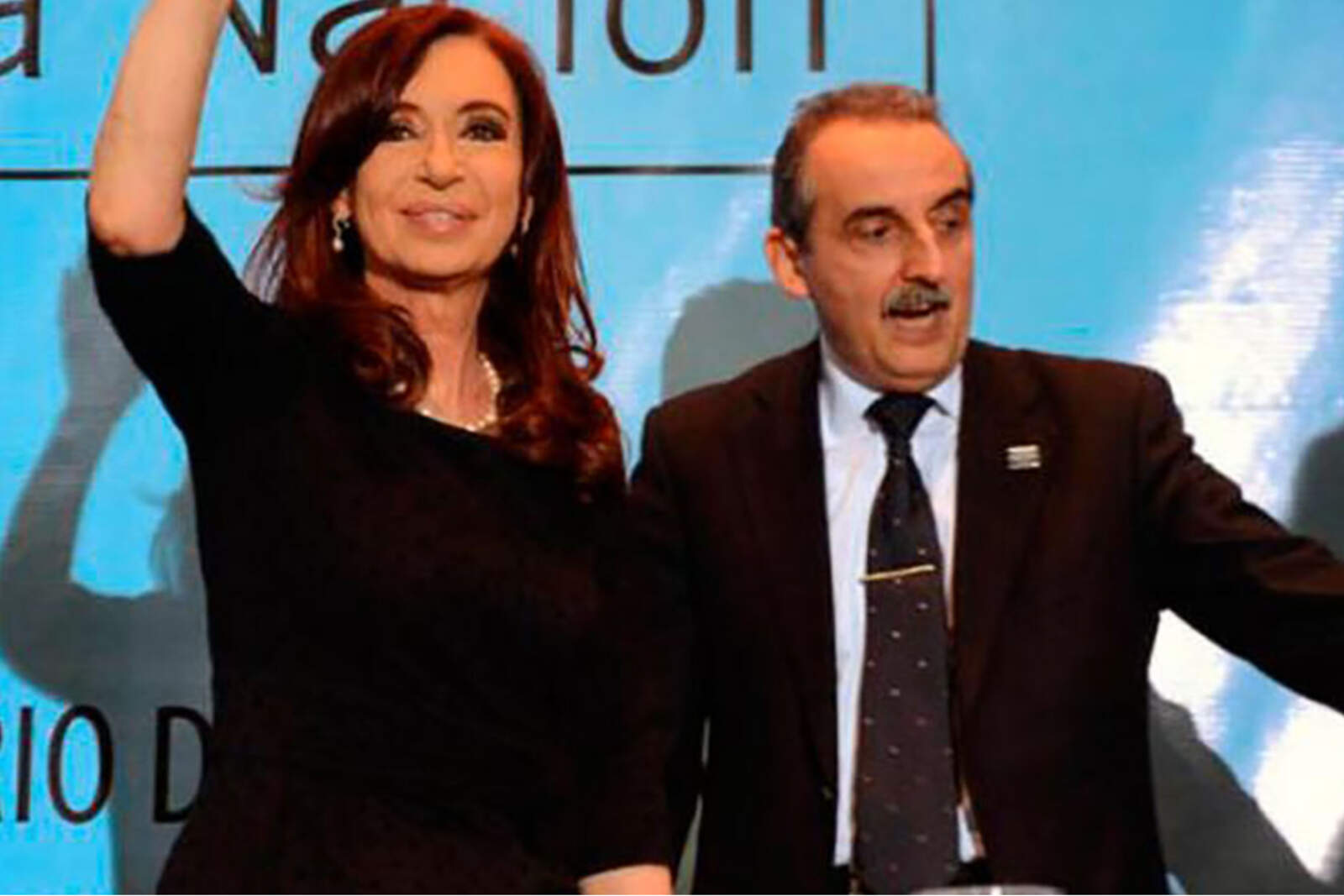
For years, Kirchnerism not only mismanaged the Argentine economy: it falsified reality. It was not about technical errors or methodological mismatches. It was a conscious political decision. Public statistics were tampered with, the inflation index was manipulated, those who measured prices outside the official narrative were persecuted, and a grotesque fiction was built where Argentina had fewer poor people than Germany and where a family could live with dignity on six pesos per day. That was the matrix: lying in order to govern.
INDEC then became a propaganda office. It did not measure the economy; it airbrushed it. It did not inform society; it anesthetized it. The objective was clear: to hide the devastating effects of uncontrolled money printing, chronic deficit, and systematic looting of the private sector. In that framework, inflation was not a problem to be solved, but a piece of data to be hidden. When reality threatened to break the narrative, it was falsified.
That pattern is not an Argentine oddity. It is a constant of statism. As Ludwig von Mises warned, when the State intervenes in the economy, it also needs to intervene in information. Central planning can't coexist with honest data, because honest data reveal its failure. That's why control of statistics is always the next step after control of markets.
With the arrival of Javier Milei to power, that mechanism broke down. That is when the scandal began. Suddenly, the inflation index began to fall steadily. Not by magic, but because money printing was cut off, the accounts were put in order, and the monetary destruction machine was dismantled. Inflation went from levels close to 300% annually to records around 30%. The world acknowledged it. Markets validated it. The data confirmed it.
But Kirchnerism reacted as it always does: by accusing others of what they did.
First they said that the new government "was going to rig the index" when it announced a methodological change. When it was explained that the update was necessary to better reflect real consumption patterns, they shouted fraud. Later, when it was decided to maintain the current methodology until the disinflation process was consolidated, they shouted fraud again. The decision did not matter. The only constant was the accusation. Because they do not argue about methods: they argue about the loss of control.
This is not a technical debate. It is a psychological reflection of authoritarian power. The statist can't conceive that someone has power and doesn't use it to manipulate. That's why the statist projects. That's why the statist accuses. That's why the statist shouts "intervention" when the statist sees rules, predictability, and consistency. As Murray Rothbard explained, socialism not only fails economically: it corrupts morally, because it normalizes lying as a political tool.
The central difference between the old Kirchnerist regime and the current libertarian government is not in a specific index. It is in the guiding principle. Previously, statistics were adapted to the narrative. Today, politics is adapted to the data. Previously, the State manufactured numbers to justify its voracity. Today, the numbers expose the State and force it to shrink. That is what they do not forgive.
That's why those who prostituted INDEC for years are the ones who talk about "manhandling" it. That's why those who persecuted private consulting firms are the ones who denounce "fraud." That's why those who built power on systematic falsification are the ones who are scandalized by transparency. They are not defending a methodology: they are defending a mode of domination.
Inflation is not just an economic phenomenon. It is a hidden, deeply regressive tax that destroys wages, savings, and contracts. Lying about it is a form of institutional violence. Telling the truth, in a country accustomed to state deception, becomes a revolutionary act.
This is not a technical discussion. It is the end of an era. For the first time in decades, the numbers stop serving power and once again serve the truth.