
The initiative received 42 votes in favor and 30 against; it now moves to the Chamber of Deputies
Compartir:
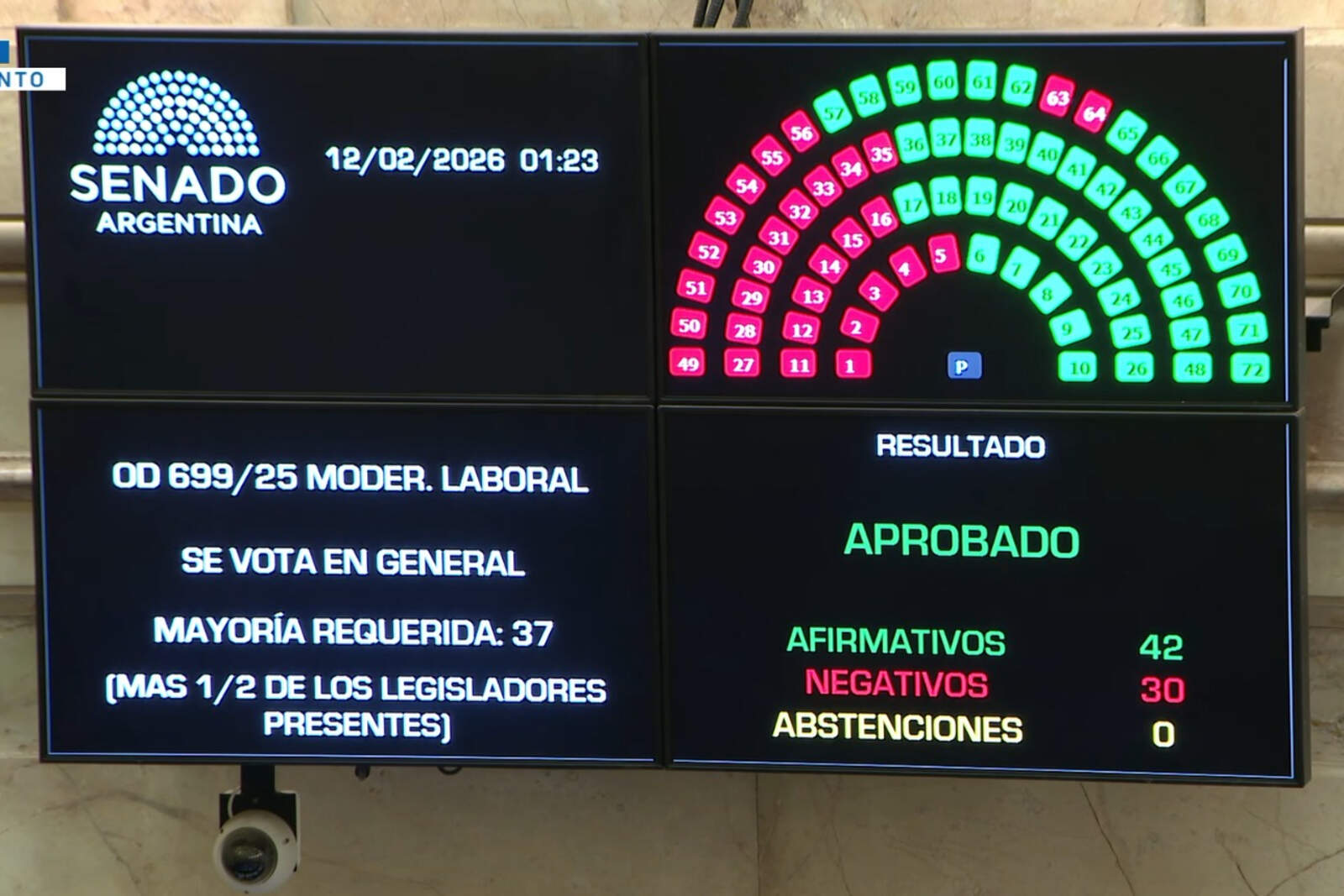
In a key vote held just past midnight, the Senate approved in general the labor reform bill promoted by President Javier Milei. The initiative obtained 42 votes in favor and 30 against, with no abstentions, surpassing the required majority of 37 votes.
The session, which began in the morning and lasted for more than 14 hours, was marked by a sharp clash between the ruling party and the opposition, in addition to disturbances in the vicinity of Congress carried out by left-wing groups.
The chamber's electronic board confirmed the result at around 1:23 a.m. on February 12, 2026. With this general approval, the bill now moves to the Chamber of Deputies, where it will have to undergo a new debate.
The central pillars of labor modernization
The reform constitutes one of the pillars of the so-called May Council and aims to introduce structural changes in the labor regime that has been in force for more than five decades. Among its central pillars are:
- The promotion of more dynamic labor agreements linked to productivity.
- The review of the system of compulsory contributions to unions and business chambers.

- The elimination of mechanisms that indefinitely extended expired agreements.
- The incorporation, as an annex, of the transfer of labor courts to the Autonomous City of Buenos Aires.
During the debate, the ruling party defended the need to modernize a system that discouraged formal hiring and fueled litigation. From the opposition, meanwhile, lawmakers denounced that the bill could affect acquired rights and questioned the dynamics of the legislative process.
Disturbances and attacks in front of Congress
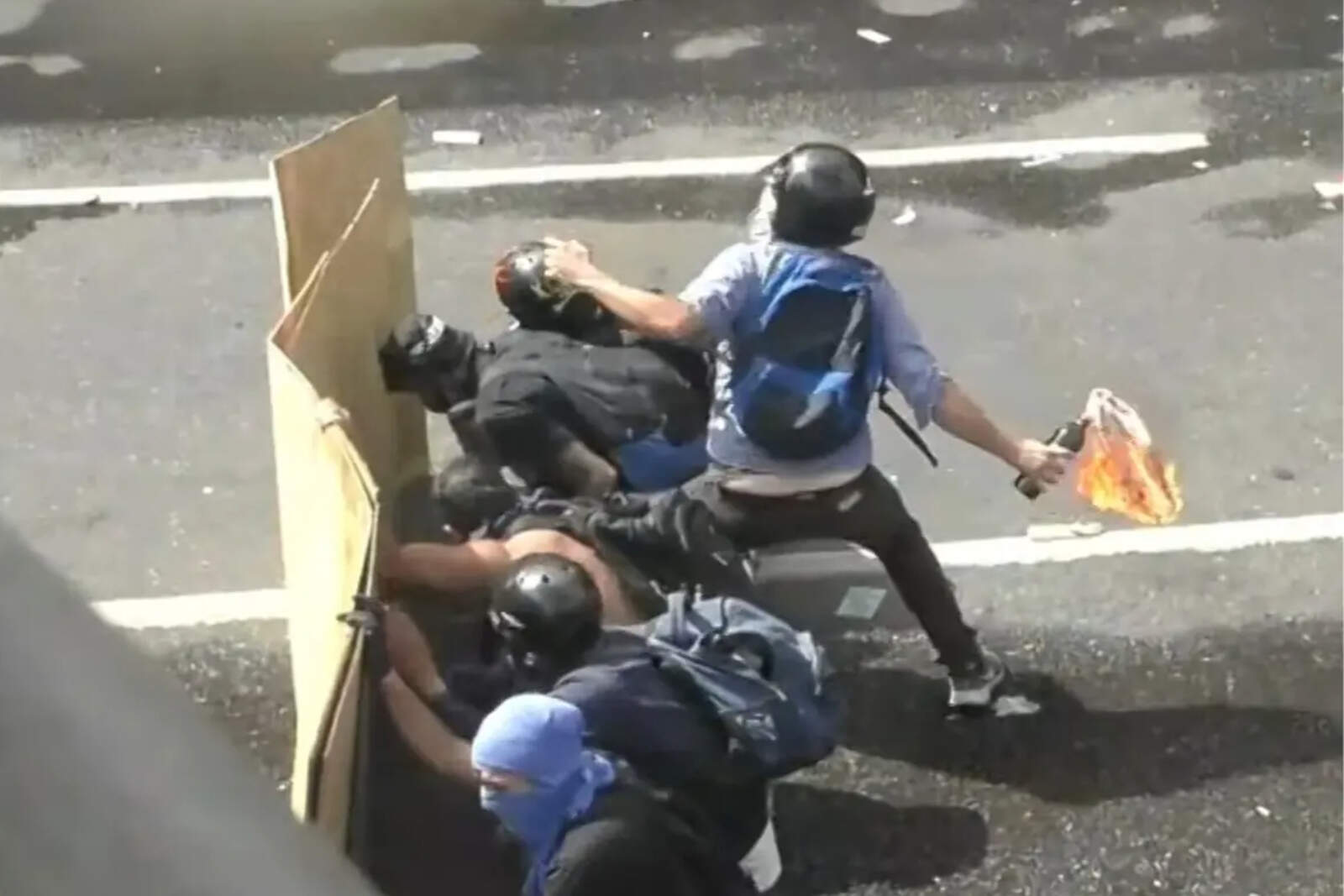
Grupos de izquierda arrojaron bombas molotov.
While the session was taking place, outside Congress there were violent incidents involving stones and Molotov cocktails being thrown at security forces. The operation made it possible to preserve the institutional functioning of the Senate despite the incidents. According to the official report, six officers were injured —from the Federal Police, the City Police, and the Gendarmerie—.
As a result of the disturbances, at least 37 violent demonstrators were arrested and around 40 were detained for identification, as part of a joint deployment between federal and Buenos Aires City forces. In addition, the City reported damage to urban furniture and destruction in the area around Congress that will require repair and cleaning work after the crowd disperses.
The ruling party secured the majority
In the chamber, the ruling party managed to maintain the agreements needed to reach a simple majority in the general vote. The discussion in particular will now begin and, subsequently, the debate in the Chamber of Deputies, where the final fate of one of the most ambitious structural reforms of the current government will be decided.
With this initial approval, the Government consolidates a central step in its economic transformation agenda, amid strong union and political resistance. The debate continues, but the legislative message is already clear: the Argentine labor model is entering a new stage.