Two years after the implementation of rental price control promoted by theSpanish Government, a study by the Juan de Mariana Institute revealed the disastrous results of this policy in the real estate market.
The report analyzes the impact on cities considered “tense”, such as Barcelona, Pamplona and La Coruña, and concludes that, as expected, state intervention failed to reduce prices and, instead, caused a significant drop in supply.
According to the study, the apparent drop in rental values responds more to statistical effects than to a real improvement for tenants.
In the case of Catalonia, where 140 municipalities were affected by the regulation, it is indicated that "the apparent decline in these municipalities is largely explained by statistical effects”.
A tenant.
Data show that in Barcelona the average income went from 1,193 euros per month in the first quarter of 2024 to 1,087 euros in the same period of 2025, while in Navarra it fell from 849 to 774 euros between the second and fourth quarters of
2025.
However, the report clarifies that, by considering comparable periods and discounting the so-called anticipation effect, "the decline is testimonial”.
This phenomenon, they explain, occurred because landlords adjusted prices upwards before the regulations came into force, anticipating the impact of regulation. As a result, the intervention failed to generate a sustained decline in real terms, but rather distorted previous market behavior
.
Lower quality
The work also warns of a drop in the quality of available housing. In Barcelona, the average area of rental properties increased from 75 square meters in 2019 to 71.4 m² today
.
At the same time, the price per square meter reached record highs, reaching 16.8 euros in the third quarter of 2025. In Navarra, the trend is similar: the values per square meter remain between 9.2 and 9.3 euros, while the average surface area fell to 84.3
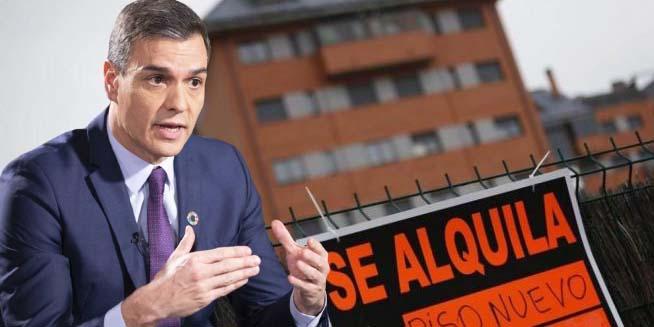
meters. Pedro Sanchez.
The sharp drop in supply The
most obvious impact is seen on supply. “The supply of rental housing has contracted significantly in regulated areas,” the report notes
.
In Barcelona, quarterly contracts fell from 9,825 in the first quarter of 2024 to a range of between 7,400 and 7,800 in subsequent periods, representing a decrease of 22.5%. In annual terms, it went from 38,683 contracts in 2023 to 32,903 in 2024 (− 14.9%), and compared to 2021, the drop is
close to 43%.
The adjustment was even more severe in other regions. In Navarra, contracts fell from 1,204 in the second quarter of 2025 to 672 in the fourth quarter (− 44.2%). In La Coruña, after the declaration of a “tense zone” in July 2025, contracts were reduced from 718 to 354 in December, implying a drop of 51% in just five months
.
The study also points to structural factors that aggravate the situation, such as rising construction costs and regulatory obstacles.
Finally, the report argues that “international evidence confirms the error of interventionism”, citing cases such as San Francisco, where rent control reduced supply by 15% and raised prices between 5% and 7%, or Berlin, where rental ads fell by about 52% after the “Mietendeckel”.
In contrast, the case of Argentina under the Government of Javier Milei stands out, where after the removal of controls in 2023, supply increased by 212% in just six months, reinforcing criticism of state regulation policies in the real estate market.