Acclaimed in Oslo as the 2025 Nobel Peace Prize laureate, the leader once again challenged the Venezuelan dictator as international demands for him to relinquish power continue to grow
Compartir:
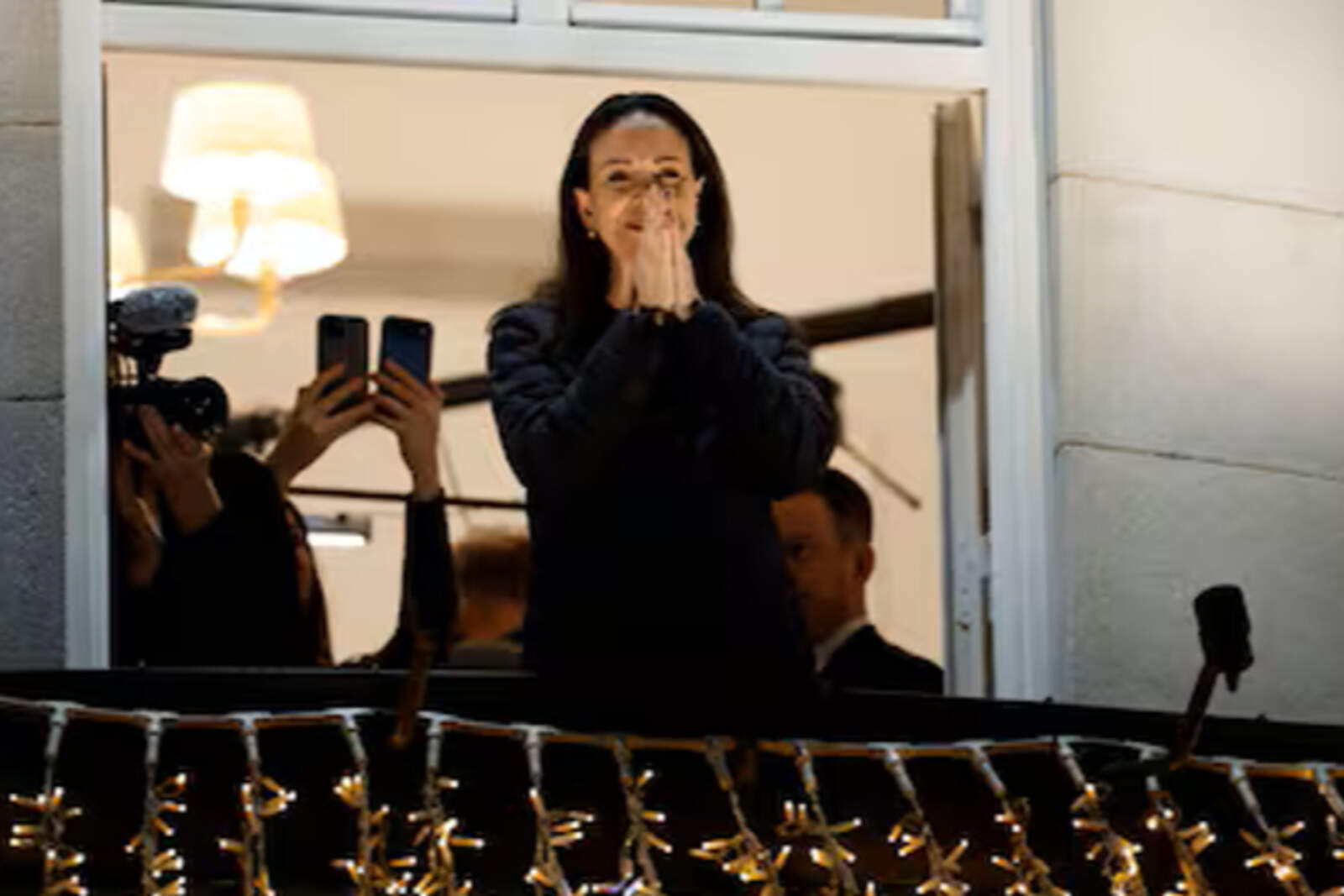
Venezuelan opposition leader, María Corina Machado, made her first public appearance in over a year this Wednesday, after remaining in hiding to evade death threats, judicial persecution, and repressive maneuvers by Nicolás Maduro's dictatorship. The reappearance took place in Oslo, hours after her daughter received the 2025 Nobel Peace Prize on her behalf, an honor that placed the leader at the center of the international stage.
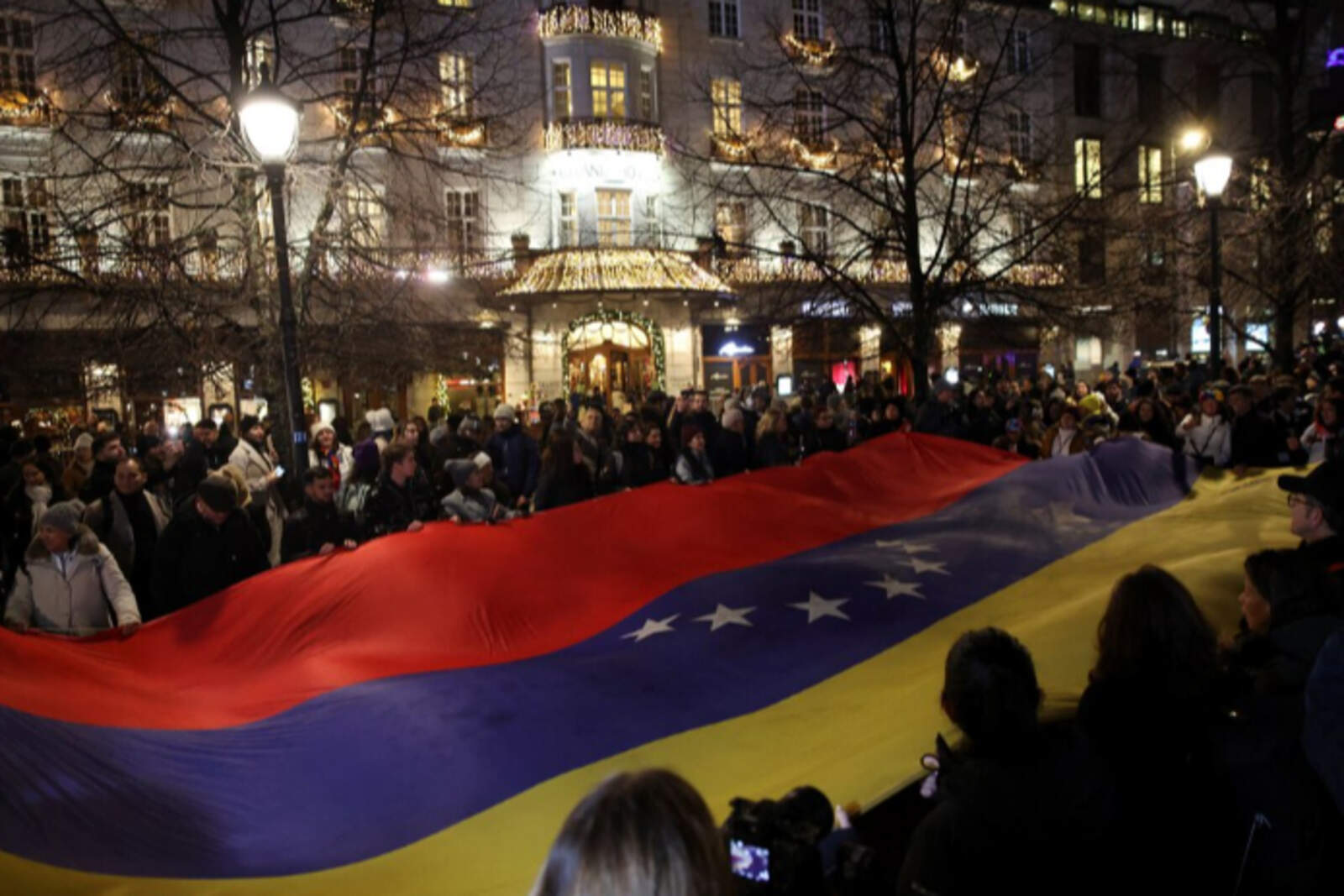
From a balcony of the historic Grand Hotel Oslo, the spot where the public traditionally gathers after the Nobel ceremony, Machado greeted and sang the Venezuelan national anthem before dozens of supporters who spontaneously gathered to see her. Her mere presence, after months of forced silence, had a deep impact on both the Venezuelan diaspora and European diplomacy.
Venezolanos en Oslo.
United States officials confirmed that Machado left Venezuela on Tuesday aboard a boat bound for Curaçao. The operation—planned in strict secrecy by her closest circle—was kept absolutely silent to ensure her physical safety and was only confirmed once the leader was already outside Venezuelan territory.
Expectations about her whereabouts increased throughout the day, especially among diplomats, activists, and Venezuelan citizens residing in Europe. Her public appearance in Oslo took place after the traditional December 11 Torch March, an event that this year took on a strong political character due to the Venezuelan crisis.
The Norwegian government officially announced that the opposition leader will hold a press conference at 09:15 GMT this Thursday, her first direct meeting with journalists since she went into hiding after the July 2024 presidential elections. "Ms. Machado is in Oslo and will have public activity tomorrow", the Ministry of Foreign Affairs stated in a brief but forceful message, reaffirming Nordic support for the Venezuelan democratic transition.
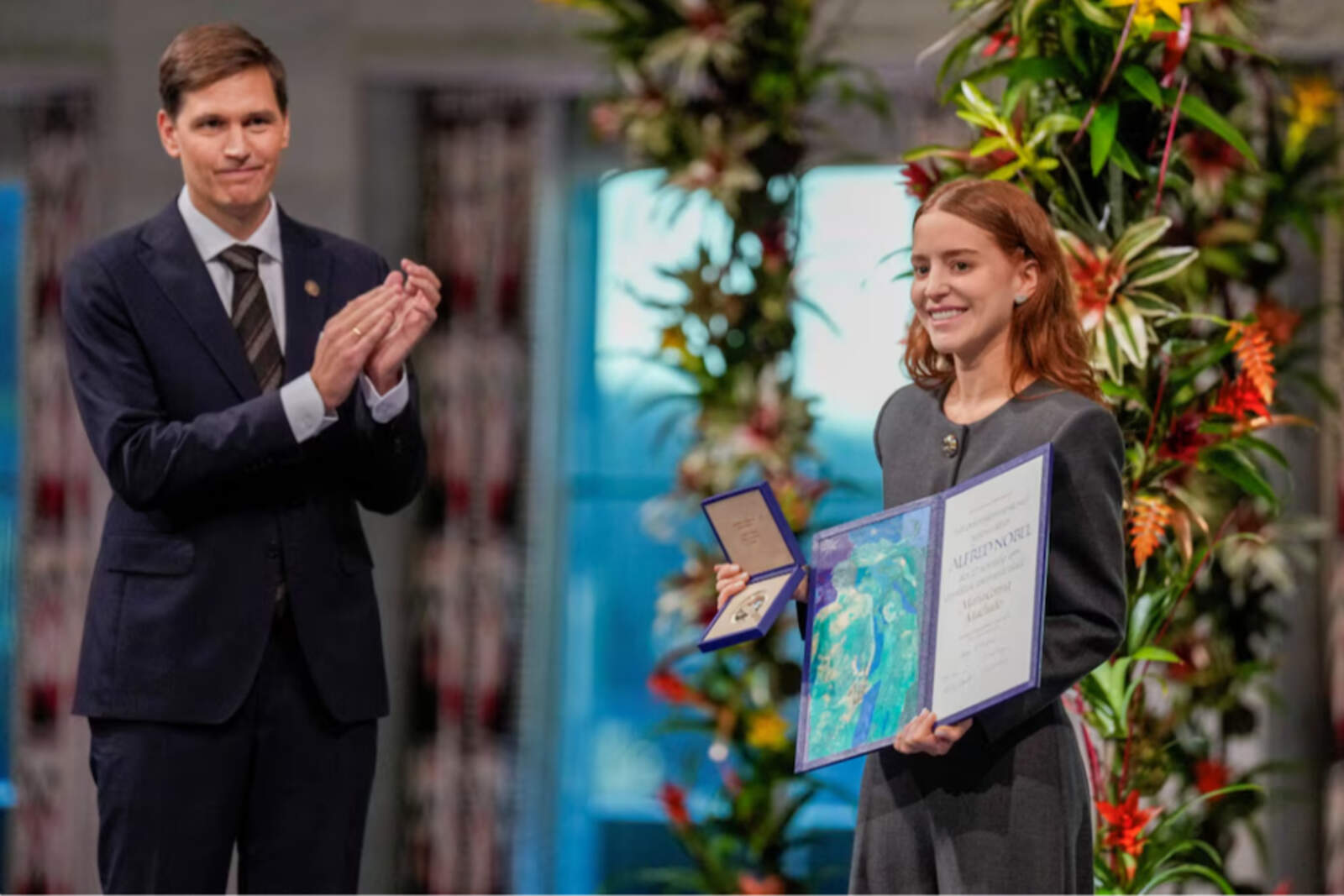
During the Nobel award ceremony, Machado's forced absence dominated the event. Her daughter, Ana Corina Sosa Machado, received the medal and diploma on her behalf and delivered a direct message about the harsh situation facing the Venezuelan opposition. "My mother will arrive in Oslo in a few hours, but her goal is to return to Venezuela very soon," she said. She also emphasized that the leader "will not give up the aspiration to live in a free country."
Ana Corina Sosa Machado.
The most resonant political moment came when the president of the Norwegian Nobel Committee, Jørgen Watne Frydnes, sent a direct message to the Chavista dictator: "Mr. Maduro, you must accept the election results and resign from your position," he declared, provoking an immediate ovation from the audience. The ceremony opened with "Alma Llanera" and "Venezuela", performed by singer Danny Ocean, in a tribute that reinforced the political tone of the day.
The Nobel Peace Prize awarded to Machado highlights her work for a democratic transition in Venezuela. Since the 2024 presidential elections—marked by Maduro's fraudulent reelection—the leader has faced accusations of conspiracy, incitement to hatred, and terrorism by the regime's Prosecutor's Office.
Days before the Nobel announcement, the attorney general publicly warned that she would be considered a "fugitive" if she left Venezuela, a message that increased the leader's personal risk.
Analyst Benedicte Bull, professor at the University of Oslo, warned that a possible return of Machado to the country "runs the risk of being arrested if she returns," although she noted that the regime has been more cautious with her because her detention would have "a strong international impact". She also pointed out that a prolonged exile could affect her political influence.
Machado, who dedicated her Nobel to United States President Donald Trump, keeps a close relationship with the Republican leader. The United States administration has ordered military operations in the Caribbean, justified as actions against criminal networks, while Maduro's regime claims they seek to destabilize him and control the country's energy resources.