

Milei goes all in for the Malvinas: what the new bill to defend Argentine sovereignty is like

Milei goes all in for the Malvinas: what the new bill to defend Argentine sovereignty is like
Milei goes all in for the Malvinas: what the new law to defend Argentine sovereignty is like
Imagen de Editorial Team
porEditorial Team
Argentina

The Government sent a bill to Congress that toughens penalties against those who exploit resources in the islands, incorporates a demolition regime, and creates a National Security Council

Add La Derecha Diario on
Share:

The president Javier Milei sent to Congress the National Sovereignty Defense Law project, an initiative that seeks to profoundly modify the tools with which the Argentine State responds to external threats.

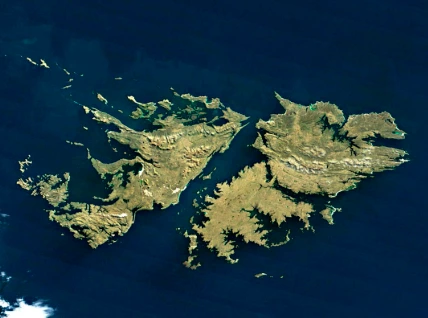
Although the Malvinas cause constitutes the origin and one of the main axes of the initiative, the project goes much further than the dispute over the islands. The Government proposes to integrate under a single strategy issues related to Defense, Intelligence, foreign policy, economy, cybersecurity, critical infrastructure, and national security.

The initiative also replaces the current regime established by Law 26,659 and establishes a much broader framework to sanction those who participate in the unauthorized exploitation of Argentine natural resources.

Penalties of up to 20 years for exploiting resources without authorization

One of the toughest chapters is linked to the economic activities developed around Malvinas and other areas over which Argentina claims sovereign rights.

The project establishes that the exploitation of renewable and non-renewable resources will require authorization from Argentine authorities. Thus, the scope would not be limited to hydrocarbons but could also encompass activities such as fishing.

Additionally, the regime targets the entire chain involved in an operation deemed illegal.

Sanctions could extend to companies, shareholders, controllers, suppliers, and providers of financial, technical, or logistical services that are essential for those activities.

Penalties of up to 20 years for exploiting resources without authorization

In criminal matters, the penalties provided can reach up to 20 years in prison for certain behaviors related to the exploration and exploitation of non-renewable natural resources.

Fines ranging from 4,000 to 500,000 barrels of oil, disqualifications of up to 20 years, and restrictions on contracting with the State are also contemplated.

The Government recovers the shoot-down regime

Another central point is the incorporation of an aerospace protection regime that contemplates the progressive use of force against aircraft deemed hostile.

The procedure begins with the identification of the aircraft and the corresponding warnings. If the aircraft maintains behavior considered hostile, military response may proceed.

The use of force is presented as a last resort and requires an express order from the President, although the project allows delegating that authority to the Minister of Defense.

The proposal thus resumes a tool that had been established during Mauricio Macri's government and later repealed during Alberto Fernández's administration.

A National Security Council with Milei at the helm

The project also creates a National Security Council, which will function as the governing body of a new National Security System.

The body will be chaired by the President and will include the permanent participation of the Chief of Staff, the Ministers of Foreign Affairs, Defense, and Economy, the Secretary of State Intelligence, and the Secretary of Legal and Technical Affairs.

The central idea is to end a fragmented management of strategic issues and establish a permanent coordination among the different areas of the State.

The Council will have the authority to request information and assistance from national agencies and may seek cooperation from provinces, municipalities, and the City of Buenos Aires.
A National Security Council with Milei at the helm

Tariffs and asset blocking in the face of external threats

The initiative also incorporates economic tools that can be used in situations deemed a serious and imminent threat to National Security.

Among the measures provided are currency restrictions, limitations on transfers and payments, controls over imports and exports, suspension of permits and concessions, and blocking of funds and assets under Argentine jurisdiction.

The project also enables a mechanism to temporarily increase the import and export duties applicable to an involved foreign State, with a limit of up to 75%.

Thus, economic and trade policy becomes an explicit part of the National Security tools.

National Defense: a broader perspective

The reform also modifies the National Defense Law to broaden the definition of threats that may affect Argentina.

The project contemplates both state and non-state threats, as long as they have an external origin, and adds dimensions that exceed the traditional military field.

Cyberspace, the electromagnetic spectrum, strategic infrastructure, and certain attacks against critical systems become part of the National Security analysis framework.

The Armed Forces must be prepared to respond to conventional and non-conventional operations, in addition to other military operations distinct from war.


Protection of critical infrastructure

The Government also proposes to create a specific system to protect infrastructure considered essential for the functioning of the country.

The regime includes facilities and networks related to energy, communications, health, defense, security, economy, and technology, as well as data centers and computer systems.

The National Security Council must develop a strategy and a national protection plan, while operators of the facilities deemed critical will have to implement their own security plans.

Information about certain infrastructures may be classified for security reasons.

More controls over vessels in Argentine waters

The project also establishes new rules for actions against vessels considered of interest.

The figure of the "Vessel of Interest" is created to identify vessels that, due to their route, history, activity, flag, or behavior, require special monitoring.

The classification does not itself imply that a crime exists nor does it automatically authorize the use of force.

The procedure establishes different stages, from identification and detention orders to inspections, interposition maneuvers, and warning shots.

Sinking is reserved for extreme military circumstances against a hostile vessel and requires presidential authorization.

A barrier against foreign interference

A barrier against foreign interference

Another chapter targets certain forms of foreign influence over Argentine political and electoral processes.

The project restricts financing and organizing electoral campaigns by foreigners without permanent residence and foreign legal entities.

It also creates crimes related to operations financed or directed by foreign States or organizations aimed at altering electoral processes or developing coordinated campaigns of mass disinformation.

Penalties can reach up to 15 years in aggravated cases.

The initiative also incorporates crimes related to clandestine operations of foreign intelligence and the delivery of sensitive information to foreign States or intelligence services.

The RePET and the tightening against terrorism

The proposal also incorporates into the legal framework the Public Registry of Persons and Entities linked to Acts of Terrorism and its Financing (RePET).

The registry will operate within the Financial Information Unit and will cover individuals and entities linked to terrorism, terrorist financing, and the proliferation of weapons of mass destruction.

Obligated subjects must immobilize funds and assets linked to individuals or entities included in the registry and report those operations to the UIF.

The project also establishes penalties of five to 15 years in prison for those who deliberately provide material support to organizations or individuals linked to terrorist activities or the proliferation of weapons of mass destruction.

An incentive to abandon illegal activities

The tightening of sanctions will be accompanied by a regularization mechanism.

The Withdrawal and Regularization Regime will allow certain subjects involved in questioned activities to access benefits if they abandon those operations, commit to not reoffending, and comply with established conditions.

One of the alternatives will be to convert investments towards legal activities developed in Argentine territory.

The mechanism cannot be used by repeat offenders or by those with a final conviction for the crimes contemplated in the regulation.

A new strategy to defend Argentine interests

The Milei project thus proposes a significant change in the way the Argentine State addresses sovereignty and external threats.

Malvinas appears as the starting point of the reform and as one of its central chapters, but the initiative proposes a much broader architecture, in which the defense of national interests also includes economy, infrastructure, intelligence, technology, trade, and foreign policy.

The Government seeks to replace a fragmented scheme with a coordinated structure from the Executive Power, with a National Security Council responsible for articulating the different areas.

Now it will be Congress that will debate the project and define the final scope of a reform that, if approved, will modify a large part of the Argentine legal framework regarding sovereignty, Defense, and National Security.


La Derecha Diario logo
TwitterInstagramYouTubeTikTokFacebook
Derecha Diario TV

Nosotros

  • Quienes Somos
  • Autores
  • Donar

Privacidad

  • Protección de datos
  • Canales
  • Sitemap
  • RSS

Contacto

  • info@derechadiario.com.ar
PUBLICIDAD

Related news

Marcelo Gallardo explained why he accepted to coach the Ecuador National Team: "It is a completely new challenge for me"

Marcelo Gallardo explained why he accepted to coach the Ecuador National Team: "It is a completely new challenge for me"

Milei sent the National Sovereignty Defense Law to Congress to strengthen the Malvinas cause

Milei sent the National Sovereignty Defense Law to Congress to strengthen the Malvinas cause

United States: poverty fell to a historic low and incomes reached a new record

United States: poverty fell to a historic low and incomes reached a new record

PS6 portable: everything we know about Project Canis and its possible arrival in 2027

PS6 portable: everything we know about Project Canis and its possible arrival in 2027

'Resident Evil': the new movie by Zach Cregger has become the highest-rated video game adaptation

'Resident Evil': the new movie by Zach Cregger has become the highest-rated video game adaptation

Snap Specs: how the new smart glasses with augmented reality are

Snap Specs: how the new smart glasses with augmented reality are

La Derecha Diario logoLa Derecha Diario logo
ESX logoInstagram logoYouTube logoTikTok logoFacebook
ARGENTINAUNITED STATESECUADORISRAELMEXICODERECHA DIARIO TV
  • ES
    XInstagramYouTubeTikTokFacebook
  • DERECHA DIARIO TV
  • Sections
  • ARGENTINA
  • UNITED STATES
  • ECUADOR
  • ISRAEL
  • MEXICO
  • URUGUAY
  • Countries
  • La Derecha Diario logoLA DERECHA DIARIO
  • La Derecha Diario México logoLA DERECHA DIARIO MÉXICO
  • La Derecha Diario Uruguay logoLA DERECHA DIARIO URUGUAY
  • La Derecha Diario Ecuador logoLA DERECHA DIARIO ECUADOR
  • La Derecha Diario Israel logoLA DERECHA DIARIO ISRAEL
  • La Derecha Diario Estados Unidos logoLA DERECHA DIARIO ESTADOS UNIDOS
  • Topics
  • GUERRA EN IRÁN
  • The Newspaper
  • QUIENES SOMOS
  • AUTORES
  • PUBLICIDAD
  • DONAR