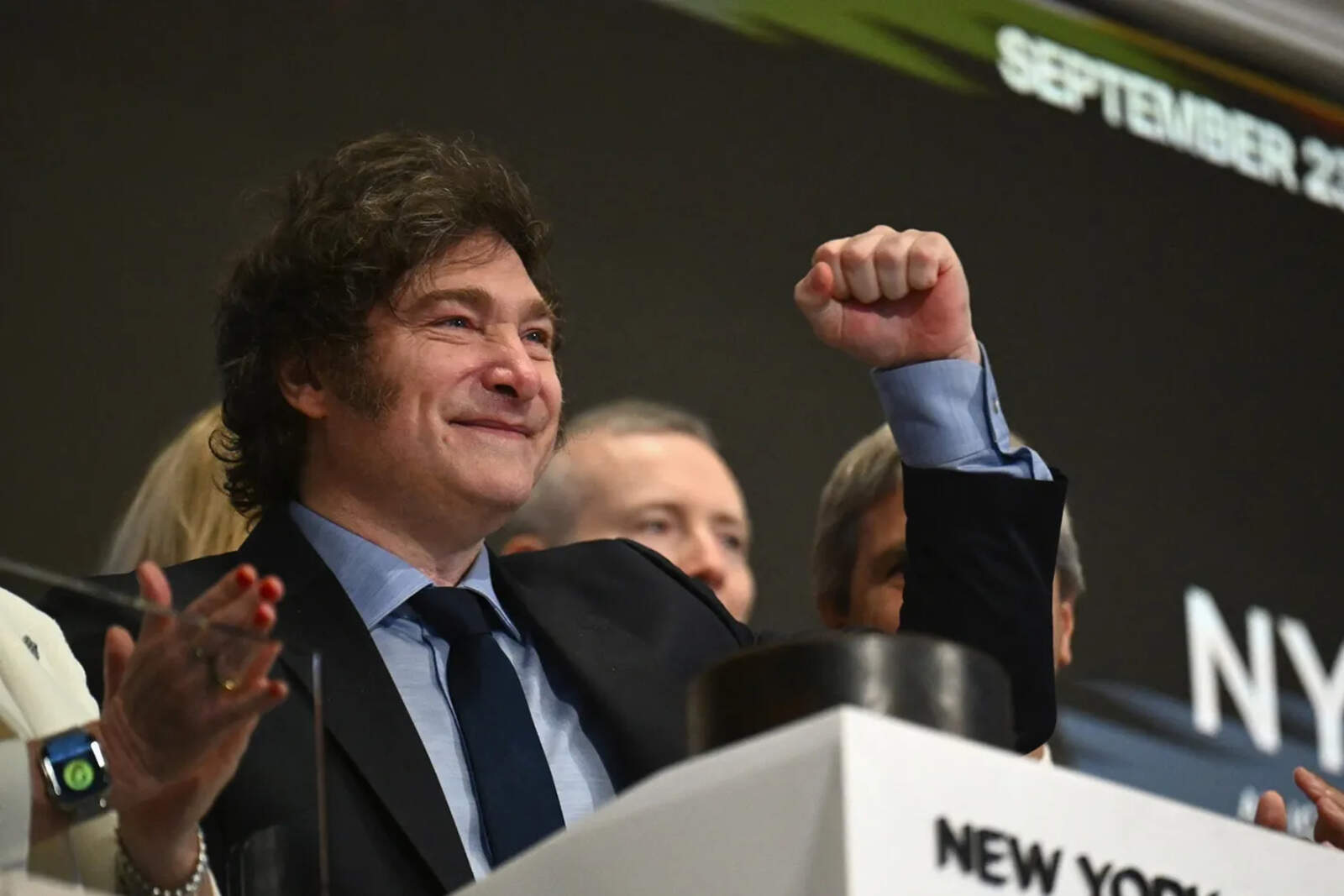

The President argued that the regulation disrupted public finances and served political purposes
Nuevo
Agregar La Derecha Diario en
Compartir:
President Javier Milei vetoed the University Financing Law passed a few days ago in Congress. The decision was officially communicated to the Chamber of Deputies and formalized through Decree 647/2025, published this Wednesday.
The measure was expected, given that the president himself had indicated that he would reject the initiative. The Executive Branch maintained that the regulation posed a serious risk to fiscal balance and served a political objective rather than an educational one.
Among the central points of the text was the automatic adjustment of operating expenses for public universities starting January 1, 2025, calculated according to the variation of the Consumer Price Index (CPI).
Specific allocations were also designated to "support salaries and working conditions for teaching and non-teaching staff". According to the ruling party, these clauses were designed to undermine the adjustment plan and force an increase in spending.

In the grounds for the veto, the Executive stated: "Article 83 of our Constitution grants the Executive Branch the power to reject in whole or in part a bill passed by the National Congress".
They also added: "The President's decision to veto a bill in no way implies a disregard for democratic institutions but rather, on the contrary, is the exercise of a power expressly provided for by the text of our Fundamental Law".
Frase pronunciada por Javier Milei luego de que se apruebe la media sanción en Diputados.
The Government emphasized that this is not an exceptional measure but a common practice in Argentine democracy. "The exercise of the constitutional power to observe a bill is not a novelty in our institutional dynamics and has been a common practice among the various administrations of the last forty (40) years", they stated.
The ruling party keeps that Congress sought to move forward with a regulation that, under the noble banner of education, had the true purpose of conditioning the Government's economic policy.
This way, the veto is presented as a brake on an initiative that would have unbalanced fiscal accounts and put the stabilization program at risk. For Milei, defending budgetary balance is essential to guarantee the sustainability of all public policies, including university policy.
The opposition, meanwhile, has already called a special session in the Chamber of Deputies for next Wednesday with the aim of addressing the rejection of the presidential veto.