The annual MIT Technology Review list highlights advances in energy, AI, biotechnology and space that promise to transform business and society.
Nuevo
Agregar La Derecha Diario en
Compartir:
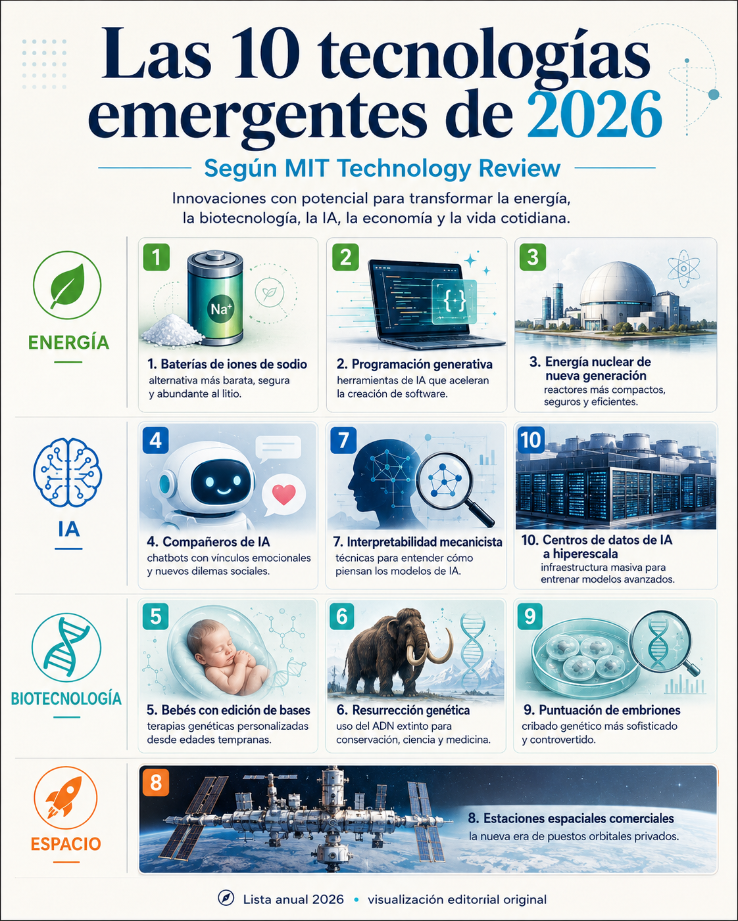
MIT Technology Review published its long-awaited list of the 10 emerging technologies for this year, a report that each edition identifies the advances with the greatest potential to change the world. The Spanish version reviews innovations ranging from energy to biotechnology, with a direct impact on the economy and daily life
.
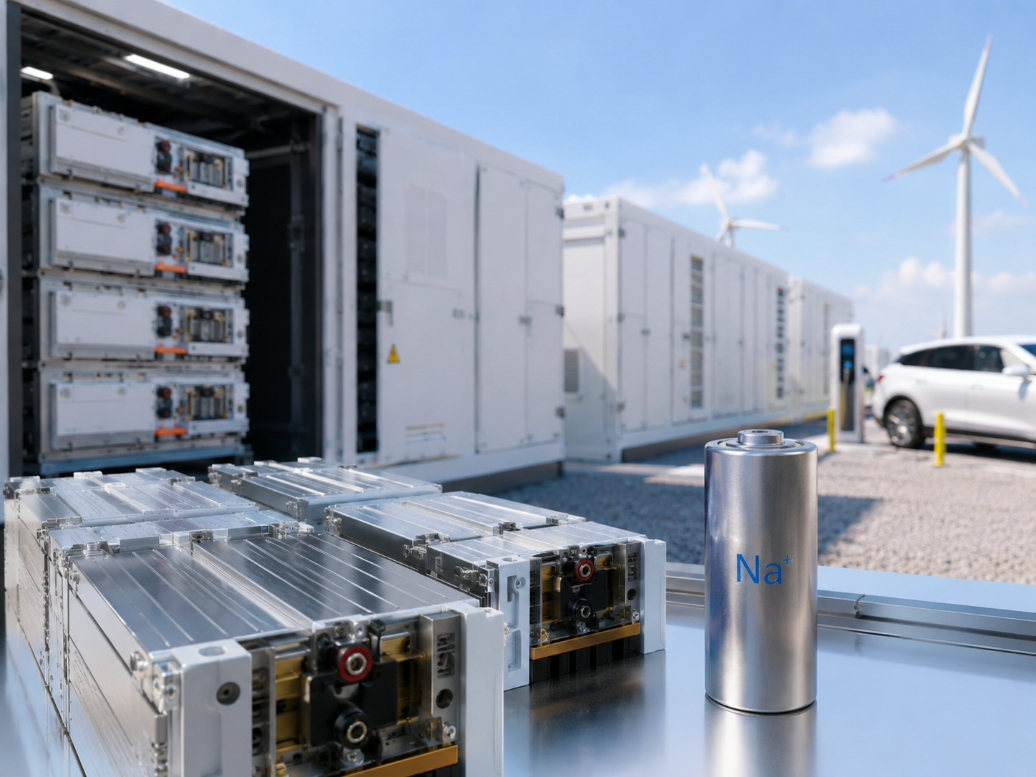
One of the key points is the rise of sodium-ion batteries, presented as a cheaper, safer and more abundant alternative to lithium. These are already starting to reach electric vehicles and the power grid, which could democratize energy storage
.
In the programming field, generative programming tools powered by AI are revolutionizing software creation. While they accelerate development, they also generate debates about the future of entry-level positions
in technology.
Energy and sustainability in focus
Next-generation nuclear energy appears as another great promise. The new reactors use innovative materials and compact designs to be safer and cheaper, offering a clean option in the face of growing electrical demand
.
For their part, hyperscale AI data centers drive advanced models with powerful architectures, albeit at an enormous energy cost. This highlights the challenge of balancing the progress of artificial intelligence with sustainability.
In biotechnology, treatments such as personalized base editing stand out. The case of a baby who received customized gene therapy opens the door to individualized medications in the coming years
.
AI, Space and Ethics
AI partners are gaining ground, with people forming intimate relationships with chatbots. Although for some it represents company, for others it involves risks that deserve attention
.
Other technologies on the list include genetic resurrection, which explores how extinct DNA can help today; mechanical interpretability, which seeks to understand the inside of AI models; commercial space stations, with the first private orbital outpost soon to be launched; and embryo scoring, which allows for more sophisticated genetic testing
for trait selection.
This set of advances reflects how technology continues to accelerate. From accessible batteries to precise genetic edits, the report highlights both the opportunities and the ethical and social challenges that come hand in hand
.
MIT experts stress that these technologies will not only transform industries, but will require regulations and public debates to maximize benefits and minimize risks. 2026 is shaping up to be a key year to see them move from research to concrete applications