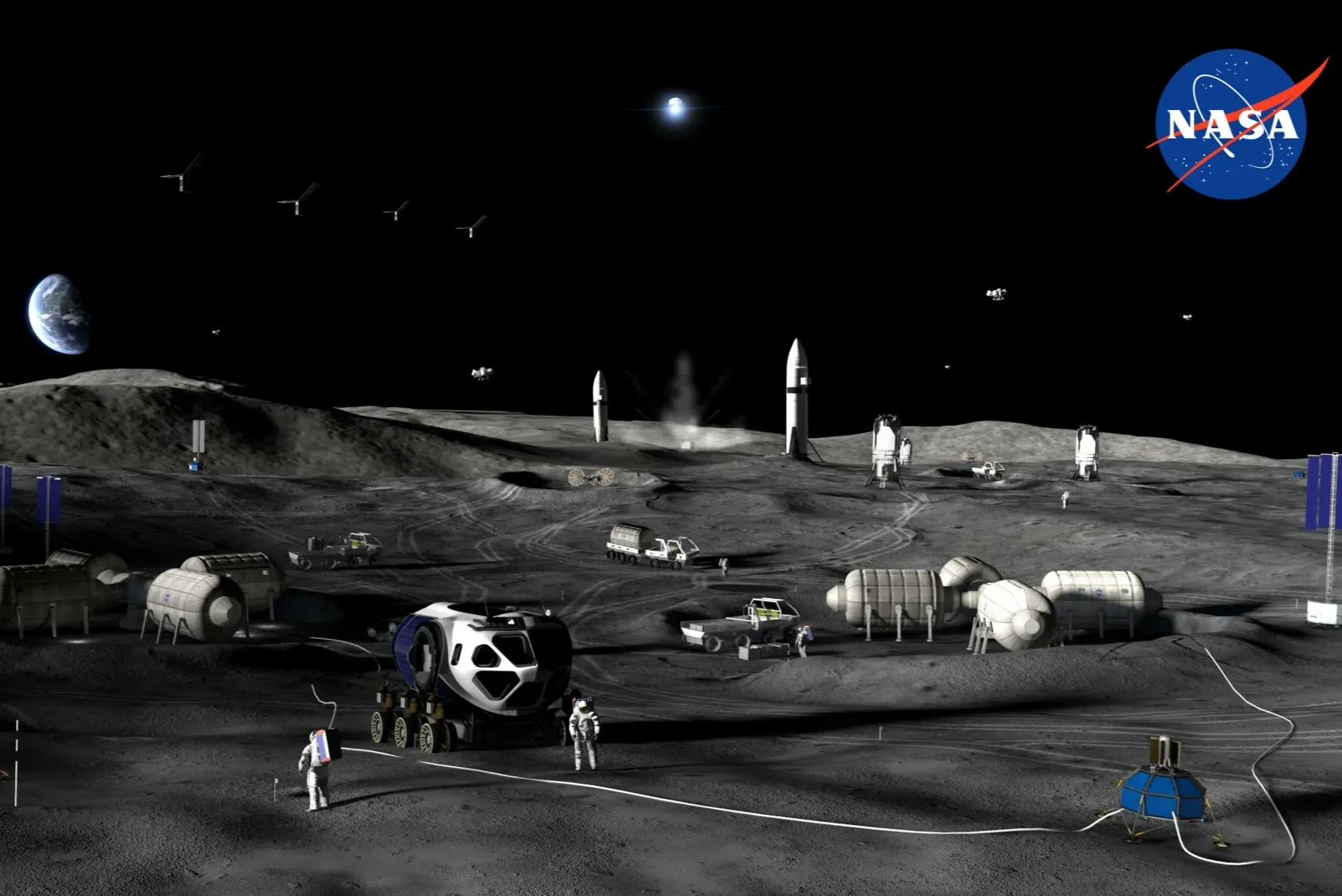

NASA this week unveiled an ambitious schedule for establishing a sustained presence on the Moon. It all starts with three key missions that will be launched this year and that will lay the groundwork for the future permanent moon base
.These operations are part of the preparations for the manned moon landing of the Artemis program scheduled for 2028. According to the agency, these are the first of more than a dozen missions to be announced during 2026
.Moon Base I will be the pioneer and is scheduled to take off no earlier than the fall of this year. It will use Blue Origin's Blue Moon Mark 1 Endurance lander to carry several NASA science instruments.
Among the payloads, the stereo camera to study the interaction of thrusters with the lunar surface and a retro-reflecting laser array that will help orbiting ships to determine more precise positions, stand out.
Second and third missions of the year Moon Base II will arrive a little later in 2026 and will carry more than 500 kilos of
payload aboard Astrobotic's Griffin lander. It includes the Astrolab FLIP rover, which will be used to test manned lunar vehicle operations that will be used by astronauts in the future
.For its part, Moon Base III also aims to be launched this year. It will carry payloads for NASA, ESA and the South Korean Institute of Astronomy. The main one is Lunar Vertex, which will fly on Intuitive Machines' Nova-C Trinity lander and will study lunar swirls to better understand surface evolution
 In addition to these three initial missions, NASA announced important contracts for the development of manned lunar rovers. $219 million were awarded to Astrolab and $220 million to Lunar Outpost to build two
 Another innovation is that the Jet Propulsion Laboratory selected Firefly Aerospace to build the ship that will carry four MoonFall drones to the Moon in 2028. These drones will capture high-resolution images in difficult terrain and will have a payload capable of surviving the lunar night for