Other cosmic phenomena: events observed in various regions of space.
Launched in November 2004, the telescope had three instruments that allowed it to observe the universe in different wavelengths, such as ultraviolet light, optical, and X-rays. Its ability to rotate and point at different targets within minutes facilitated the tracking of sudden events.
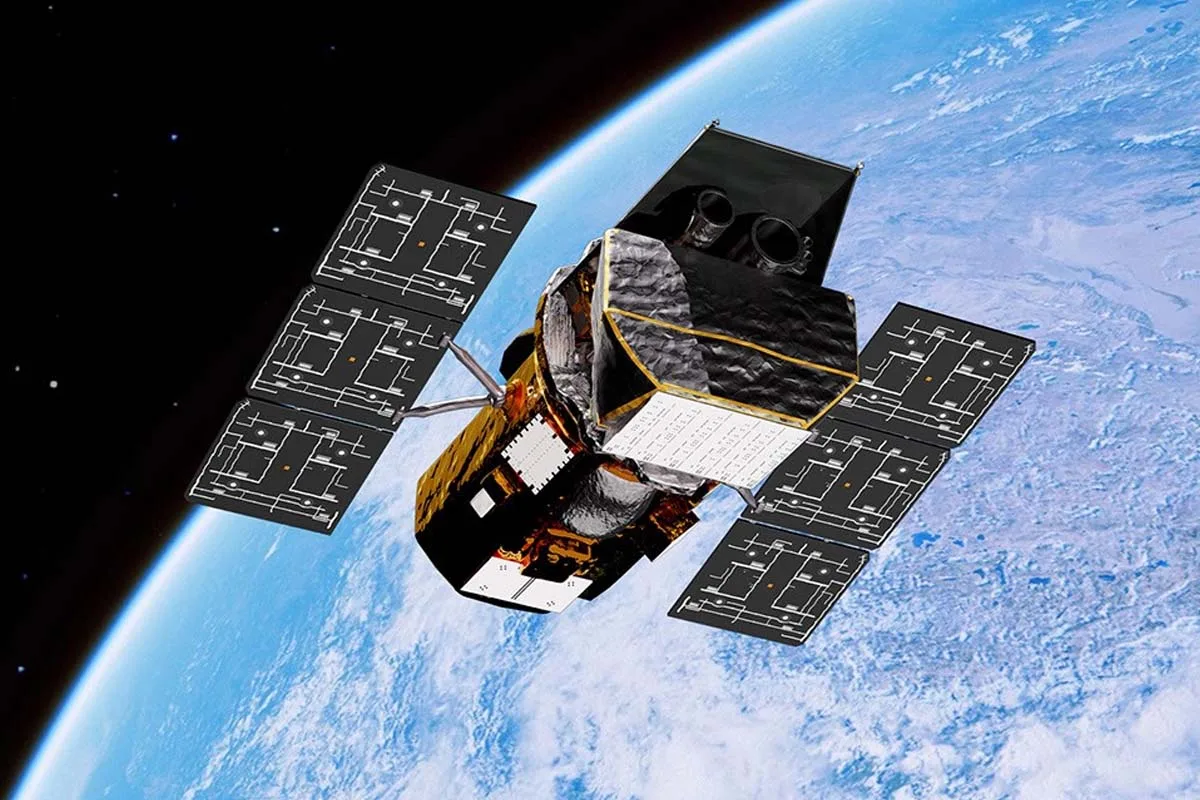
The Swift telescopefrom NASA disintegrated in the Earth's atmosphere after nearly 22 years of activity. The observatory, which investigated some of the most powerful explosions in the universe, re-entered over the region of Sumatra, in Indonesia.
The U.S. space agency confirmed that the re-entry occurred on Wednesday at 7:39 AM Eastern Time, at about 3.4 degrees north latitude and 98.6 degrees east longitude. The NASAestimated a probability of 1 in 2,100 that some fragment would survive and fall on a populated area. No damage or injuries were reported.
NASA's Swift Space Telescope disintegrated in Earth's atmosphere
A mission that far exceeded its lifespan
The Neil Gehrels Swift observatory weighed approximately 1,450 kilograms and was designed to operate for two years. However, it exceeded expectations and became a key tool for studying cosmic phenomena such as:
Gamma-ray bursts: extremely powerful explosions occurring in the universe.
Supernovae: explosions of stars.
Black holes: astronomical objects that were also part of its research.
According to NASA estimates, Swift's scientific observations contributed to nearly 7,000 research papers. The data collected during the mission will continue to be analyzed by scientists in the coming years.
A mission that far exceeded its lifespan
Why the NASA Swift telescope fell
The return of the observatory was the result of atmospheric drag, which gradually reduced its speed and deteriorated its orbit. Increased solar activity intensified this effect and accelerated its descent toward Earth.
In August 2026, NASA had explored a rescue mission to extend its operation. The initiative contemplated a robotic spacecraft developed by Katalyst Space Technologies, which was to rendezvous with Swift and elevate it to a higher orbit. However, the attempt failed after launch.
Why did NASA's Swift telescope fall
NASA had officially concluded the scientific operations of the telescope on October 20, 2026, due to the loss of altitude making observations increasingly difficult.
The end of Swift represents the closure of a mission that, despite being conceived to last only two years, extended its activity for nearly two decades and contributed to the study of some of the most enigmatic phenomena in the universe.