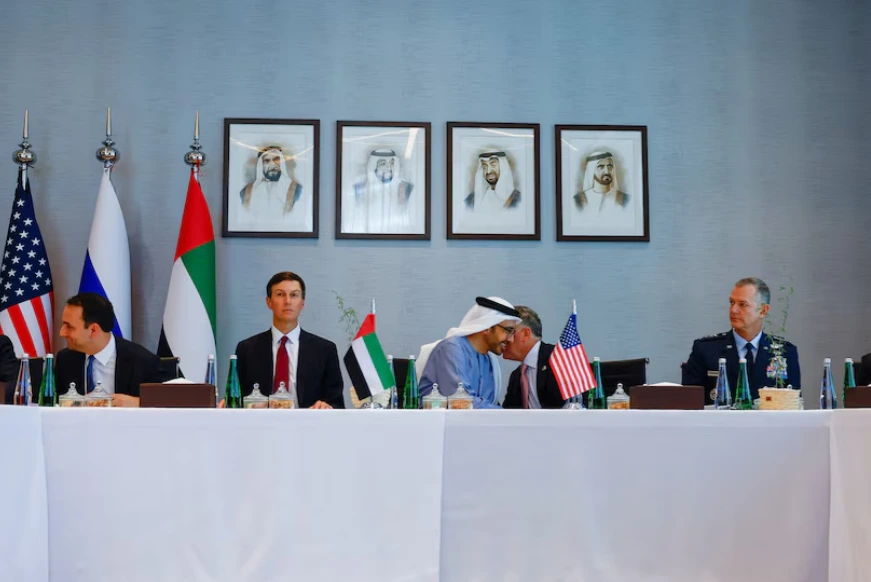
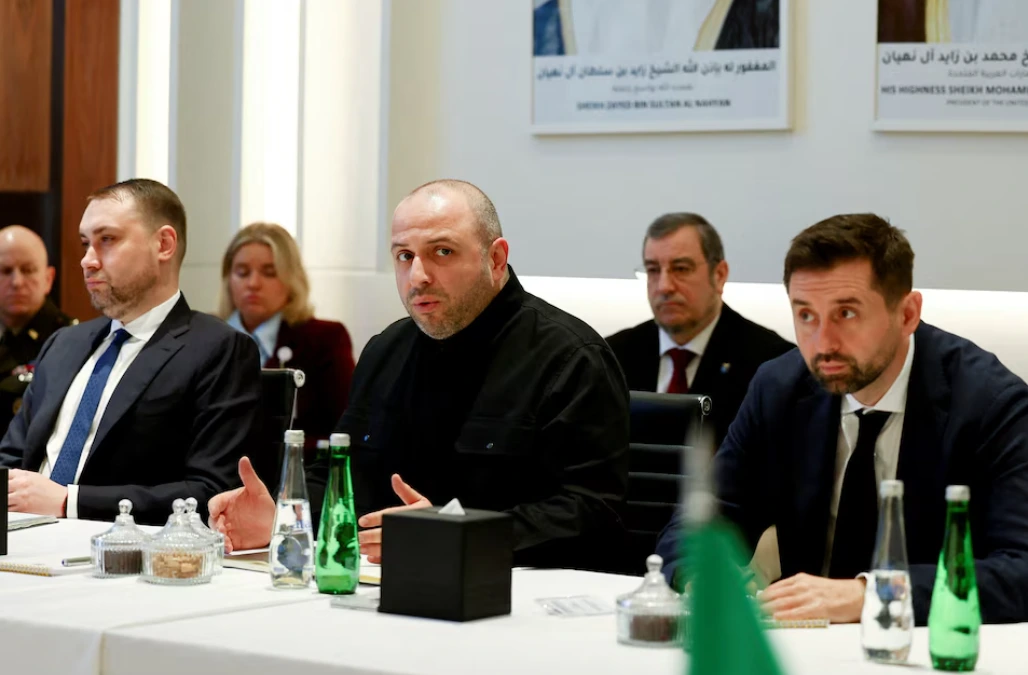
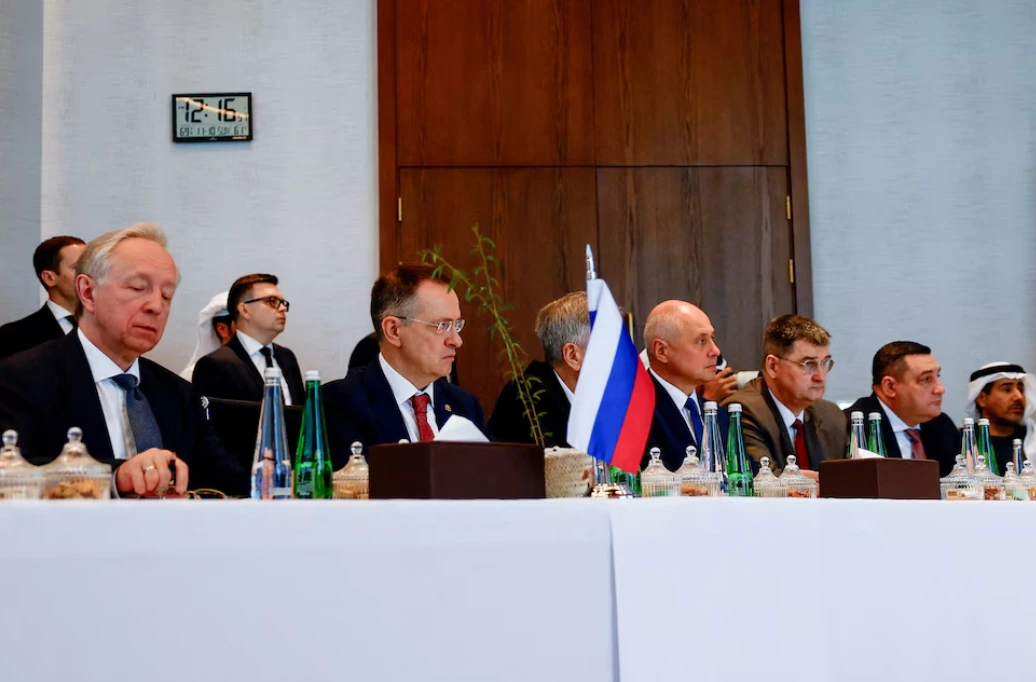
The delegations from the three countries concluded the second day of talks to try to end the war. An official statement is expected, and it has been revealed that there could be a new prisoner exchange
There are also differences over when the future architecture of European security should be discussed. Moscow wants that debate to be part of the general negotiations, while Kiev insists that hostilities must first cease and protection guarantees established.
A Russian source stated that the end of the war represents only one component of a much broader discussion about continental security. From Ukraine, however, they insisted that significant divergences still exist between both positions.
A possible exchange of prisoners and the attacks that continue
One of the concrete outcomes that could arise from the negotiations is a new prisoner exchange. During the first day, Zelensky mentioned the possibility of a large-scale swap, with options of 1,000 for 1,000 or even 1,500 for 1,500 detainees.
The humanitarian talks also addressed issues related to Ukrainian civilians under Russian custody and minors transferred from Ukrainian territory. However, a definitive agreement with confirmed dates and quantities has not yet been officially announced.
While diplomatic contacts are ongoing, military attacks continue in both countries.
The Ukrainian government reported Russian bombings against six important electrical substations spread across four provinces. Attacks on energy infrastructure represent one of the main problems for Kiev, especially given the need to ensure supply during the winter.
In Russian territory, the governor of the Leningrad region, Alexander Drozdenko, reported an attack by Ukrainian drones against the oil port of Ust-Luga. The official stated that the bombing caused a fire and left three injured. He also reported that air defenses neutralized at least 150 drones in that region.
The second day ended without an announcement of a ceasefire or a definitive political agreement. Nevertheless, the continuation of talks and the possibility of advancing humanitarian issues keep the diplomatic channel promoted by the Trump administration open.
The second day took place in a trilateral format, with representatives from Washington, Moscow, and Kiev. The meeting lasted just under two hours, according to the Russian state agency TASS. After that meeting concluded, a new round of talks began between the Ukrainian delegation, the United States, and European representatives.
Washington once again played a central role in the diplomatic contacts. President Donald Trump seeks to promote a negotiated solution to the conflict, while his envoys Steve Witkoff and Jared Kushner work to bridge the positions of Moscow and Kiev.
The U.S. delegation is also looking to gradually expand the negotiation format to include European countries. Marco Rubio, U.S. Secretary of State, described the first day of talks as "very productive," although he acknowledged that there is still work ahead.
For his part, Kushner raised the need to establish a new security framework that includes both Ukraine and Russia as well as the rest of Europe. The initiative aims to discuss not only the end of hostilities but also the geopolitical conditions that would prevent a new escalation.
European participation is one of the points that still generates differences. While Washington believes that the countries of the continent should be involved in a potential solution, Moscow has reservations about their inclusion in direct negotiations.
Territorial differences remain the main obstacle
One of the most complex issues continues to be the future of the territories in eastern Ukraine, particularly the Donetsk region.
Territorial differences remain the main obstacle
Russia demands that Kiev withdraw its troops from the entire region, a condition that the Ukrainian government rejects. Zelensky believes that abandoning those positions would represent a territorial concession that would leave the country in a vulnerable situation.
Ukraine, on the other hand, demands concrete and long-term security guarantees. Among its main demands is the commitment to receive financial backing for at least ten years, with the aim of maintaining an army of 800,000 troops and rebuilding the infrastructure damaged during the war.