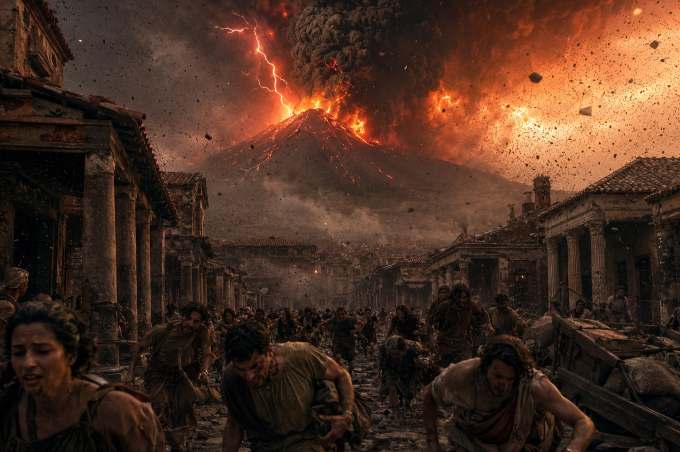

In 1961, during excavations in the area known as the Garden of the Fugitives in Pompeii, the remains of 14 people who failed to escape the devastating eruption of Vesuvius in 79 A.D. were discovered. Archaeologists created plaster casts that capture their final postures, a chilling testament to that tragedy.
More than six decades later, a recent study provided key data about the identity of one of those victims. Using new X-ray scanners and computed tomography, researchers detected objects accompanying the body that changed the understanding of who that person was.
A fabric bag containing bronze and silver coins was found, along with a box that held a small slate tablet and several small metal instruments. Experts interpret that the tablet was used for preparing cosmetic or medicinal mixtures, while the utensils are part of a typical surgical kit of a doctor from that time.
The Doctor Who Could Not Escape
Everything indicates that this individual was a doctor trying to escape the burning city while carrying his tools of the trade. The eruption caught him before he could reach safety, like so many other Pompeians. This finding allows for a further reconstruction of daily life in the ancient Roman city.
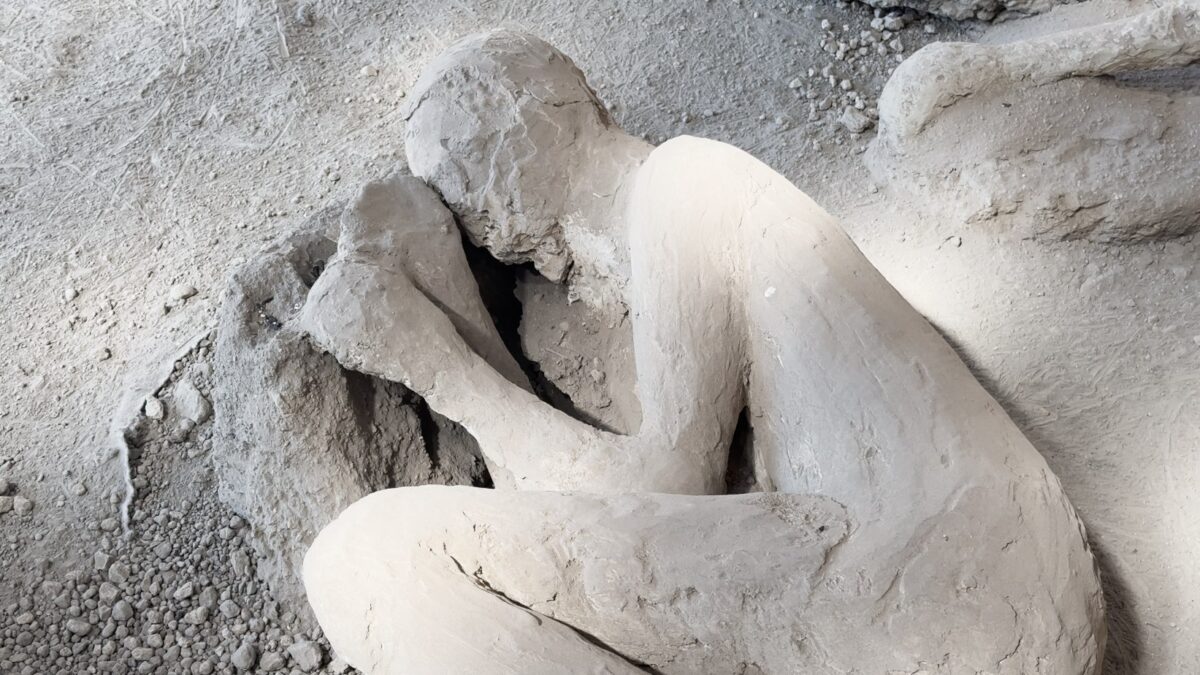
The plaster casts, an innovative technique at the time, have allowed generations of researchers and the public to connect with the last hours of the victims. In this particular case, modern technology added valuable information that goes beyond mere body posture.









