Historic discovery in Japan: a mysterious priestess from 1,500 years ago found in an ancient tomb

Historic discovery in Japan: a mysterious priestess from 1,500 years ago found in an ancient tomb

Most read in Argentina

Gemini connects with Google Wallet to analyze expenses and detect subscriptions

  1. Sánchez's Management: more than 3,600 African immigrants arrived in the Canary Islands in just three days

  2. Prepaid cards for Human Capital: which courses can be paid for and how to access them

  3. New AFA scandal: over 1 million dollars detected in payments to luxury yacht companies

  4. 5,000-year-old skulls confirm sacrifices in the tombs of Egypt's first kings

Imagen de Editorial Team
porEditorial Team
Argentina

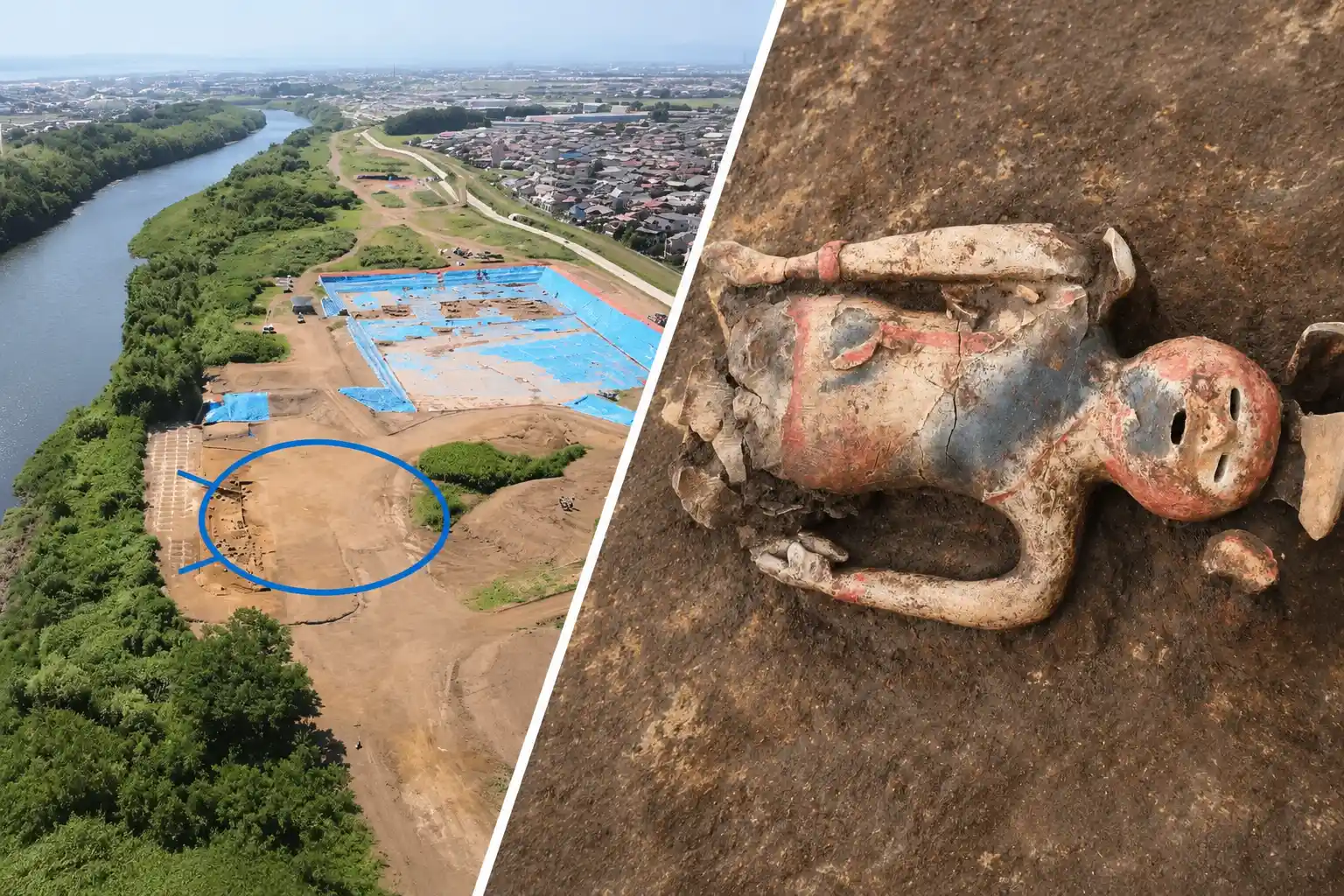
The figure was found in the moat of an ancient funerary monument in Gunma Prefecture. Researchers believe it represents a priestess responsible for conducting religious ceremonies and connecting the world of the living with that of the spirits

Add La Derecha Diario on
Share:

Its name comes from the kofun, large mounds built to bury members of the elite.

In these monuments, haniwa sculptures representing people, animals, houses, and other elements related to the society of the time were placed.

Specialists believe that these figures served ceremonial functions and could act as funerary offerings. Some traditions also attributed to them the ability to house the spirits of the deceased.

Excavations conducted since 2020 at Nishikaminomiya have identified eleven burial mounds corresponding to the 5th and 6th centuries.

How the priestess ended up in the moat of a tomb

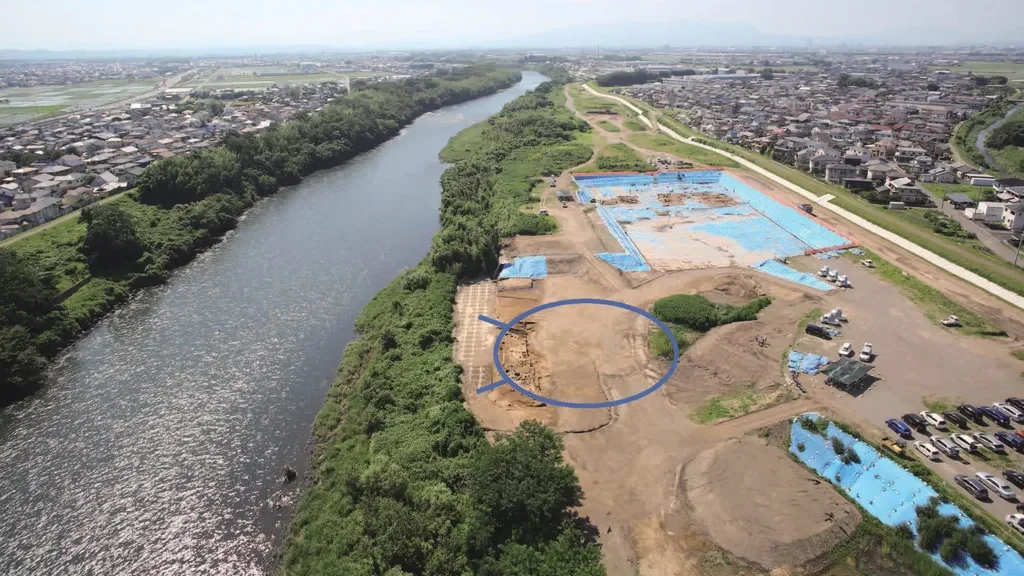
The monument where the figure appeared has an approximate diameter of 45 meters and retains evidence of a stone sarcophagus shaped like a boat.

According to researchers, the sculpture was likely originally located near that sarcophagus, forming part of the ceremonial elements accompanying the deceased.

Over the centuries, the piece would have slid down the slope of the mound until it ended up deposited in the outer moat, where it was eventually recovered.

This hypothesis explains why a figure intended for an important funerary space appeared outside its original location.

Where the discovered figure is currently located

The discovery was officially announced by the authorities of Gunma in October 2026 and subsequently disseminated by international media specialized in archaeology.

The sculpture began to be publicly exhibited on October 28 at the Gunma Archaeological Research Center's Excavation Information Museum, located in the city of Shibukawa.

The initial exhibition was organized for one month to bring the finding closer to the public.

The figure constitutes a valuable testimony of the beliefs, traditions, and funerary practices of Japan fifteen centuries ago, in addition to providing information about the representation of women linked to religious ceremonies.


La Derecha Diario on X

  1. AHORA — MÁXIMA TENSIÓN EN PARÍS: Estudiantes franceses rompieron las barricadas montadas por grupos de extrema izquierda que bloqueaban el acceso al liceo Claude Monet para poder ingresar al establecimiento y asistir a clases.

    10 min ago

  2. EL LÍDER DE VOX, SANTIAGO ABASCAL, SOBRE LA INVASIÓN MIGRATORIA EN CANARIAS: “Lo que queremos es que no entre un solo cayuco más a Canarias y que se manden al puerto del que han salido”.

    20 min ago

  3. AHORA — “LA RESISTENCIA ES UNO DE LOS DONES QUE EL SEÑOR ME HA DADO” El papa León XIV agradeció a Dios por haber podido realizar su viaje apostólico a Sudamérica tras su operación y destacó la fuerza de la oración y los mensajes de apoyo recibidos de todo el mundo. “No estoy al 100%, pero estoy bastante bien”.

    30 min ago

  4. URGENTE — EL PAPA LEÓN XIV HABLÓ SOBRE SU RELACIÓN CON MILEI Y ACLARÓ QUE TIENEN UN EXCELENTE VÍNCULO DONDE COINCIDEN SOBRE LA VIDA HUMANA El papa León XIV aclaró que su mensaje en la Argentina no fue político y reveló que durante su encuentro con Javier Milei conversaron sobre economía y sobre la fe, y coincidieron sobre la importancia de respetar la vida humana en todas sus etapas. “Hay algunos que tratan de forzarme hacia la derecha o hacia la izquierda, pero mi mensaje no es político". Por último, reveló que su reunión con Milei fue muy positiva: "El valor de la vida, el valor del ser humano, en todas sus etapas, pues tenemos que buscar cómo trabajar juntos en eso, y por ahí fue nuestra conversación. Estuvo muy abierto a escuchar mi mensaje”.

    38 min ago

  5. AHORA — El vocero presidencial de Milei, Adrián Ravier, brinda una nueva conferencia de prensa desde Casa Rosada. MIRALO EN VIVO: https://youtube.com/live/q3jKDWXxKzk?si=IdJVEUP4t-UE_G4s

    9 min ago

La Derecha Diario logo
TwitterInstagramYouTubeTikTokFacebook
Derecha Diario TV

Nosotros

  • Quienes Somos
  • Autores
  • Donar

Privacidad

  • Protección de datos
  • Canales
  • Sitemap
  • RSS

Contacto

  • info@derechadiario.com.ar
PUBLICIDAD
La Derecha Diario logo
ESX logoInstagram logoYouTube logoTikTok logoFacebook
ARGENTINAUNITED STATESECUADORISRAELMEXICOURUGUAY
DERECHA DIARIO TV
  • ES
    XInstagramYouTubeTikTokFacebook
  • DERECHA DIARIO TV
  • Sections
  • ARGENTINA
  • UNITED STATES
  • ECUADOR
  • ISRAEL
  • MEXICO
  • URUGUAY
  • Countries
  • La Derecha Diario logoLA DERECHA DIARIO
  • La Derecha Diario México logoLA DERECHA DIARIO MÉXICO
  • La Derecha Diario Uruguay logoLA DERECHA DIARIO URUGUAY
  • La Derecha Diario Ecuador logoLA DERECHA DIARIO ECUADOR
  • La Derecha Diario Israel logoLA DERECHA DIARIO ISRAEL
  • La Derecha Diario Estados Unidos logoLA DERECHA DIARIO ESTADOS UNIDOS
  • The Newspaper
  • QUIENES SOMOS
  • AUTORES
  • PUBLICIDAD
  • DONAR

Related news

LIVE | Adrián Ravier holds a new press conference and details the Government's agenda

LIVE | Adrián Ravier holds a new press conference and details the Government's agenda

Trump arrived in the Philippines to reactivate the Quad before meeting with Xi and Putin

Trump arrived in the Philippines to reactivate the Quad before meeting with Xi and Putin

Franco Colapinto revealed the main challenge that Alpine will face in the Las Vegas Grand Prix: "It will be a key objective"

Franco Colapinto revealed the main challenge that Alpine will face in the Las Vegas Grand Prix: "It will be a key objective"

Carmen Barbieri returned to TV and revealed how her health was: “I thought I was dying”

Carmen Barbieri returned to TV and revealed how her health was: “I thought I was dying”

Pope Leo XIV highlighted his meeting with Milei and assured that there was "mutual understanding" about the value of life

Pope Leo XIV highlighted his meeting with Milei and assured that there was "mutual understanding" about the value of life

MasterChef Celebrity: Edith Hermida asked an unexpected question about Rocío Robles' intimacy

MasterChef Celebrity: Edith Hermida asked an unexpected question about Rocío Robles' intimacy

A team of Japanese archaeologists discovered an extraordinary clay figure approximately 1,500 years old, which may represent a priestess associated with the funerary rituals of ancient Japan. The finding occurred at the archaeological site of Nishikaminomiya, located in Gunma Prefecture on Honshu Island, northwest of Tokyo.

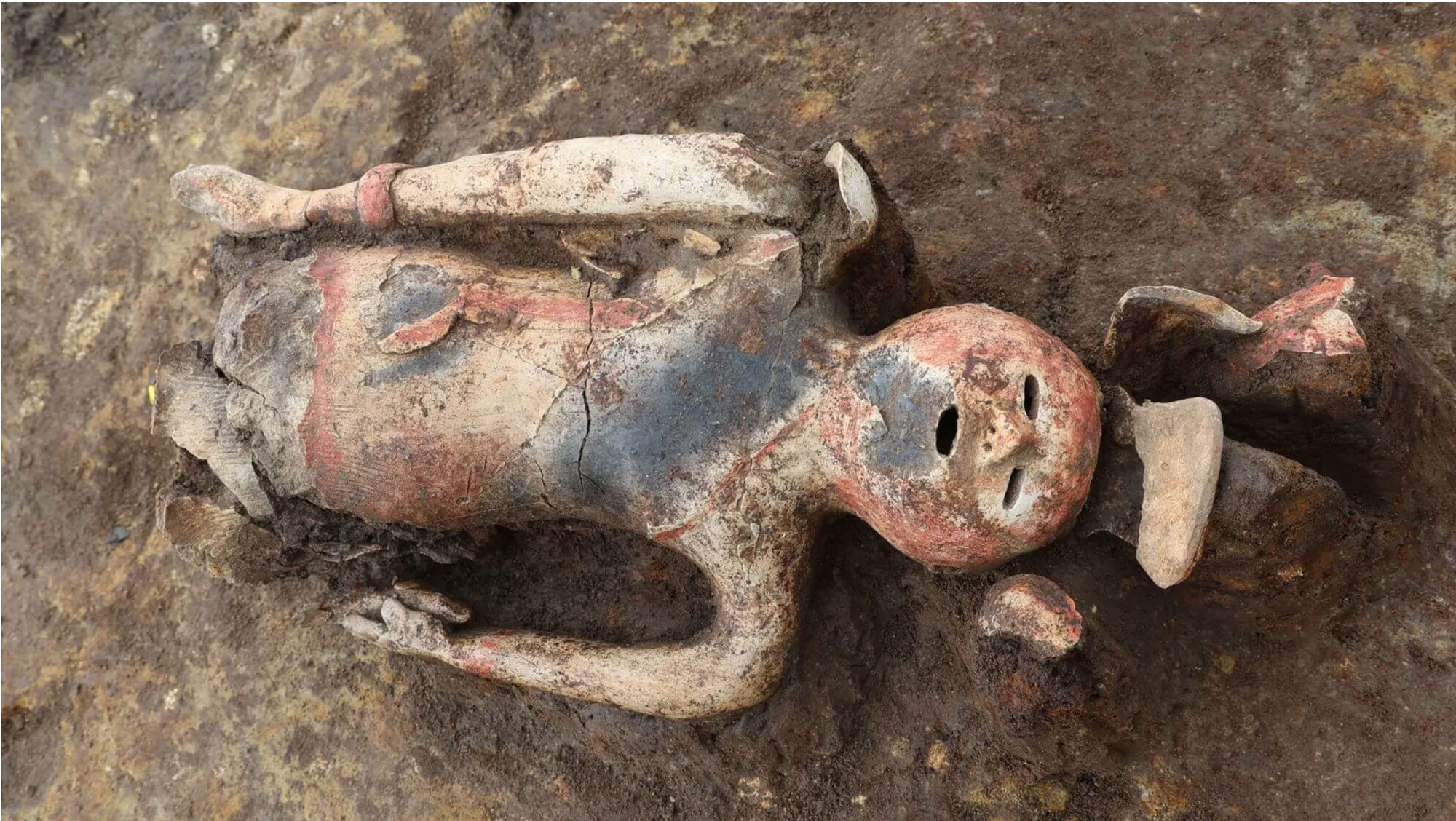
The sculpture was found in the moat surrounding a burial mound constructed during the 5th century. Although only the head and torso survived, the fragments retain details that allowed for the identification of its possible religious function.

A mysterious 1,500-year-old clay figure

The piece belongs to a category of sculptures known as haniwa, funerary figures made of clay that were placed around Japanese tombs.

The recovered fragments measure approximately 40 centimeters, although specialists believe the original sculpture would have been considerably larger.

Among its features are a prominent nose, carefully modeled fingers, and a traditional Japanese hairstyle gathered on top of the head, known as shimada.

Historic discovery in Japan: a mysterious priestess from 1,500 years ago found in an ancient tomb

The figure also features bracelets made of clay and red pigment, a red band painted across the torso, and an elongated ceremonial object held in its left hand.

These elements led researchers to interpret that it could represent a miko, a traditional Japanese priestess.

Who were the miko priestesses of ancient Japan

The miko performed religious functions related to communication between the human and spiritual worlds.

In ancient Japanese traditions, these women participated in ceremonies, funerary rituals, and practices aimed at establishing connections with deities and spirits.

Their presence in a funerary monument could be related to the spiritual protection of the deceased and the rites accompanying their burial.

However, the identity of the figure constitutes an archaeological interpretation based on its appearance and the objects it carries, not a definitive identification.

The authorities of Gunma particularly highlighted the care dedicated to the elaboration of details that could likely not even be observed from a considerable distance.

Imagen 1468970

The Kofun period and the mysterious Japanese funerary monuments

The sculpture belongs to the Kofun period, which developed approximately between the 3rd and 8th centuries, a fundamental stage for understanding the formation of the first political and social structures of the Japanese archipelago.