The Ministry of Education imposes new restrictions. It prohibits recording in classrooms and limits cell phone use under state control
Compartir:
The Ministry of Education of Córdoba has presented a new framework for the use of cell phones in schools. Apparently, it seeks to "organize" the use of digital devices. In practice, it opens the door to ideological regulation of communication and private property within the classroom.
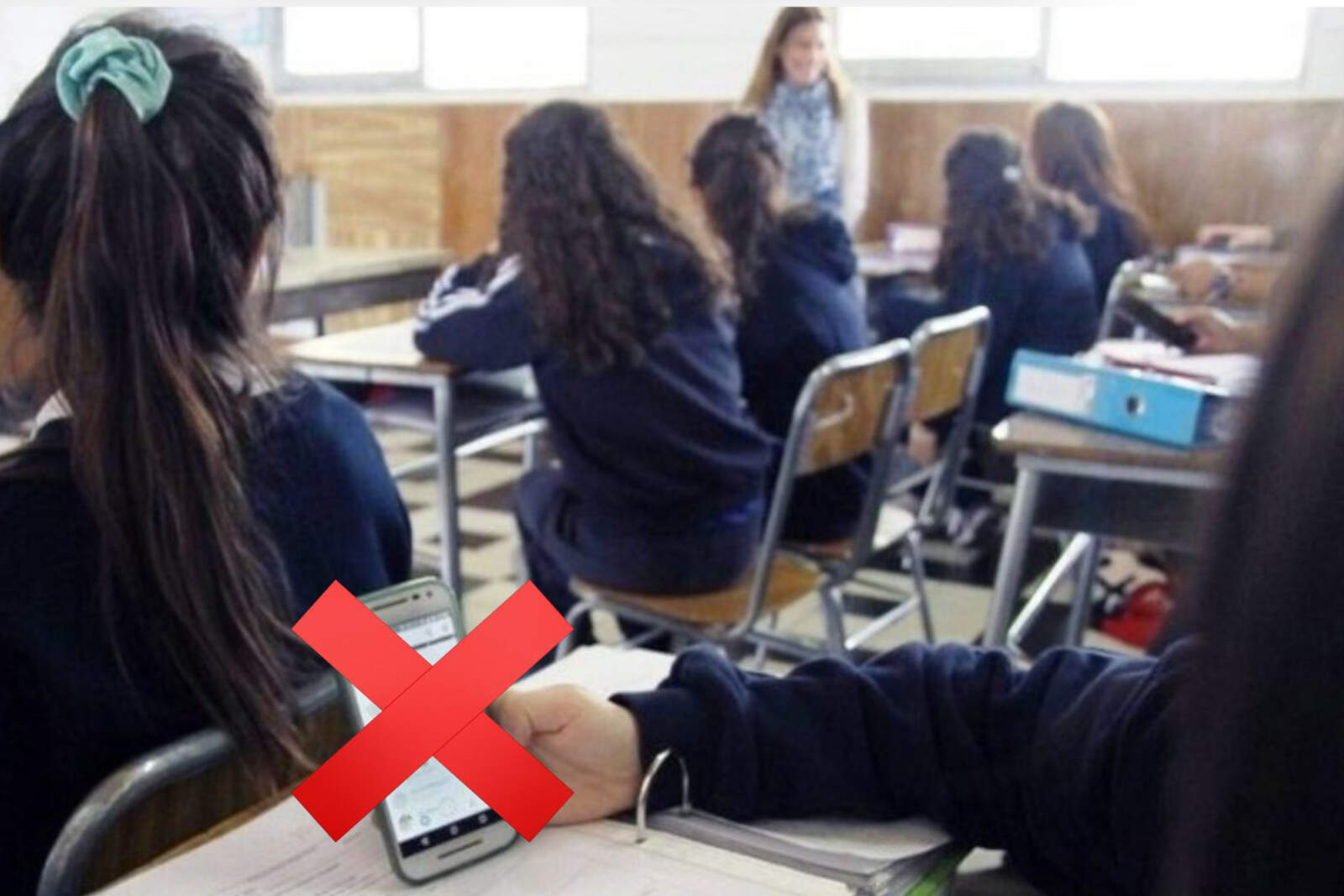
The official document allows the use of cell phones only for pedagogical purposes and under the teacher's authorization. This means that the State determines when and how a personal asset can be used. The pedagogical excuse becomes a tool to impose control over individual freedom.
In addition, the text expressly prohibits recording or photographing without consent. A clause that, far from protecting privacy, acts as a shield against complaints of indoctrination in classrooms.
Durante años, los celulares fueron también una forma de defensa para los estudiantes frente a abusos o discursos partidarios.
From the free classroom to the monitored classroom
For years, cell phones have also served as a means of defense for students against abuse or partisan discourse. Thanks to those recordings, teachers who insulted Milei or repeated ideological slogans in front of minors were exposed. With this new regulation, that evidence could disappear.
The provincial government presents the regulation as a way to "guarantee an orderly educational environment." However, in practice, it eliminates any possibility of recording situations where authority is used to impose a political agenda. The message is clear: be silent, obey, and do not document.
The result is a controlled classroom, where the teacher has absolute power and the student loses a means of defense. This is a paradox in a democracy that should promote transparency and free expression.
El Ministerio de Educación de Córdoba presentó un nuevo marco para el uso de celulares en las escuelas. En apariencia, busca “ordenar” el uso de dispositivos digitales.
The advance on private property
The official text also states that each user will be responsible for their device, but will not be able to use it freely. In other words, the State recognizes ownership, but denies the right to exercise it. This is a contradiction that is closer to 21st-century socialism than to a modern educational policy.
Cell phones do not belong to the State or the educational system. They are private assets, acquired through the efforts of families. Regulating their use based on political or ideological criteria constitutes an advance on private property, disguised as "pedagogical regulation."
Instead of fostering critical thinking, the government chooses to impose restrictions. The objective doesn't seem to be to educate, but to control the environment where the next generation is formed.
Es decir, el Estado reconoce la propiedad, pero niega el derecho a ejercerla.
An excuse for censorship
The authorities claim that the measure seeks to "avoid distractions." However, the tone of the document and its emphasis on recordings reveal another intention. To protect teachers from being recorded while spreading ideas contrary to the national government, currently represented by Javier Milei.
Córdoba thus follows a logic of control that is increasingly common in progressive educational systems. Instead of teaching freedom, obedience and silence are instilled. What is prohibited is not the cell phone, but the evidence.
Under the argument of order, a school closed to public scrutiny is being built. Meanwhile, impunity is guaranteed for those who use the classroom for political purposes.
Esto implica que el Estado determina cuándo y cómo puede emplearse un bien personal.