Gelbard's economic strategy ended up financing one of the most delusional and brutal regimes in Africa
Nuevo
Agregar La Derecha Diario en
Compartir:
The history of Jean-Bédel Bokassa's regime in the Central African Republic was recorded as one of the most unusual and brutal episodes of the 20th century.
However, it also left a direct mark on Argentina, since during the Peronist governments of the 1970s, the Argentine state granted a loan to a dictator who believed he was Napoleon, a debt that was never settled and that over time turned into a multimillion-dollar liability.
Bokassa came to power in 1966 after a coup d'état. Trained militarily in France, a country that he admired deeply, he developed a particular obsession with Napoleon Bonaparte.
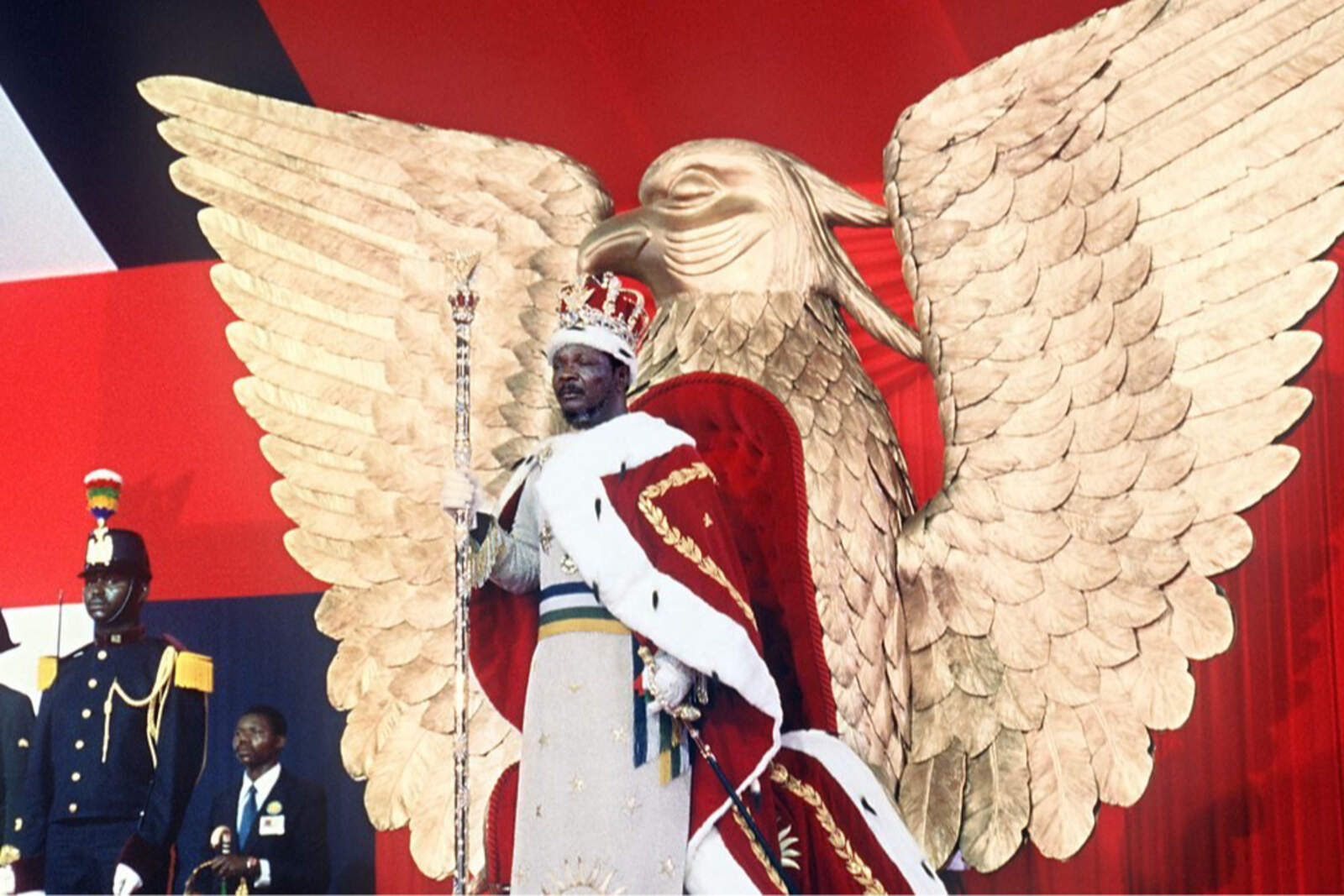
Amid that fascination, on December 4, 1976 he changed the country's name and proclaimed himself emperor of the brand-new Central African Empire under the title of Bokassa I, consolidating a personalist and authoritarian regime that combined extreme violence, a cult of personality, and imperial delusion.
Jean-Bédel Bokassa.
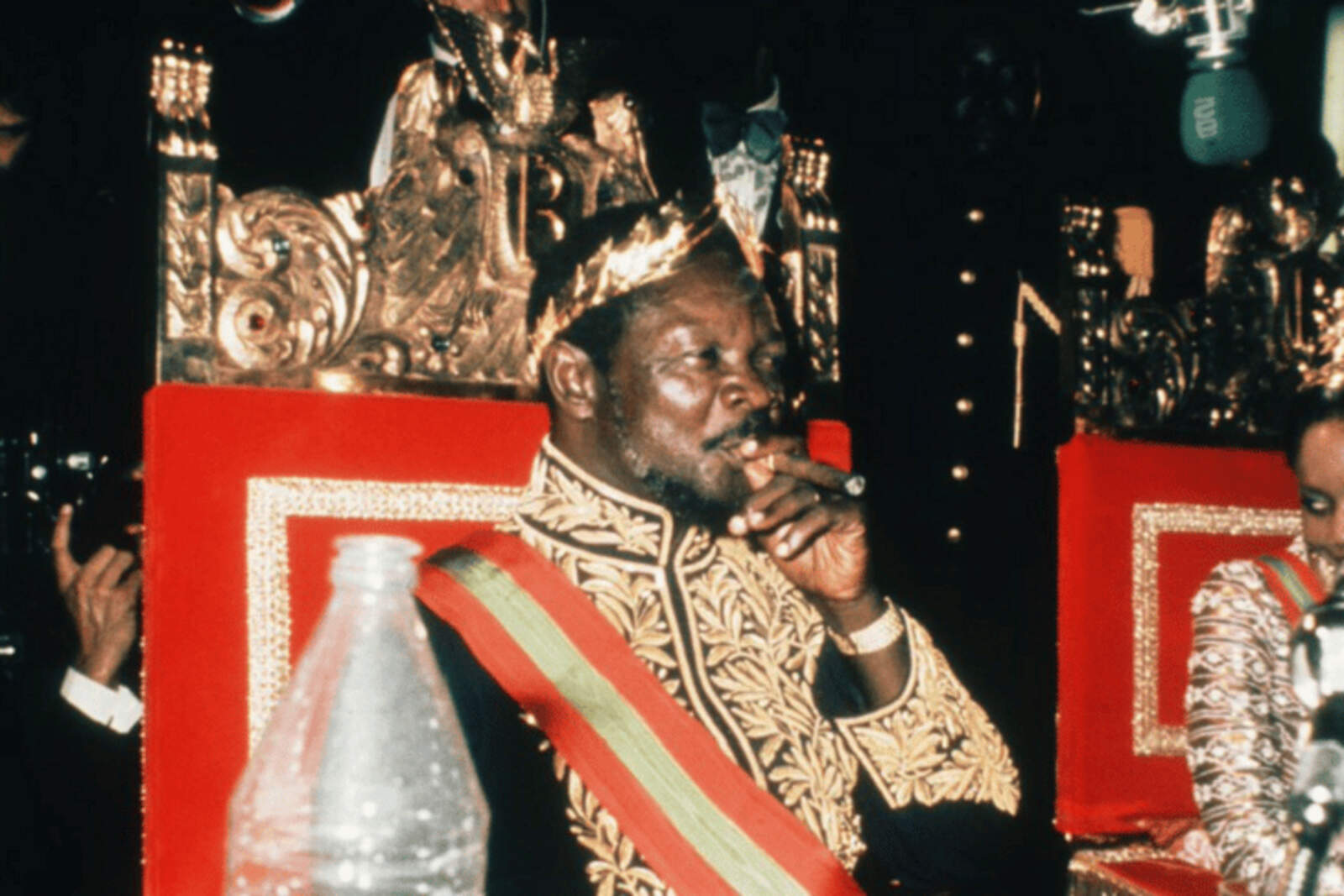
A year later, on December 4, 1977, he organized in Bangui a coronation ceremony designed as an almost exact replica of Napoleon's coronation in 1804. The event had an approximate cost of 20 million dollars of the time, which is equivalent to about 75 million dollars in 2011 values. In a country mired in extreme poverty, that expenditure represented nearly 20% of the Gross Domestic Product.
For the ceremony, Bokassa ordered a crown adorned with thousands of diamonds to be brought from France, a solid gold throne in the shape of an eagle that weighed around two tons, antique carriages, thoroughbred horses, and tons of European food and wine. All this took place while the population lacked basic infrastructure, hospitals, and schools. A large part of the financial aid that France sent to the country ended up financing that imperial display.
Bokassa's regime was as eccentric as it was brutal. He had 17 wives and 58 children, and his government was marked by extreme violence. There are allegations of cannibalism that include opponents, allies, and even hundreds of children.
His empire had a brief life. In 1979, after a series of student massacres and the definitive deterioration of his international image, Bokassa was overthrown and the Central African Empire collapsed.
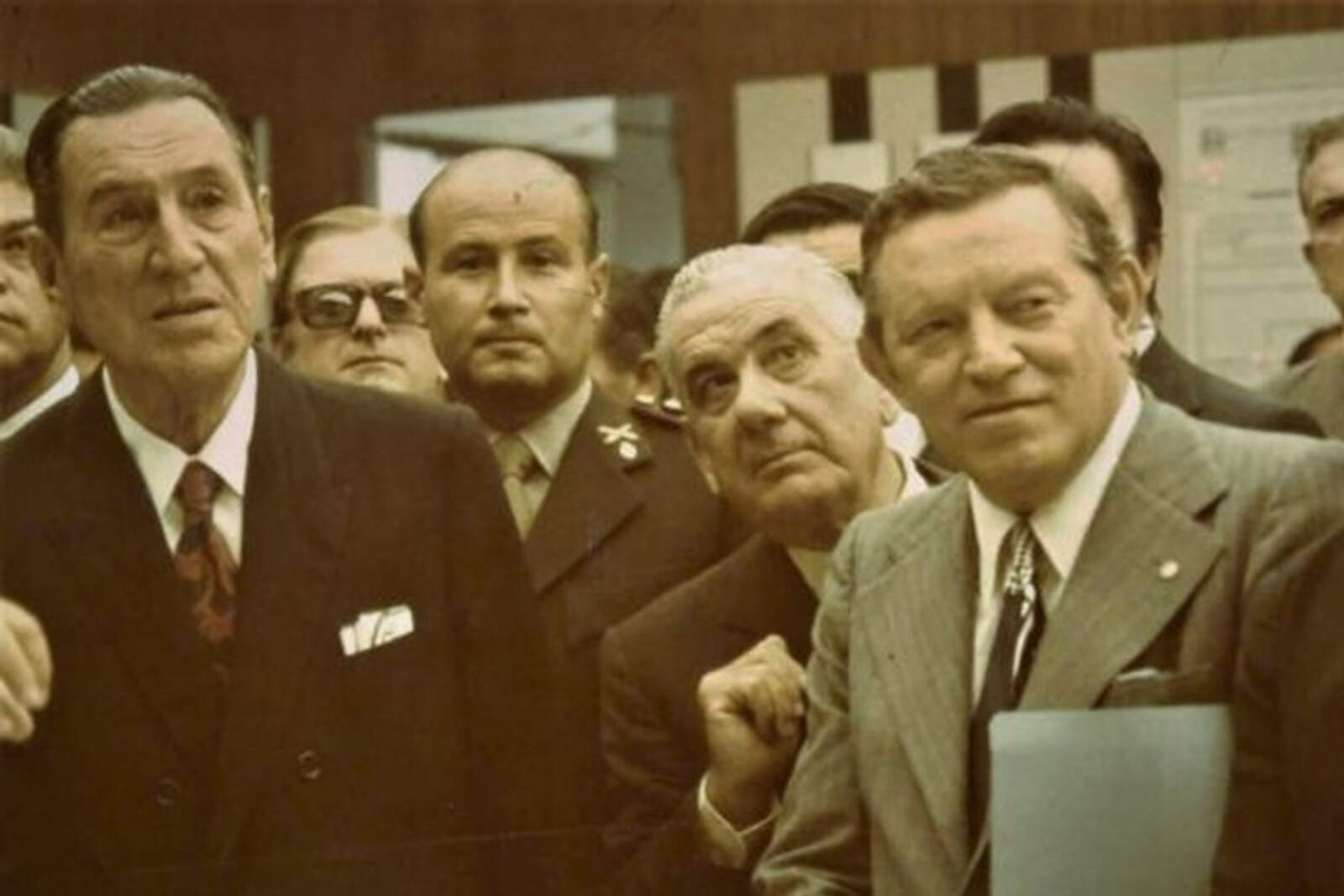
Juan Domingo Perón y José Ber Gelbard.
The Peronist debt
In that context, the connection with Argentina is framed. During the years 1973 and 1974, Peronism granted a multimillion-dollar loan to Bokassa's regime as part of an economic strategy promoted by José Ber Gelbard, then Minister of Economy during the presidencies of Héctor Cámpora and Juan Domingo Perón. The operation consisted of loans financed by the Argentine state so that the Central African government would buy Argentine products.
The initial amount of that debt was approximately 10 million dollars. However, after the collapse of the regime and Bokassa's fall, the Central African Republic never paid either the principal or the interest. The debt remained in permanent default and, over the decades, it increased until it reached a figure close to 44 million dollars.
Thus, a trade policy promoted by Peronism ended up linking Argentina with one of the most delusional dictators of contemporary history. The result was an uncollectible debt originating in state financing for an African emperor who believed he was Napoleon and who left behind a devastated country and an account that was never closed.